Salads
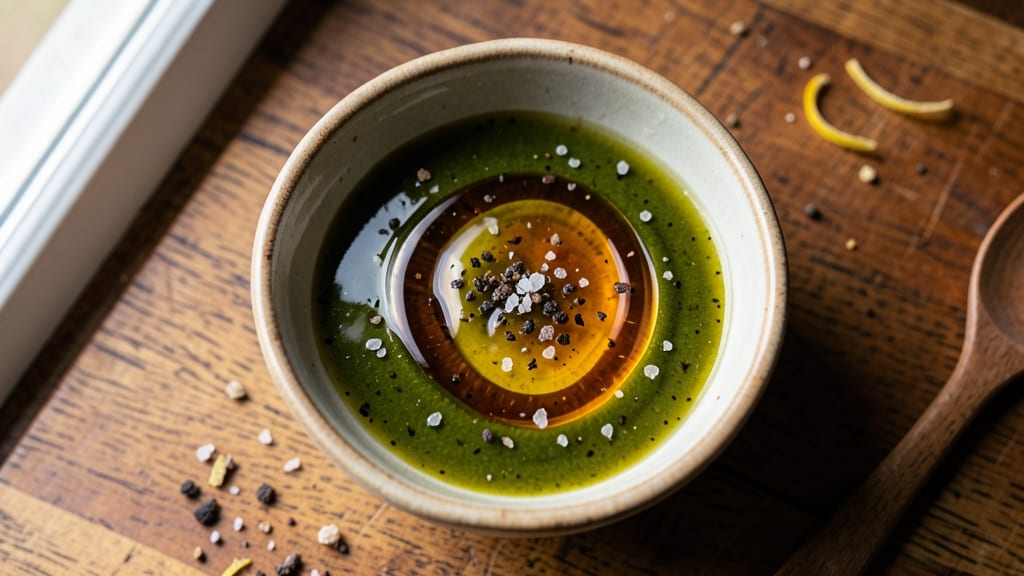
This apple cider vinegar and oil salad dressing recipe delivers a bright, tangy balance that elevates every dish without fuss. The secret lies in a simple 3:1 oil-to-vinegar ratio, creating a stable emulsion that stays creamy without overpowering flavors.
I developed this version after realizing most store-bought dressings rely on hidden stabilizers—this one uses just five core ingredients for a cleaner, more vibrant result.
The dressing's magic comes from combining raw apple cider vinegar (for probiotic benefits and depth) with high-quality olive oil, then whisking vigorously to create a velvety texture. A touch of Dijon mustard acts as a natural emulsifier, while maple syrup or agave balances the acidity for subtle sweetness.
The result? A dressing that clings beautifully to greens, grains, and roasted vegetables without turning bitter or separating.
What sets this recipe apart is its versatility—use it as-is for a classic vinaigrette, or customize with fresh herbs, garlic, or smoked paprika for depth. It stores perfectly in the fridge for up to two weeks, making it ideal for meal prep.
The tangy-sweet profile works equally well on kale salads, grain bowls, or even as a marinade for roasted chicken.
For best results, whisk the ingredients thoroughly before using, and give it a gentle shake before each use to maintain that perfect emulsion. This dressing proves simplicity can outshine complexity every time—no fancy techniques, just bright, balanced flavor that transforms ordinary meals into something special.
Ingredients for apple cider vinegar and oil salad dressing
Five core ingredients create a bright, stable dressing that elevates salads and roasted vegetables effortlessly.
| Ingredient | Amount | Notes |
|---|---|---|
| Extra-Virgin Olive Oil 🫒 | 3 tbsp | Cold-pressed for optimal flavor |
| Raw Apple Cider Vinegar 🍏 | 1 tbsp | Unfiltered for probiotic benefits |
| Dijon Mustard 🌶️ | 1 tsp | For natural emulsification |
| Pure Maple Syrup 🍁 | 1 tsp | Grade A for balanced sweetness |
| Diamond Crystal Kosher Salt 🧂 | ¼ tsp | Fine grain for even dissolution |
| Freshly Ground Black Pepper 🌶️ | ⅛ tsp | Freshly cracked for aroma |
| Garlic Cloves 🧄 | 1 clove | Minced for aromatic depth (optional) |
| Fresh Thyme Leaves 🌿 | ⅛ cup | Finely chopped for herbal note (optional) |
The olive oil is non-negotiable—Kalamata or Arbequina varieties add subtle fruitiness that complements the vinegar beautifully. Whole Foods or local olive oil shops carry excellent options, but avoid anything labeled 'light' or 'pure'—those are often refined. For the apple cider vinegar, Bragg's unfiltered is my go-to for that tangy depth, though any raw, unprocessed vinegar works. The Dijon mustard should be 100% mustard seed—no additives or fillers. If you can't find it, whole-grain mustard works in a pinch, but the texture won't be as silky. Fresh thyme and garlic, when used, should be finely minced—no large chunks. Store-bought minced garlic lacks the fresh aroma, so do it yourself if possible.
No Dijon mustard? Whisk the oil and vinegar first, then add a pinch of xanthan gum (1/8 tsp) as a stabilizer—it’s vegan and does the job. Short on maple syrup? Agave nectar or date syrup works equally well, though maple has a more complex flavor. The garlic and thyme are truly optional, but if you’re adding them, toast the garlic in olive oil for 30 seconds first—this deepens the flavor significantly. For a smoky twist, add 1/4 tsp smoked paprika to the finished dressing. If you prefer a sweeter profile, increase the maple syrup to 1.5 tsp. The key to any substitution is maintaining the 3:1 oil-to-vinegar ratio—this ensures the emulsion stays stable.
This dressing stays fresh for up to 3 weeks in an airtight jar in the fridge, though the flavor peaks within the first week. To maintain that velvety texture, shake vigorously before each use—the emulsion will naturally separate over time. For meal prep, portion into small jars (like 4 oz mason jars) so you can grab exactly what you need. If the dressing thickens, simply whisk in 1 tsp warm water to restore consistency. Freezing isn’t recommended—oil separates when thawed. The salt and pepper can be adjusted to taste, but start with the given amounts for a balanced foundation.
Why You'll Love This Recipe
- No-Fuss Whisking: I swear by this dressing because it’s just five ingredients, a jar, and 30 seconds of stirring. No fancy tools, no waiting for anything to cool—just pour, shake, and go.
- Sweet-Tart Magic: That maple syrup in there? It’s the secret weapon. The apple cider vinegar gives it a bright tang, but the syrup softens it into something smooth and addictive—like a hug for your taste buds.
- Pantry Staple Power: Honestly, I make this so often I forget how many times I’ve used it. Toss it on greens, drizzle it over roasted veggies, or even use it as a marinade—it’s my go-to for anything that needs a little bright, savory punch.
- Lasts All Week: Between us, I always end up with leftovers, and that’s a good thing. This dressing keeps for ages in the fridge, so I’m never scrambling for a quick fix when lunch rolls around. Plus, the ingredients are cheap—you’ll be making it twice as much as you think.
Step-by-step instructions for apple cider vinegar and oil salad dressing
A simple yet sophisticated dressing that relies on precise technique for perfect emulsification.
Whisk Together the Mustard and Maple Syrup
In a small bowl, combine the 1 tsp Dijon Mustard and 1 tsp Pure Maple Syrup. Use a wire whisk to blend them thoroughly for 10-15 seconds until fully incorporated. The mustard acts as an emulsifier, while the maple syrup adds subtle sweetness that balances the acidity. This step ensures the dressing will hold its structure without separating later.
If you notice any graininess in the mustard, continue whisking for another 5 seconds—this prevents clumps that could affect the final texture. The mixture should be smooth and slightly thickened, resembling a light paste. Set this mixture aside while you prepare the remaining ingredients.
Add Vinegar and Seasonings
To the mustard-maple syrup mixture, add the 1 tbsp Raw Apple Cider Vinegar, 0.25 tsp Diamond Crystal Kosher Salt, and 0.125 tsp Freshly Ground Black Pepper. Whisk vigorously for 20 seconds until the salt and pepper are completely dissolved and the vinegar is fully incorporated. The vinegar introduces the signature tang, while the salt and pepper enhance depth of flavor.
At this stage, the mixture should look slightly cloudy with a smooth, even consistency. If you're using the 1 clove Garlic Cloves and 0.125 cup Fresh Thyme Leaves, finely mince the garlic and chop the thyme leaves before adding them now. Whisk for an additional 10 seconds to distribute these aromatics evenly. The garlic adds a subtle savory note, while the thyme contributes a fresh herbal brightness.
Gradually Incorporate the Olive Oil
With the whisk still in the bowl, slowly drizzle in the 3 tbsp Extra-Virgin Olive Oil while whisking continuously. Start with a thin stream and maintain a steady pace—this gradual addition is critical for achieving a stable emulsion. The oil should blend smoothly without creating a greasy separation. If you add it too quickly, the dressing may break.
Continue whisking for 30-45 seconds after the last drop of oil is incorporated. The dressing should now have a creamy, velvety texture with a glossy sheen. If it appears slightly thick, you can thin it with 1-2 teaspoons of water or additional vinegar, but it should hold its shape without being overly runny. This is the moment that matters: proper emulsification ensures your dressing stays cohesive for days.
Taste and Adjust for Balance
Taste the dressing immediately to assess the flavor profile. The apple cider vinegar should provide a bright acidity, while the olive oil adds richness. The maple syrup should mellow the sharpness, and the Dijon mustard contributes a subtle depth. If the dressing tastes too sharp, add a pinch more Pure Maple Syrup. If it lacks saltiness, incorporate an additional 0.125 tsp Diamond Crystal Kosher Salt. For more peppery heat, add a touch of Freshly Ground Black Pepper.
Once balanced, transfer the dressing to a clean, airtight jar or bottle. Shake gently before each use to re-emulsify any natural separation that may occur over time. This dressing keeps well in the refrigerator for up to 1 week, making it a versatile pantry staple for salads, marinades, or even as a finishing drizzle for roasted vegetables.
Pro Tips For Making Apple Cider Vinegar And Oil Salad Dressing
- STIR SLOWLY AFTER MIXING: Pour the apple cider vinegar into the mustard first, then whisk in the olive oil drop by drop at first—this prevents a greasy split. After the first few drops, you can add the oil in a steady stream, but rushing it creates a clumpy mess that won’t emulsify properly.
- USE COLD INGREDIENTS: Chill your olive oil and vinegar for 15 minutes before mixing—this keeps the dressing thick and stable longer. I learned this the hard way when my summer kitchen turned the dressing into a sad, watery puddle by noon.
- MEASURE THE SALT FIRST: Dissolve the kosher salt in the maple syrup before adding anything else—this ensures even distribution and prevents grainy texture. Skip this, and you’ll end up with a dressing that tastes unevenly salty in some bites and bland in others.
- WHISK LIKE YOU MEAN IT: Use a fork or small whisk, not a lazy wrist—give it 30 seconds of aggressive stirring to break the oil into tiny droplets. This isn’t a quick shake; it’s the only way to get that silky, clingy texture that clings to greens like it’s supposed to.
Flavor customization for apple cider vinegar and oil salad dressing
Sweet-Tart Variations
For a bolder sweetness, increase the maple syrup to 1.5 tsp and add ½ tsp vanilla extract—this creates a caramelized depth perfect for roasted squash or sweet potatoes.
If you prefer tropical notes, swap the maple syrup for 1 tsp agave nectar and add ½ tsp finely grated ginger for a zesty kick. 🌶️
Need a savory twist? Reduce the maple syrup to ½ tsp and add 1 tsp soy sauce or 1 tsp miso paste for umami richness. This works beautifully on grain bowls or Asian-inspired salads. The soy sauce also helps balance the acidity without extra sweetness.
Herb & Spice Infusions
Fresh herbs elevate this dressing instantly. Try 1 tbsp finely chopped dill for a bright, citrusy note that pairs well with cucumber salads. For a Mediterranean flair, add 1 tsp dried oregano and ½ tsp red pepper flakes—this combo shines on Greek salads or grilled veggies. 🌿
Spice lovers can experiment with ½ tsp smoked paprika for depth or ¼ tsp ground coriander for a citrusy warmth. For a garlicky punch, sauté 2 minced garlic cloves in 1 tsp olive oil until fragrant, then cool and whisk into the dressing.
This works especially well with hearty greens like kale or spinach.
Global Flavor Twists
Transform this dressing into a Middle Eastern-inspired tahini dressing by replacing 1 tbsp olive oil with 1 tbsp tahini and adding ½ tsp ground cumin. The nutty tahini adds creaminess while the cumin introduces earthy warmth—perfect for tabbouleh or roasted eggplant. 🌏
For a Japanese-inspired variation, swap the apple cider vinegar for 1 tbsp rice vinegar and add 1 tsp sesame oil plus ½ tsp toasted sesame seeds.
This lighter, nuttier dressing pairs beautifully with sushi bowls or cucumber salads. The sesame oil adds a toasty aroma that complements the vinegar’s tang.
Heat & Smokiness
Craving spicy heat? Add ½ tsp hot sauce (like Cholula or Tabasco) or ¼ tsp cayenne pepper for a fiery kick. For a smoky depth, mix in ½ tsp liquid smoke or ¼ tsp smoked salt—this works amazingly on BBQ chicken salads or grilled corn. 🔥
For a balanced heat, combine ½ tsp honey (or maple syrup) with ¼ tsp cayenne to create a sweet-spicy contrast. This variation is ideal for spicy tuna salads or Asian-inspired dishes where you want heat without overpowering the meal.
Nutrition facts
Frequently asked questions
Why does my vinegar and oil dressing separate?
This happens when the emulsion breaks due to improper mixing or ingredient ratios. The key is whisking the oil into the vinegar mixture very slowly while whisking continuously. For extra stability, add 1/8 tsp xanthan gum or increase the Dijon mustard to 1.5 tsp. Always shake before using to re-emulsify.
Can I make this dressing without Dijon mustard?
Yes! Use 1/8 tsp xanthan gum as a natural emulsifier instead. Alternatively, whisk the oil and vinegar together first, then add 1 tsp honey or maple syrup while whisking vigorously. The sweetener helps bind the oil and vinegar, though the texture may be slightly less stable than with mustard.
How much dressing should I make for a family of 4?
Double the recipe to make 6 tbsp olive oil, 2 tbsp vinegar, and adjust seasonings proportionally. This yields about 1 cup of dressing, perfect for a large salad or as a marinade. Store leftovers in an airtight jar in the fridge for up to 2 weeks, shaking before each use.
What are the best greens to pair with this dressing?
This bright dressing works beautifully with bitter greens like arugula, kale, or radicchio, as the tangy-sweet balance cuts through their intensity. It also enhances milder greens like spinach or mixed baby greens. For extra flavor, toss in toasted nuts or seeds like walnuts or pumpkin seeds.
Can I use this dressing as a marinade?
The acidity in the vinegar tenderizes proteins like chicken or tofu, while the oil keeps them moist. Use a 1:1 ratio of dressing to protein and marinate for 30 minutes to 2 hours in the fridge. For best results, grill or roast the meat immediately after marinating—never reuse the marinade without boiling it first.