
Salads
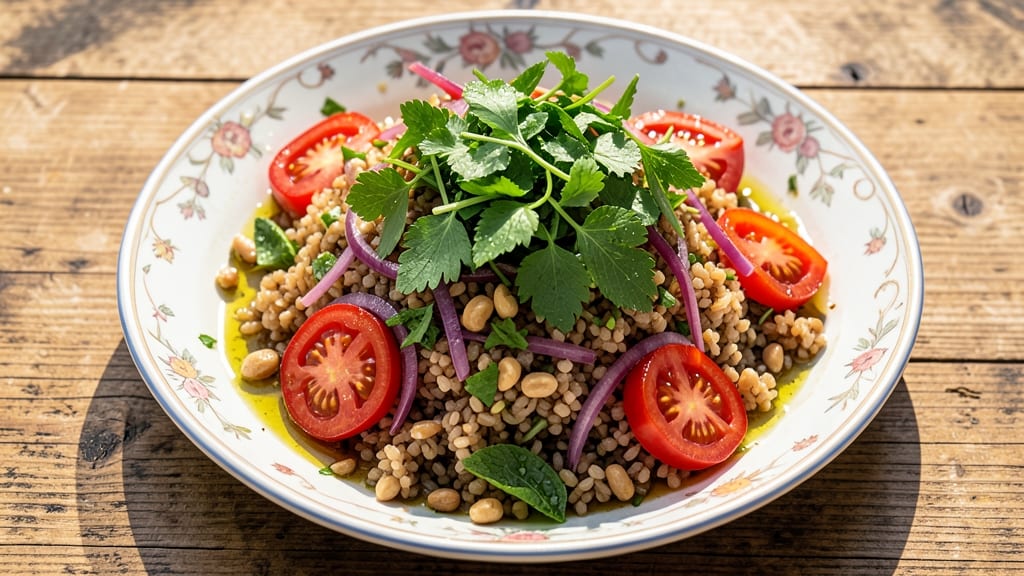
This Arabic tabbouleh salad recipe delivers the vibrant, herby freshness of the Mediterranean in just 15 minutes—no cooking required. The secret lies in perfectly hydrated bulgur wheat and a bright blend of parsley and mint, tossed with lemon juice and olive oil for that signature tangy crunch.
I first discovered this dish during a trip to Beirut, where it's served as both a refreshing starter and a hearty main course.
The beauty of traditional tabbouleh is its simplicity—just 10 ingredients transform into a dish that's as nutritious as it is flavorful. Fresh herbs take center stage, while bulgur provides a satisfying chewy texture that balances the salad's brightness.
This vegan version skips yogurt entirely, relying instead on lemon's acidity to brighten every bite and keep the dish light yet substantial.
What makes this recipe truly special is how the flavors develop as you mix: the lemon juice tenderizes the bulgur while the herbs release their oils, creating a fragrant, aromatic salad that's impossible to resist.
The texture is what sets it apart—crisp vegetables, tender bulgur, and a perfect herb-to-herb ratio that delivers that signature Lebanese freshness in every spoonful.
Serve it as a side with grilled meats or as a standalone dish with warm pita bread. The best part? It tastes even better the next day as the flavors meld further. Let's make this classic salad—your taste buds will thank you.
Ingredients for arabic tabbouleh salad
Fresh herbs, bright citrus, and perfectly hydrated bulgur—just ten ingredients transform into Lebanese freshness.
| Ingredient | Amount | Notes |
|---|---|---|
| Fine Bulgur Wheat 🌾 | 1 cup | Rinsed thoroughly before soaking |
| Fresh Flat-Leaf Parsley 🌿 | 1 ½ cups | Stems removed, loosely packed |
| Fresh Mint Leaves 🍃 | ½ cup | Loosely packed, stems removed |
| Red Onion 🧅 | 1 small | Finely diced, about 0.75 cup |
| Medium Tomatoes 🍅 | 2 whole | Diced, seeds removed, about 1.5 cups |
| Extra-Virgin Olive Oil 🫒 | ½ cup | Light fruity variety preferred |
| Fresh Lemon Juice 🍋 | ¼ cup | About 2 lemons, freshly squeezed |
| Garlic Cloves 🧄 | 3 cloves | Minced, about 1 tsp |
| Diamond Crystal Kosher Salt 🧂 | 1 tsp | Adjust to taste |
| Fresh Cucumber 🥒 | 1 medium | Diced, about 1 cup |
The herbs are non-negotiable here. Fresh parsley and mint from the grocery store's produce section (not the sad plastic containers) make all the difference. Look for vibrant green leaves with no wilting—Whole Foods or Trader Joe's usually carry the best quality. For the bulgur, fine grain is essential—it hydrates evenly and gives that signature tender texture. I always rinse it thoroughly before soaking to remove any bitterness. The tomatoes and cucumber should be crisp, so grab them the day you're making this—Heirloom varieties have the best flavor, but regular grocery store tomatoes work fine if you can't find them.
No fresh herbs? Dried parsley at one-third the amount works in a pinch, but the flavor won't be the same. Short on time? Pre-chopped herb blends from the salad bar section save effort, though I prefer doing it myself. The lemon juice is crucial—freshly squeezed is a must. Bottled won't cut it here. For the garlic, roasted garlic adds a sweet depth if you're feeling fancy. The cucumber can be swapped for radishes or green bell pepper if you want something different, but keep the texture contrast in mind. And if you're worried about the bulgur being too chewy, soak it for 20-25 minutes instead of the usual 15.
This salad tastes even better the next day as the flavors meld—keep it in an airtight container in the fridge for up to 3 days. For serving, I like to portion it into individual bowls with a drizzle of extra olive oil on top. The bulgur will firm up slightly when chilled, so let it sit at room temperature for 10 minutes before serving if you're making it ahead. Store the lemon juice separately if you're prepping ingredients in advance, and add it just before serving to keep the herbs bright. The herbs will start to wilt after 2 days, so use them up quickly if you're not using the whole salad at once.
Why You'll Love This Recipe
- No-Soaking Needed: I swear by this trick—just toast the fine bulgur in a dry pan for 5 minutes, then pour boiling water over it. Fifteen minutes later, it’s fluffy and ready. No overnight soaking, no fuss.
- Herb Bomb Brightness: That parsley-to-mint ratio? Chef’s kiss. The parsley gives it that fresh, grassy backbone, while the mint adds a bright, almost candy-like lift—especially when you let it sit for 20 minutes before serving. Honestly, the flavor punches way harder than it looks.
- Lunchbox to Party Platter: Between us, this salad is my go-to for packed lunches (it holds up for days) and last-minute gatherings. Toss it with grilled chicken for a meal, or serve it alongside shawarma for a crowd—it’s the MVP that makes everything feel special.
- Budget-Friendly Pantry Staple: Bulgur’s cheap, herbs last forever if stored right, and onions/tomatoes? You’ll use them up before they spoil. I’ve made this for under $3 a serving, and it still feels like a restaurant dish. Practical? Absolutely. Delicious? Ridiculously so.
Step-by-step instructions for Arabic tabbouleh salad
Here's how to make this vibrant, herby salad that's all about freshness and perfect texture.
Soak the Bulgur Wheat Until Plump
Place the 1 cup fine bulgur wheat in a medium bowl and cover it completely with 4 cups cold water. Let it soak at room temperature for 10 minutes, then drain using a fine-mesh strainer. The bulgur should be soft but still hold its shape—if it feels mushy, you've soaked too long. Give it a gentle squeeze between your fingers to test.
Rinse the drained bulgur under cold water to remove any excess starch, then transfer it to a clean bowl. This step is crucial—it prevents the bulgur from becoming gummy later. I like to fluff it with a fork right away to break up any clumps. The texture should be light and slightly springy, not dense or sticky.
Prepare the Herb and Vegetable Base
In a large mixing bowl, combine the 1.5 cups fresh flat-leaf parsley and 0.5 cup fresh mint leaves, removing any thick stems as you go. Add the 1 small red onion, finely diced (about 0.75 cup), and the 2 whole medium tomatoes, diced with seeds removed (about 1.5 cups). Toss everything together gently with your hands—this helps distribute the flavors evenly.
Next, add the 1 medium fresh cucumber, diced (about 1 cup), and the 3 cloves garlic, minced (about 1 teaspoon). The cucumber should be cut into small, even pieces—no need for uniformity, but keep them roughly the same size so they absorb the dressing uniformly. Give everything another quick mix, just until combined. The colors should look bright and inviting at this stage.
Mix in the Dressing and Season
In a small bowl, whisk together the 0.5 cup extra-virgin olive oil, 0.25 cup fresh lemon juice, and 1 teaspoon Diamond Crystal kosher salt. Pour this dressing over the herb and vegetable mixture, then fold everything together with a large spoon or your hands. Work gently but thoroughly to ensure every piece of bulgur and vegetable gets coated.
Taste a spoonful at this point—you might find it needs more salt or lemon. Adjust the seasoning gradually, remembering that the flavors will meld as it sits. The salad should be bright, tangy, and herby, with none of the ingredients overpowering. If it tastes too acidic, add a pinch more salt; if it's too mild, squeeze in a little extra lemon juice. This is where the magic happens.
Chill and Let Flavors Develop
Cover the bowl with plastic wrap and refrigerate the tabbouleh for at least 30 minutes—this lets the flavors meld and the bulgur absorb the dressing. I usually give it 1 hour if I can, but even 30 minutes makes a noticeable difference. The salad should be cool but not cold when you serve it, so plan accordingly if you're making it ahead.
Before serving, give it one final taste and adjust the seasoning if needed. The texture should be light and refreshing, with the bulgur holding its shape but still tender. If the salad seems too wet, drain any excess liquid from the bottom of the bowl before serving. This classic dish is all about balance—herbs, lemon, and olive oil working together in perfect harmony.
Pro Tips For Making Arabic Tabbouleh Salad
- Soak Bulgur Properly: I learned this the hard way—skipping the soak or rushing it leaves your tabbouleh with chewy, undercooked bulgur. Use twice the water called for (1 cup bulgur to 2 cups boiling water), cover, and let it sit for 20-25 minutes until all liquid is absorbed. No peeking—just let it rest. The texture should be tender but still hold shape when squeezed.
- Chop Parsley Like a Pro: Fine bulgur needs fine herbs, but don’t just pulse them in a food processor—you’ll end up with paste. Instead, stack parsley leaves and slice them thinly with a sharp knife, then chop the stems separately (they’re packed with flavor). For mint, tear leaves by hand—this keeps their delicate aroma intact. If your herbs look sad, soak them in ice water for 10 minutes first.
- Salt the Bulgur Early: This isn’t just seasoning—it’s the thing that matters most. Add ½ teaspoon salt to the boiling water when soaking the bulgur. The salt infuses the grains while they hydrate, giving your salad a bright, cohesive flavor. Skip this, and your tabbouleh will taste flat, even if you add lemon later.
- Dice Onion and Tomato Small: Big chunks of onion or tomato make your salad look lazy. Dice the red onion into ¼-inch pieces (smaller than a pea) and the tomatoes into ⅛-inch cubes—this ensures even distribution and prevents soggy spots. Pro move: Toss the diced onion in a little salt and let it sit for 5 minutes before mixing; it’ll soften just enough to blend in without overpowering.
Common mistakes when making this recipe
Over-Soaking Bulgur
I’ve made this mistake more times than I’d admit—leaving the bulgur soak too long turns it into a mushy, gluey mess. The ideal texture is tender but still holds its shape, like tiny chewy pearls.
If your bulgur feels like it’s dissolving into the water, drain it immediately and rinse with cold water to stop the cooking process. Trust me, 10 minutes max is all you need for perfect bulgur. 🌾
Skipping the Herb Rinse
Fresh parsley and mint often have dirt or grit clinging to the leaves, which can make your salad taste gritty. Always rinse the herbs thoroughly under cold water before chopping, then gently pat them dry with a clean kitchen towel.
I like to hold the stems and swish them in a bowl of water to dislodge any hidden dirt. This step is non-negotiable for that clean, bright flavor. 🌿
Using Bottled Lemon Juice
Bottled lemon juice lacks the bright acidity and freshness of freshly squeezed juice. The difference is night and day—your tabbouleh will taste flat and dull if you skip this step. Always use freshly squeezed lemon juice, even if it means squeezing a few extra lemons.
The zest adds subtle citrus notes that bottled juice can’t replicate. For 2 lemons, you’ll get about 0.25 cup of juice—save any extra for dressings or marinades. 🍋
Uneven Herb Distribution
Mixing the herbs unevenly can leave pockets of bland bulgur or overly herby sections. To avoid this, fold the herbs into the bulgur gently but thoroughly with your hands—this ensures every bite has that herby punch.
I like to use a large spoon first to distribute the dressing, then my fingers to break up any clumps. The goal is a uniform texture where each ingredient shines. 🍃
Ignoring the Chill Time
Rushing the 30-minute chill means the flavors won’t meld properly, and the bulgur won’t absorb the dressing. This is where the magic happens—the lemon juice tenderizes the bulgur further, and the herbs release their oils.
If you’re short on time, at least let it sit for 15 minutes at room temperature before serving. Patience here makes all the difference. ⏰
Over-Salting the Dressing
It’s easy to overdo the salt, especially if you’re used to salting to taste at the end. The dressing should be seasoned lightly—you can always add more salt later, but you can’t take it out.
Start with 1 teaspoon of kosher salt and adjust gradually. Taste as you go, and remember that the herbs and vegetables will contribute their own flavors. A little goes a long way! 🧂
Nutrition facts
Frequently asked questions
Can I make tabbouleh without bulgur?
Yes, but the texture will change significantly. For a grain-free version, try using 1 cup cooked quinoa or 1 cup diced cucumber (extra) to maintain moisture. The dish will be lighter but lose that signature chewy element. If you're gluten-free, ensure your bulgur is certified—most fine bulgur is naturally gluten-free, but cross-contamination can occur.
How do I store leftover tabbouleh?
Store in an airtight container in the fridge for up to 3 days. The flavors actually improve overnight as the herbs soften slightly and the lemon brightens. To serve, let it sit at room temperature for 10 minutes before tasting—this brings back the crispness. Save any extra lemon juice separately and add it fresh before eating to keep the herbs vibrant.
What's the best way to chop the herbs?
Use a sharp chef's knife for even cuts. For parsley, stack stems and chop in batches—this keeps your fingers safe and creates uniform pieces. Mint should be torn by hand after removing stems for a more delicate texture. Aim for fine dice (about 1/4-inch pieces) so the herbs distribute evenly. A food processor can work in a pinch, but hand-chopping gives better control.
Can I make tabbouleh ahead of time?
Prep all ingredients separately (chopped veggies, soaked bulgur, herbs) and store them in separate containers in the fridge. Assemble just before serving to maintain crispness. If making the full salad ahead, refrigerate for up to 2 days—the bulgur will firm up slightly, so add a splash of lemon juice and olive oil before serving to revive it.
Why does my tabbouleh taste bland?
Most likely, you're missing the acidity or salt balance. Taste as you go and adjust with more lemon juice (brightens flavors) or kosher salt (enhances depth). Another common issue is using wilted herbs—always pick the freshest possible. For extra punch, add 1 tablespoon red wine vinegar or a pinch of ground cumin to the dressing. The herbs should dominate the flavor profile!