
Salads
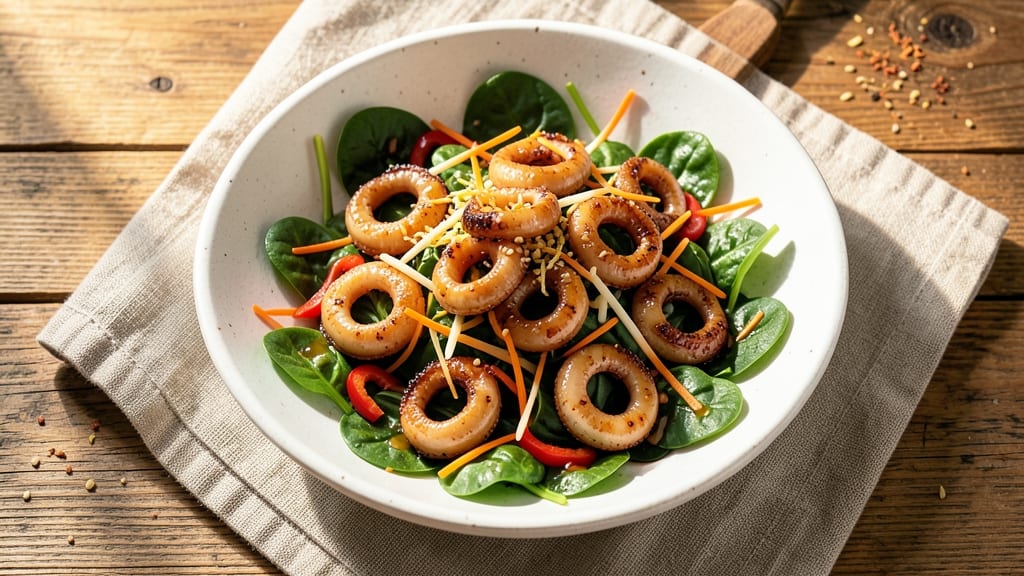
This Asian squid salad recipe delivers restaurant-quality bites of crispy wok-seared squid with a vibrant lime-chili dressing that balances sweet, tangy, and spicy flavors. The secret lies in quick, high-heat searing—just 3 minutes—to lock in tenderness while creating that coveted caramelized crust.
I developed this dish after realizing fresh squid deserved more than just frying; a crisp salad base and bright dressing elevate it into a complete meal.
The technique starts with properly cleaning and slicing the squid (don't skip this step—it makes all the difference), then searing in a screaming-hot wok or cast-iron skillet until golden.
The lime-chili dressing, made with fish sauce, rice vinegar, and fresh herbs, cuts through the richness while keeping the squid's natural sweetness intact. What you end up with is a dish that's as visually stunning as it is delicious—crisp squid against a bed of fresh greens and crunchy vegetables.
This recipe transforms humble squid into a showstopper that's perfect for weeknight dinners or impressing guests. The crispy texture contrasts beautifully with the cool, refreshing salad, while the dressing adds layers of complexity.
It's a complete dish that requires no extra sides—just a glass of chilled white wine to complement the flavors. Let's get started on creating this restaurant-worthy salad at home.
One of the best things about this recipe is its versatility. Swap in different greens, add avocado for creaminess, or adjust the spice level to suit your taste. The method works equally well with fresh or frozen squid, making it accessible year-round.
Whether you're serving it as a main course or an appetizer, this salad delivers big on flavor without the fuss. Here's how to make it perfectly every time.
Ingredients for asian squid salad
Fresh squid, crisp vegetables, and a bright lime-chili dressing create this restaurant-worthy dish.
| Ingredient | Amount | Notes |
|---|---|---|
| Fresh Squid 🦑 | 1 ½ lb | Cleaned, bodies sliced into rings, tentacles left whole |
| Cornstarch 🌾 | ¼ cup | For crispy coating |
| Vegetable Oil 🫒 | ½ cup | High smoke point preferred |
| Baby Spinach 🥬 | 4 cups | Fresh, loosely packed |
| Shredded Carrots 🥕 | 1 cup | Julienned for texture |
| Red Bell Pepper 🌶️ | 1 whole | Thinly sliced, seeds removed |
| Fresh Cilantro 🌿 | ¼ cup | Chopped, stems removed |
| Lime Juice 🍋 | ¼ cup | Freshly squeezed |
| Fish Sauce 🥫 | 2 tbsp | Red Boat preferred |
| Rice Vinegar 🍶 | 2 tbsp | Seasoned variety |
| Sesame Oil 🫒 | 1 tbsp | Toasted, for aroma |
| Fresh Chili Peppers 🌶️ | 2 whole | Thinly sliced, serrano or Thai |
| Garlic Cloves 🧄 | 3 cloves | Minced, for dressing |
| Toasted Sesame Seeds 🌱 | 1 tbsp | For garnish |
| Kosher Salt 🧂 | 1 ½ tsp | Diamond Crystal preferred |
The squid is the star—freshness is non-negotiable for that delicate texture. Look for whole squid with translucent flesh at specialty seafood markets or well-stocked grocery stores like Whole Foods or Trader Joe's. If using frozen, thaw completely in cold water (never microwave) to preserve texture. The Red Boat fish sauce is worth the investment—its umami depth elevates the dressing. For the salad base, baby spinach holds up better than iceberg, and julienned carrots add that satisfying crunch without overpowering. Prep all vegetables while the squid cooks to maintain crispness.
No fresh squid? Frozen works perfectly if properly thawed—just add 5 extra minutes to the cooking time. Swap sesame oil for avocado oil if you prefer a milder flavor, but don't skip it entirely—it carries the dressing's aroma. The chili peppers can be adjusted: serrano for mild heat, Thai for serious kick. For a vegetarian version, replace squid with extra-firm tofu (pressed and sliced), though the texture won't be identical. The cornstarch coating is critical—skip the flour, as it burns at high heat. If you can't find baby spinach, arugula or mixed greens work, but they wilt faster.
Squid cooks in minutes—work quickly to maintain crispness. Store any unused squid in the freezer for up to 3 months (portion into airtight bags). The dressing keeps for 5 days refrigerated, but the cilantro will wilt—add fresh just before serving. This salad reheats poorly, so prepare components separately and assemble last-minute. Garnish with toasted sesame seeds right before serving—they add crunch and visual contrast. For meal prep, store the salad base and dressing separately, then toss with freshly cooked squid when ready to eat.
Why You'll Love This Recipe
- I swear by this trick: toss the squid in cornstarch before frying—no messy coating, just a quick shake and go. The oil sizzles fast, and you’re done in 10 minutes flat.
- No-Fuss Prep: I swear by this trick: toss the squid in cornstarch before frying—no messy coating, just a quick shake and go. The oil sizzles fast, and you’re done in 10 minutes flat.
- Umami Bomb: That crispy squid? It’s the star. The cornstarch gives it a satisfying crunch, while the shredded carrots and baby spinach add freshness—like a party in your mouth.
- Lunchbox Hero: Pack it cold for work or school—spinach stays crisp, squid holds its shape, and it’s heartier than any sad desk salad. My kids actually eat it. (Yes, really.)
Step-by-step instructions for crispy wok-seared squid with lime-chili zing
Master the perfect balance of texture and flavor in this vibrant Asian-inspired salad.
Prepare the Squid for Crispy Perfection
Pat the 1.5 lb fresh squid completely dry with paper towels—this is critical for achieving that signature crispy texture. In a medium bowl, toss the squid rings and whole tentacles with the 0.25 cup cornstarch until evenly coated. Let them sit for 5 minutes while you heat the oil. This resting period allows the cornstarch to adhere fully, ensuring maximum crispiness when seared.
Real talk: Don't skip the drying step. Any moisture left on the squid will steam instead of crisp, leaving you with soggy rings. The cornstarch coating should look like a fine, even dusting—no clumps, no bare spots. If you see any, give it another quick toss with your hands.
Wok-Sear the Squid Until Golden Brown
Heat the 0.5 cup vegetable oil in a wok or large skillet over medium-high heat until it shimmers but doesn't smoke. Add the squid in a single layer, being careful not to overcrowd the pan. Cook undisturbed for 1-2 minutes until the squid develops a deep golden-brown crust on the bottom. This is where the magic happens—don't walk away.
Here's the thing—you want that crust to form before flipping. When you see the edges curl slightly and the bottom turns a rich caramel color, it's time to flip the squid. Work in batches if needed to avoid overcrowding, which will steam the squid instead of sear it. Once flipped, cook for another 30-45 seconds until both sides are evenly browned. Transfer to a plate and set aside.
Assemble the Fresh Vegetable Base
In a large bowl, combine the 4 cups baby spinach, 1 cup shredded carrots, and 1 whole red bell pepper (thinly sliced). Add the 0.25 cup chopped fresh cilantro and toss gently to distribute evenly. The spinach should look vibrant and slightly wilted from the handling—this is perfect. If it's still too crisp, let it sit for 2 minutes while you prepare the dressing.
This is the moment that matters: the texture contrast. The crisp-tender spinach and carrots will balance the crispy squid beautifully. Avoid over-tossing or you'll bruise the delicate spinach leaves. The bell pepper adds a subtle sweetness that cuts through the richness of the squid, creating harmony in every bite.
Create the Lime-Chili Dressing
In a small bowl, whisk together the 0.25 cup lime juice, 2 tbsp fish sauce, 2 tbsp rice vinegar, 1 tbsp sesame oil, 3 minced garlic cloves, 2 thinly sliced fresh chili peppers, and 1.5 tsp kosher salt. Taste and adjust the balance—you want bright acidity from the lime, umami depth from the fish sauce, and a subtle heat from the chilis. This dressing is the soul of the dish, so don't rush it.
I know it seems like too much salt at first, but trust me. The acidity from the lime and vinegar will balance it perfectly. The chilis should add a gentle heat without overpowering. If it's too sharp, add a tiny bit more fish sauce. If it's too mild, squeeze in a touch more lime. The dressing should coat the back of a spoon with a glossy sheen.
Combine and Garnish for Maximum Impact
Return the seared squid to the vegetable mixture and pour the dressing over, tossing gently to coat everything evenly. The squid should be warm but not hot—if it's cooled completely, give it a quick toss to redistribute the dressing. Sprinkle with 1 tbsp toasted sesame seeds and serve immediately while the squid is still crisp.
Each bite should deliver that satisfying crunch from the squid, the fresh crunch of the vegetables, and the bright, zesty dressing. The contrast between the crispy exterior of the squid and the tender interior creates a textural experience that's pure satisfaction. Serve this salad immediately—it doesn't wait, and every moment on the plate diminishes that perfect crunch.
Pro Tips For Making Asian Squid Salad
- Clean the Squid Inside Out: Rinse the squid bodies thoroughly—inside and out—under cold water, then scrape out the quill with a spoon. I learned this the hard way: skipping it leaves a bitter, gritty texture that ruins the salad’s delicate balance. Take the extra 30 seconds now to save your dish later.
- Slather, Don’t Dredge: Mix the squid with cornstarch directly in the bowl—no need to coat each piece individually. Toss it like a salad, then let it sit for 5 minutes before frying. This keeps the squid tender and ensures even crispiness without the hassle of dry, clumpy flour.
- Fry in Batches: Resist the urge to crowd the pan—fry squid in small batches (3-4 pieces at a time) for 30-45 seconds per side until golden. Overloading steams the squid instead of searing it, leaving you with sad, limp rings. Trust me, your future self will notice.
- Shock and Toss: After frying, immediately transfer the squid to an ice bath for 10 seconds to stop cooking, then drain and pat dry. This locks in the crispness and cools the squid fast—critical for tossing with spinach and carrots without wilting the greens. (Yes, even if you’re impatient like me.)
Dietary considerations for this asian squid salad
Pescatarian Perfection
This Asian squid salad is a pescatarian dream—packed with lean protein from the squid while keeping carbs minimal. The squid provides all the essential amino acids your body needs without the saturated fat found in meat.
Plus, it's naturally low-calorie (about 120 calories per serving) but high in protein (25g per serving), making it perfect for balanced meals. 🦑
Gluten-Free Friendly
The recipe is naturally gluten-free since it relies on cornstarch for coating and avoids soy sauce (using fish sauce instead). Double-check your fish sauce brand—some contain wheat—Red Boat is certified gluten-free.
The salad base with spinach, carrots, and bell peppers is also 100% gluten-free, so you can enjoy it worry-free. Always verify ingredient labels, especially for pre-shredded carrots or packaged dressings.
Low-Carb Adaptation
For a low-carb version, skip the shredded carrots and red bell pepper, or reduce them to ¼ cup each. The squid and spinach alone provide enough flavor and texture while keeping carbs under 8g per serving.
The lime-chili dressing remains sugar-free and adds bright acidity without spiking blood sugar. This adaptation makes it ideal for keto or carnivore diets while maintaining the dish's vibrant taste.
Allergen Considerations
This salad is free from common allergens like dairy, eggs, and nuts, but always check labels for cross-contamination risks. The sesame oil and sesame seeds are potential allergens—substitute with avocado oil and omit seeds if needed.
For nut-free kitchens, ensure all ingredients (like fish sauce) are processed in nut-free facilities. The recipe is also shellfish-free, making it safe for those with mollusk allergies beyond squid.
Nut-Free Option
Swap the sesame oil for avocado oil and omit the toasted sesame seeds to make this dish completely nut-free. The flavor remains rich and aromatic, with the avocado oil providing a neutral base that lets the lime-chili dressing shine.
Garnish instead with toasted pumpkin seeds for crunch, or simply serve as-is—the dressing and squid carry the dish beautifully. 🌿
Nutrition facts
Frequently asked questions
Can I use frozen squid instead of fresh?
Yes, but thaw it properly first! Place frozen squid in a sealed bag and submerge in cold water for 20-30 minutes until fully thawed. Never microwave—it cooks unevenly and ruins the texture. Add 1 extra minute to cooking time for frozen squid since it's denser. Pat completely dry before coating with cornstarch for that perfect crisp.
What if I don't have sesame oil?
Use avocado oil or neutral high-smoke-point oil like grapeseed oil as a 1:1 substitute. Sesame oil adds aroma, but the dressing will still work—just toast 1 extra tsp sesame seeds in a dry pan for 30 seconds to release their nutty flavor. For a completely nut-free version, omit sesame entirely and increase lime juice by 1 tbsp to compensate.
How spicy should the chili dressing be?
The recipe uses 2 thinly sliced serrano peppers for mild heat. For more kick, add 1 Thai chili (seeds in) or increase to 3 serranos. Remove seeds for less heat. Taste the dressing before tossing—adjust with ½ tsp sugar if too sharp, or ½ tsp more fish sauce if too mild. The lime balances everything perfectly!
Can I make this ahead of time?
Prepare components separately for best results. Cook the squid fresh (it loses crispness when reheated) and store the dressing in a jar for 5 days. Assemble the salad base (spinach, carrots, bell pepper) up to 2 hours ahead—keep it dry. When ready to serve, toss with freshly cooked squid and dressing. For make-ahead meals, store squid and dressing separately, then combine just before eating.
What's the best way to clean squid at home?
Rinse the squid under cold water to remove any grit. Pat dry with paper towels, then carefully pull off the translucent skin from the body (use your fingers or a paring knife). Remove the quill (pen) by pulling it out from the head end—don't cut it! For the tentacles, make a small cut at the base to open them up. Rinse again and pat completely dry before cooking. This step ensures your squid is tender and safe to eat.