Salads
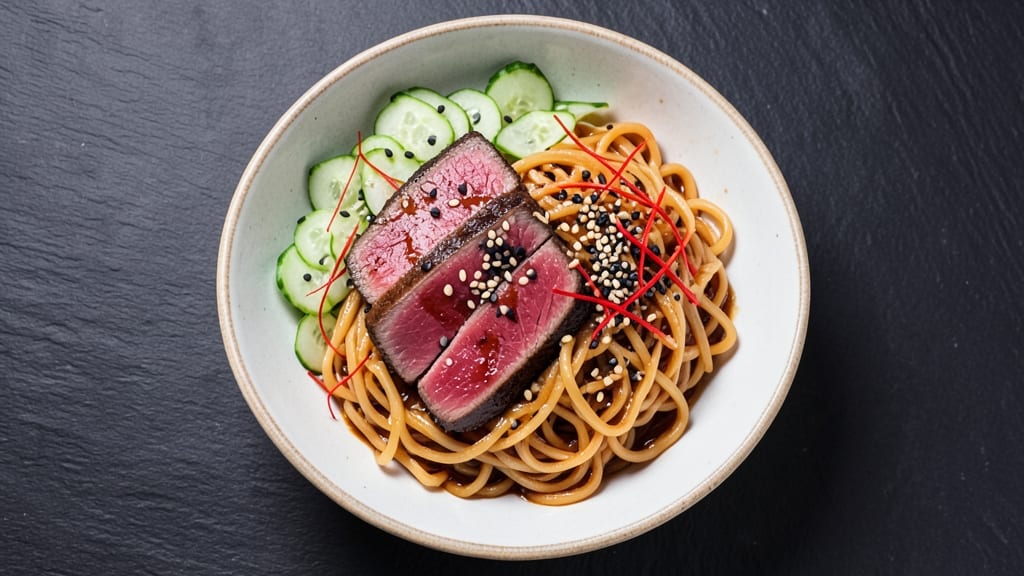
This Asian tuna steak salad delivers restaurant-quality flavors at home with perfectly seared sushi-grade tuna over crispy rice noodles. The secret lies in high-heat searing for that signature crispy exterior while keeping the interior tender, paired with a tangy sesame-soy dressing that ties everything together.
I developed this recipe after craving the bold umami and freshness of Asian-inspired dishes without the fuss of traditional sushi preparation.
The foundation starts with crispy rice noodles that provide the perfect textural contrast to the rich tuna, while fresh greens and crunchy vegetables add brightness. A quick searing technique ensures the tuna stays juicy and flavorful, while the dressing—balancing sesame, soy, and a touch of spice—elevates every bite.
What makes this dish stand out is how effortlessly it combines protein, texture, and bold flavors in one cohesive salad.
By the time you assemble this dish, you’ll have a visually stunning plate featuring crispy noodles, perfectly seared tuna, and vibrant toppings—all held together by a dressing that enhances rather than overpowers.
The result is a meal that’s as impressive as it is delicious, perfect for a light yet satisfying lunch or dinner. Whether you’re serving it as a main course or a showstopping appetizer, this salad delivers on both flavor and presentation.
Pair it with steamed edamame or a side of rice for a complete meal, or keep it as-is for a refreshing, protein-packed dish. The beauty of this recipe is its versatility—adjust the dressing to your taste or swap in your favorite vegetables without compromising the dish’s integrity.
Let’s get started on creating this standout salad!
Ingredients for asian tuna steak salad
Crispy rice noodles, perfectly seared tuna, and vibrant toppings—this salad delivers restaurant-quality flavors at home.
| Ingredient | Amount | Notes |
|---|---|---|
| Sushi-Grade Tuna Steak 🐟 | 1 lb | Thinly sliced (1/4-inch), sushi-grade |
| Rice Noodles 🍜 | 8 oz | Thin vermicelli, uncooked |
| Sesame Oil 🫒 | 2 tbsp | Toasted, for crispy texture |
| Soy Sauce 🥢 | 3 tbsp | Low-sodium preferred |
| Rice Vinegar 🍶 | 2 tbsp | Seasoned, for tangy balance |
| Sesame Seeds 🌾 | 1 tbsp | Toasted, for garnish |
| Sesame Paste 🥜 | 1 tbsp | For dressing thickness |
| Honey 🍯 | 1 tbsp | For subtle sweetness |
| Red Bell Pepper 🌶️ | 1 whole | Thinly sliced, for crunch |
| Cucumber 🥒 | 1 medium | Seedless, julienned |
| Green Onions 🧅 | 3 whole | Thinly sliced, for freshness |
| Avocado 🥑 | 1 medium | Ripe, sliced for creaminess |
| Vegetable Oil 🫒 | 2 tbsp | High smoke point for searing |
| Lime 🍋 | 1 whole | Juiced, for brightness |
| Salt 🧂 | ½ tsp | Kosher, for seasoning |
The tuna is non-negotiable here. Sushi-grade is a must—ask your fishmonger for the freshest cut, ideally vacuum-sealed and labeled. Whole Foods or high-end grocery stores like H-Mart carry excellent options, or order online for same-day delivery. For the rice noodles, Vietnamese or Thai brands like Sen Mee or Mai Cuong are ideal—they crisp up beautifully. If you can't find them, rice vermicelli works in a pinch, but soak it 10 minutes longer. The key is achieving that signature crispy texture, so don't skip the sesame oil tossing step—it's what makes these noodles shine.
No sesame paste? Mix 1 tbsp tahini with 1 tsp water for a close substitute. Short on honey? Maple syrup works too, though it has a more pronounced flavor. The red bell pepper can be swapped for shredded carrots or jicama if you're avoiding nightshades. For extra umami, add a dash of fish sauce to the dressing—just a teaspoon goes a long way. The avocado should be ripe but firm; if it's too soft, chill it 20 minutes before slicing to prevent browning. And if you can't find sushi-grade tuna, high-quality ahi tuna from the seafood counter works too—just sear it immediately after purchasing.
Prep the dressing first—it keeps for 5 days in the fridge, so make extra for another salad. The noodles crisp best when tossed hot with sesame oil, so have a large bowl ready. Store any leftover tuna in an airtight container with a thin layer of lime juice to prevent oxidation. The salad itself holds up for 2 days in the fridge, though the avocado will soften—add it fresh when serving. For a make-ahead option, assemble everything except the avocado, store separately, and toss just before eating.
Why You'll Love This Recipe
- The contrast is next-level: tender, buttery tuna steak with that crispy sear, cool rice noodles, and a dressing that’s salty, tangy, and nutty all at once. Between us, the soy-sesame glaze on the tuna alone makes it worth it—no fancy plating needed.
- No-Fuss Freshness: I swear by this when I’m too tired to chop much—just sear the tuna steak rare (30 seconds per side) while the noodles soak in warm water. The rice vinegar and sesame oil dressing comes together in a bowl while you wait, and honestly? That’s the whole effort.
- Umami Bomb: The contrast is next-level: tender, buttery tuna steak with that crispy sear, cool rice noodles, and a dressing that’s salty, tangy, and nutty all at once. Between us, the soy-sesame glaze on the tuna alone makes it worth it—no fancy plating needed.
- Lunchbox Hero: Pack it cold for work or school—it holds up better than you’d think. I’ve sent this in a bento box with cucumber slices, and my kids (yes, even the picky one) devour it by noon. The noodles stay chewy, the tuna stays juicy, and no one complains about soggy salads.
Step-by-step instructions for seared sushi-grade tuna over crispy rice noodles
Here's how to create a restaurant-worthy Asian-inspired salad with perfectly seared tuna and crisp-tender noodles.
Prepare the Crispy Rice Noodles
Bring a pot of water to a rolling boil and add the 8 oz rice noodles. Cook for exactly 4 minutes—they'll look slightly underdone but will crisp up beautifully when tossed with oil. Drain immediately and rinse under cold water for 10 seconds to stop the cooking process and remove excess starch.
Transfer the noodles to a large bowl and toss with 2 tbsp vegetable oil and 0.5 tsp salt. Spread them out on a baking sheet in a single layer and let them air-dry for 5 minutes at room temperature. This step creates that signature crispy texture that makes this salad special. Don't skip it—this is what gives the noodles their satisfying crunch.
Create the Flavorful Dressing
In a small bowl, whisk together the 3 tbsp soy sauce, 2 tbsp rice vinegar, 1 tbsp sesame paste, and 1 tbsp honey until completely smooth. The sesame paste will thicken the mixture slightly, creating a perfect coating for the noodles and tuna. Taste and adjust seasoning—you might want to add a pinch more salt or a touch of honey depending on your preference.
In a separate small bowl, mix the 2 tbsp toasted sesame oil with the juice of the 1 whole lime. This bright citrus note cuts through the richness of the tuna and complements the umami flavors perfectly. Keep both dressings separate until you're ready to combine them—the sesame oil is delicate and can become overpowering if mixed too early.
Sear the Tuna to Perfection
Heat a clean skillet over high heat until it's screaming hot. Add the 1 lb sushi-grade tuna steak (sliced into ¼-inch thick pieces) and let it sear undisturbed for 30-45 seconds per side. You're looking for a beautiful medium-rare center with crispy edges—this is where the magic happens. Don't overcrowd the pan or the tuna will steam instead of sear.
Once the tuna is cooked to your liking, remove it from the pan and let it rest for 2-3 minutes before serving. This brief resting period allows the juices to redistribute, ensuring each bite is moist and flavorful. The tuna should be warm throughout but still have a slight pink center—this is the ideal doneness for sushi-grade fish.
Assemble the Salad
In a large serving bowl, combine the crispy rice noodles with the prepared dressing. Toss gently but thoroughly to coat each strand evenly. The noodles should look glossy and well-coated with the sauce. Add the thinly sliced red bell pepper, julienned cucumber, thinly sliced green onions, and sliced avocado to the bowl and mix lightly—just enough to combine without mashing the avocado.
Divide the dressed noodles and vegetables among 4 plates, creating a base for the tuna. Arrange the seared tuna steak pieces artfully on top of the noodles, fanning them out slightly for visual appeal. Drizzle with any remaining dressing from the bowl and sprinkle generously with 1 tbsp toasted sesame seeds for both texture and flavor. Serve immediately while everything is at its peak texture and temperature.
Final Touches and Serving
Garnish each serving with an additional squeeze of lime juice and a final sprinkle of sesame seeds. The acidity from the lime will brighten the flavors and cut through any richness from the tuna. I like to serve this salad immediately while the noodles are still crisp and the tuna is perfectly warm—this dish doesn't wait well.
For an extra touch, you can lightly toast the sesame seeds in a dry skillet for 30 seconds before sprinkling them on top. This adds an extra layer of nutty aroma that complements the entire dish beautifully. Pair with a cold Asian lager or a crisp white wine to complete the meal experience.
Pro Tips For Making Asian Tuna Steak Salad
- SEAR THE TUNA FAST: Hit that tuna steak with a screaming-hot pan—just 30 seconds per side max, or it’ll turn into rubber. I learned this the hard way after a 2-minute sear left me with dry, sad fish. Keep the heat high and the contact brief, then let it rest before slicing.
- SOAK NOODLES JUST UNTIL AL DENTE: Rice noodles turn to mush fast—soak them in warm water for 5-6 minutes max, then drain and rinse with cold water. Over-soaking is the fastest way to ruin the texture, and nobody wants sad, gummy noodles in their salad.
- USE SESAME OIL LAST: Add that fragrant sesame oil right before serving, not while cooking. It burns easily and loses its nutty aroma if heated. A few drops at the end keep the flavor bright and make the whole dish smell like a street food stall.
- SLICE TUNA AGAINST THE GRAIN: Cut the tuna steak thinly, but go perpendicular to the muscle fibers for cleaner bites. Thick slices hide the texture, and thin ones make every mouthful pop. A sharp knife and steady hand are your best tools here—no rushing.
Essential equipment for this recipe
Pan Essentials
For searing the tuna, a carbon steel skillet like the Mauviel M'Cook is my go-to—it heats up fast and retains heat beautifully. If you don’t have one, a heavy stainless steel pan (like All-Clad) works too.
The key is getting it screaming hot—I crank my burner to high heat and let it sit for 2-3 minutes before adding the tuna. A fish spatula (like OXO Good Grips) helps flip the delicate slices without tearing them. 🔥
Noodle Prep Tools
Crispy rice noodles require a baking sheet (preferably half-sheet pans) for drying, and a large mixing bowl (I use Le Creuset stoneware) to toss them with oil. A fine-mesh strainer (like OXO Good Grips) speeds up draining, and a wooden spoon prevents sticking when tossing.
For extra crispiness, I use a wire cooling rack to prop up the noodles while they air-dry—this prevents sogginess. ⚡
Dressing Prep
Whisking the dressing requires a small mixing bowl (I love Vitamix’s stainless steel bowls) and a silicon whisk (like OXO’s) for smooth, lump-free results. Measure ingredients with a scale (for sesame paste) and liquid measuring cup (for vinegar and lime juice).
A microplane (like Mikado) is perfect for zesting lime if you want extra brightness. Keep dressings separate until combining—the sesame oil is delicate! 💫
Serving Presentation
Plating this salad requires 4 shallow bowls or plates (I use Corelle stoneware) to showcase the layers. A small offset spatula helps arrange the tuna artfully, and tweezers (for sesame seeds) add precision.
For garnish, a lime zester (like Barbour) adds elegant curls, and a small bowl keeps extra dressing handy. Serve with chilled Asian lager (like Sapporo) or dry Riesling—both complement the dish perfectly. ✨
Nutrition facts
Frequently asked questions
Can I use regular tuna instead of sushi-grade for this salad?
For safety reasons, stick with sushi-grade tuna—it's been frozen to kill parasites and is safe to eat raw or lightly seared. If you must use regular canned tuna, cook it thoroughly until it reaches 145°F internally, but the texture and flavor won't be as premium. The dish relies on that signature medium-rare sear, so sushi-grade is ideal.
How do I make the rice noodles extra crispy?
After draining, rinse the noodles with ice water for 10 seconds to stop cooking, then toss them with 2 tbsp vegetable oil and spread them in a single layer on a baking sheet. Let them air-dry for 10-15 minutes (not just 5) at room temperature. For even more crunch, use a wire cooling rack to prop them up while drying. The longer they dry, the crispier they'll be!
What if I don’t have sesame paste for the dressing?
No problem! Mix 1 tbsp tahini with 1 tsp water to mimic sesame paste's thickness. For extra richness, add ½ tsp soy sauce to the tahini mixture. Alternatively, blend 1 tbsp toasted sesame seeds with 1 tsp water for a coarser texture. The dish will still taste delicious—just slightly less refined.
Can I prepare this salad ahead of time?
Assemble everything except the avocado and tuna up to 2 days ahead, storing components separately in airtight containers. Keep the tuna in a sealed container with a thin layer of lime juice to prevent oxidation. When ready to serve, sear the tuna fresh and add the avocado last minute. The noodles will soften slightly but still hold their texture. For best results, serve within 4 hours of final assembly.
What’s the best way to store leftover tuna?
Wrap seared tuna tightly in plastic wrap, then place it in a freezer bag with lime juice to preserve freshness. It’ll keep in the fridge for 1 day or in the freezer for 3 months. Thaw overnight in the fridge—never at room temperature. For reheating, warm gently in a skillet over low heat for 10 seconds per side to maintain texture.