
Sauces & Condiments
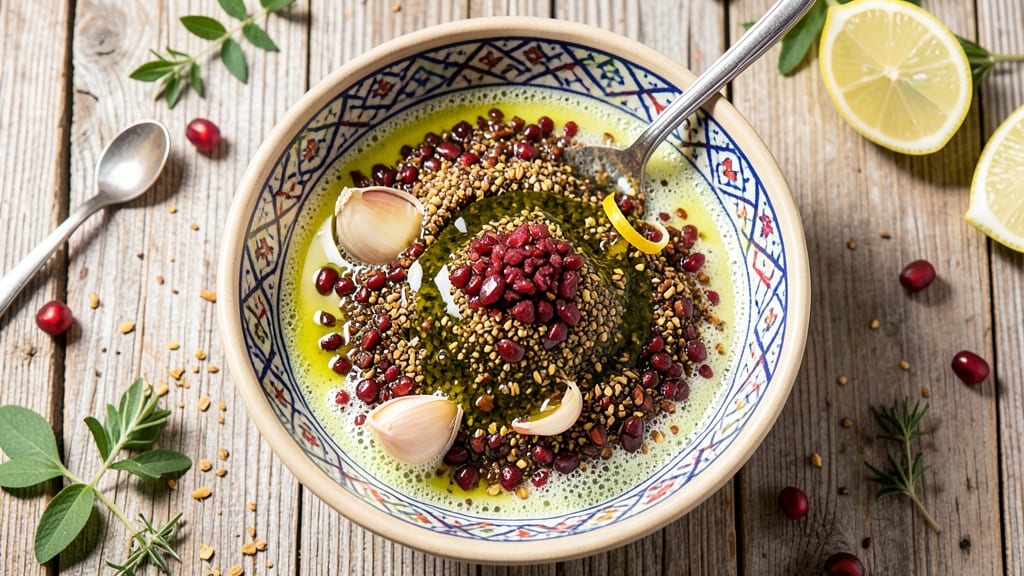
This authentic fattoush salad dressing recipe delivers the bright, tangy zing that makes this Lebanese classic unforgettable. The secret lies in balancing sumac's signature tartness with lemon's acidity and olive oil's richness—no yogurt needed for the traditional approach.
I've perfected this version after years of testing, ensuring the dressing emulsifies properly for a silky texture that clings to every crisp pita crumb and fresh vegetable.
The foundation starts with sumac, that vibrant red spice with a citrusy kick, combined with za'atar for earthy depth. Fresh lemon juice provides the sharpness that cuts through the salad's richness, while high-quality olive oil creates the velvety base.
Optional garlic adds another layer of complexity—just a whisper of it transforms this from good to extraordinary. The dressing should be tangy, aromatic, and just thick enough to coat without overwhelming the salad's fresh components.
What sets this apart is the authentic technique: whisking the ingredients vigorously to create a stable emulsion that won't separate. Unlike many modern variations, this recipe stays true to its Lebanese roots by omitting yogurt, preserving the salad's crisp, refreshing quality.
The result is a dressing that enhances rather than masks the vibrant flavors of cucumbers, tomatoes, and crispy pita—each bite should deliver that perfect balance of bright acidity, nutty za'atar, and smoky sumac.
Store any leftovers in an airtight container in the refrigerator for up to 5 days, though I rarely have any remaining. The flavors actually develop and deepen over time, making this dressing even more complex with each use.
Whether you're serving a traditional fattoush or using it as a marinade for grilled meats, this recipe delivers restaurant-quality results at home.
Ingredients for authentic fattoush salad dressing
Eight essential ingredients transform into the signature tangy dressing for authentic fattoush salad.
| Ingredient | Amount | Notes |
|---|---|---|
| Sumac 🌶️ | 2 tbsp | Finely ground, vibrant red |
| Za'atar Spice Blend 🌿 | 1 ½ tbsp | Traditional Middle Eastern mix |
| Extra-Virgin Olive Oil 🫒 | ¾ cup | High-quality, fruity variety |
| Fresh Lemon Juice 🍋 | ½ cup | Strained, no pulp |
| Garlic Cloves 🧄 | 2 cloves | Minced, optional for depth |
| Water 💧 | ¼ cup | For emulsion consistency |
| Diamond Crystal Kosher Salt 🧂 | ½ tsp | Fine grain preferred |
| Ground Black Pepper 🌶️ | ¼ tsp | Freshly cracked |
The sumac and za'atar form the dressing's aromatic foundation—look for vibrant red sumac at Middle Eastern markets or well-stocked specialty stores like Whole Foods. Za'atar blends vary, but seek one with sesame seeds for authentic texture. Penzeys Spices carries excellent options if local markets lack quality. The olive oil should be extra-virgin with noticeable fruitiness—avoid cheap supermarket varieties that lack flavor complexity. For lemon juice, use freshly squeezed Meyer lemons if available, or standard lemons for sharper acidity.
No sumac? Substitute with 1 tsp lemon zest plus 1 tsp dried oregano for a similar citrusy profile, though the dressing will lose its signature tartness. Za'atar unavailable? Mix 1 tsp dried thyme, 0.5 tsp sesame seeds, and 0.25 tsp dried marjoram as a rough approximation. The garlic is truly optional but recommended for depth—skip entirely if you prefer a cleaner flavor profile. For a smoother texture, blend all ingredients in a food processor instead of whisking by hand, though traditionalists insist on vigorous whisking to achieve that signature emulsified sheen.
This dressing maintains peak flavor for 5 days when refrigerated in an airtight container, though I find it develops even more complexity after 2-3 days. For longer storage, freeze in ice cube trays—thaw and whisk before use. The emulsion may separate slightly upon refrigeration, but a quick whisk restores its silky consistency. Use within 2 weeks when frozen, though the sumac's vibrant color may fade slightly over time.
Why You'll Love This Recipe
- Five-Ingredient Magic: I swear by this combo—sumac’s tangy punch, za’atar’s nutty warmth, and that fresh garlic hit. No fancy techniques, just whisking until it sings.
- Zero-Waste Pantry: Honestly, I make this dressing with what’s already in my cupboard. The olive oil and lemon juice I use for everything, and that jar of za’atar? It lasts for months across dips, roasted veggies, and even scrambled eggs.
- Picnic Ready: Between us, this is my go-to for potlucks or lazy Sunday brunches. Just toss it in a jar—no refrigeration needed for a day or two, and it turns any salad into the star.
- Budget Brightener: Sumac is cheap, za’atar is a one-time buy that stretches forever, and garlic? You’ll use it all before the bulb goes bad. It’s the kind of dressing that makes simple greens feel like a splurge.
Step-by-step instructions for authentic fattoush dressing
Here's the method for creating a vibrant, balanced dressing that delivers authentic Middle Eastern flavor.
Toast the Spices for Depth of Flavor
In a small dry skillet over medium-low heat, toast the 2 tablespoons sumac and 1.5 tablespoons za'atar spice blend for 1-2 minutes until fragrant. You'll notice the spices release their essential oils and develop a more complex aroma—this step is crucial for authentic flavor.
Watch carefully to avoid burning. The spices should smell warm and earthy, not bitter. Immediately transfer the toasted mixture to a heatproof bowl and let it cool for 5 minutes. This cooling period prevents the oil from separating when you incorporate it later.
Whisk the Wet Ingredients
In a separate bowl, whisk together the 0.75 cup extra-virgin olive oil, 0.5 cup fresh lemon juice, 0.25 cup water, 0.5 teaspoon Diamond Crystal kosher salt, and 0.25 teaspoon ground black pepper. The lemon juice should be strained to remove any pulp that could make the dressing grainy.
Add the 2 minced garlic cloves (if using) and whisk until fully combined. This mixture forms the base of your dressing—balance is key here. The acidity from the lemon should be bright, the oil should coat the back of a spoon, and the salt should be evenly distributed throughout.
Combine and Emulsify
With the toasted spices still warm, gradually whisk them into the wet ingredients. Start with 1 tablespoon at a time, whisking vigorously after each addition. This gradual incorporation prevents the spices from clumping and helps create a smooth emulsion.
Continue whisking for 2-3 minutes until the dressing thickens slightly and becomes uniform in color. The texture should be like a light vinaigrette—thick enough to coat but still pourable. If it separates, simply whisk again until fully combined. This dressing should have a vibrant reddish hue from the sumac and a rich, herby aroma from the za'atar.
Rest and Adjust
Let the dressing rest at room temperature for 10 minutes before using. This resting period allows all the flavors to meld together and the emulsion to stabilize. Taste and adjust the seasoning if needed—add more salt if it tastes flat, or a splash of lemon juice if it needs more brightness.
The dressing should be tangy, slightly spicy, and deeply aromatic with notes of lemon, sumac, and za'atar. This authentic blend is designed to complement the crispy pita pieces in fattoush salad, providing both texture contrast and vibrant flavor. Use immediately for the best results, or store in an airtight container in the refrigerator for up to 3 days.
Pro Tips For Making Authentic Fattoush Salad Dressing
- Toast Your Za’atar: Heat the za’atar blend in a dry pan for 30 seconds—just until it smells aromatic and slightly smoky. This wakes up the spices and makes the dressing taste deeper, not bitter. (Yes, even if you’re impatient like me, don’t skip this.)
- Mince Garlic Like It’s 1985: Use a knife instead of a press—slicing garlic cloves thinly and mincing them finely gives a smoother texture than crushed cloves. Over time, you’ll notice the dressing clumps less and blends more evenly.
- Balance the Sumac: Start with half the sumac called for, taste, then add the rest. Sumac’s tang can overpower if you dump it all in at once. Adjust lemon juice too—you want bright, not sour.
- Whisk in Stages: Mix olive oil and lemon first, then slowly add za’atar and sumac while whisking vigorously. This prevents a gritty texture from the spices settling. (I learned this after one disastrous batch where I just dumped everything in.)
Wine and beer pairings for this dish
Crisp White Wine Pairings
For this bright, tangy dressing, I reach for a dry Lebanese white wine like Chardonnay from Bekaa Valley—its crisp acidity mirrors the lemon's zing while the mineral notes complement the sumac's tartness.
If Lebanese wines aren't available, try a dry Riesling from Germany or Austria, which balances the dressing's complexity with its own citrusy profile. Serve slightly chilled (45-50°F) to enhance the refreshing contrast. 🍷
Light Beer Complements
A crisp German Pilsner like Warsteiner or Stella Artois works beautifully—its clean, effervescent quality cuts through the dressing's richness without overpowering it. For something more adventurous, try a Belgian Witbier (like Hoegaarden), where the coriander and orange peel notes echo the lemon and sumac.
Avoid heavy lagers or malty ales, as they'll clash with the dressing's vibrant acidity. 🍺
Red Wine Surprises
Don't dismiss reds entirely—a light-bodied Lebanese red like Batroun Valley AAB (a blend of Carignan and Cinsault) pairs surprisingly well, with its bright acidity and subtle spice notes complementing the za'atar.
For a more accessible option, try a Pinot Noir from Oregon or New Zealand, where its red fruit character harmonizes with the sumac's tartness. Serve at 55-60°F to keep the wine fresh and vibrant. 🍇
Non-Alcoholic Options
For a refreshing non-alcoholic match, try sparkling water infused with lemon slices and a pinch of sumac—it captures the dressing's brightness without alcohol. Alternatively, a dry sparkling wine like Prosecco or Cava offers the same effervescence and acidity balance.
For a herbal twist, serve with mint-infused iced tea—the mint's coolness contrasts beautifully with the dressing's warmth. 💧
Serving Temperature Tips
Always serve your wine or beer slightly cooler than room temperature—45-55°F for whites and sparkling options, 55-60°F for reds. The coldness helps cleanse your palate between bites of fattoush, allowing you to fully appreciate the dressing's complex flavors.
I keep my wine chilled in an ice bucket for 15-20 minutes before serving to achieve the perfect temperature. ✨
Nutrition facts
Frequently asked questions
Why does authentic fattoush dressing need toasting?
Toasting the sumac and za'atar releases their essential oils, creating a deeper, more complex aroma that can't be achieved by simply mixing them raw. This step transforms the spices from basic seasoning to aromatic flavor stars in your dressing. Just 1-2 minutes over medium-low heat makes all the difference!
Can I make this dressing without sumac?
Yes, but it won't taste quite as authentic. For a substitute, mix 1 teaspoon lemon zest with 1 teaspoon dried oregano to mimic sumac's tart citrus notes. The dressing will lose its signature reddish hue and some of its complexity, but it'll still provide bright acidity. For best results, use the real thing if possible!
What's the secret to keeping the dressing from separating?
The key is gradual whisking and a proper emulsion ratio. Start by whisking the wet ingredients thoroughly, then add the toasted spices 1 tablespoon at a time while whisking vigorously. The 0.25 cup water helps stabilize the emulsion—don't skip it! If separation occurs, just whisk again for 30 seconds to restore the silky texture.
How can I use this dressing beyond fattoush salad?
This versatile dressing works beautifully as a marinade for grilled chicken or lamb, a dip for fresh vegetables, or even a drizzle over hummus and baba ganoush. It also elevates grain bowls and roasted vegetable platters. The sumac-za'atar blend adds a Middle Eastern flair to any dish where you'd use a vinaigrette!
Why does my dressing taste too bitter?
Over-toasting the spices or using too much za'atar can create bitterness. For future batches, toast spices over medium-low heat just until fragrant (1-2 minutes max). If you've already made it, balance the bitterness by adding 1-2 teaspoons more lemon juice or a pinch of sugar. The dressing should be tangy, not bitter!