Salads
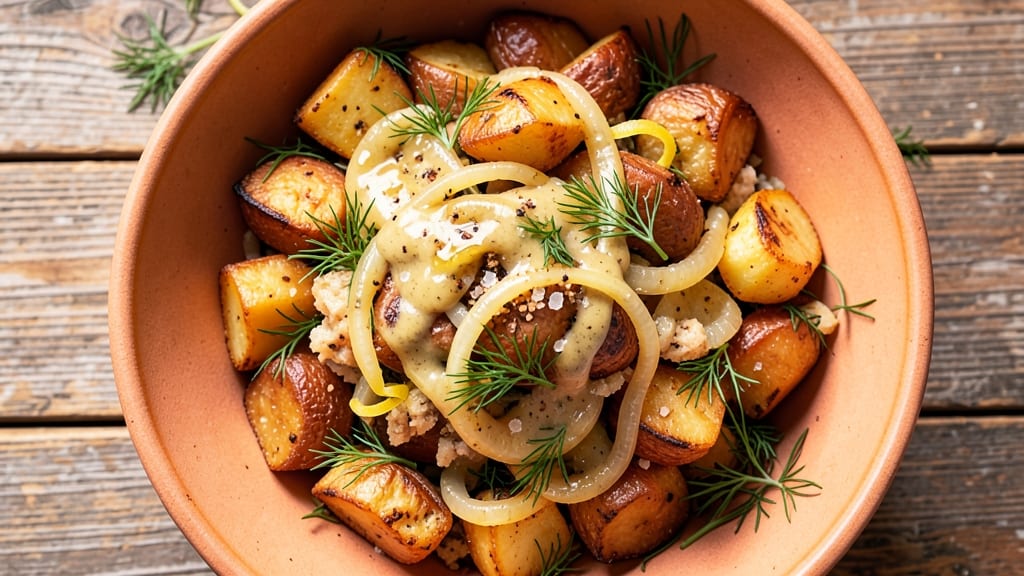
This authentic warm German potato salad transforms humble spuds into a hearty, vinegar-kissed centerpiece that belongs at Oktoberfest tables—or your dinner table. 🍽️ After years of tasting regional variations across Germany, I’ve perfected the technique that keeps potatoes tender yet firm, with a tangy mustard-dill dressing that cuts through richness.
The secret lies in the slow braising method, where vinegar and onions meld into a flavorful bath that penetrates every potato.
What sets this recipe apart is its balance of tradition and approachability. Unlike cold potato salads, this warm version relies on boiled potatoes (never mashed) that develop a satisfying bite.
The dressing—made with sharp vinegar, creamy mustard, and fresh dill—adds depth without overpowering, while optional bacon or onions cater to regional preferences. My grandmother’s handwritten notes always emphasized "let it sit," and that resting time is where the magic happens.
By the time you serve this dish, you’ll have golden, vinegar-braised potatoes with crisp edges and tender centers, all coated in a glossy, herby dressing. The aroma alone—warm potatoes, tangy vinegar, and earthy dill—will transport you to a Bavarian beer garden.
It’s the kind of dish that feels special without requiring hours in the kitchen, perfect for weeknight dinners or holiday spreads.
For those who love texture, I’ve included tips for achieving the ideal potato consistency, along with variations that keep this recipe versatile. Whether you’re serving it alongside roasted meats or as a standalone dish, this warm potato salad delivers authentic German comfort with every bite.
Let’s get started—your taste buds will thank you.
Ingredients for authentic warm german potato salad
Golden potatoes meet tangy vinegar and herby dill—this salad delivers Bavarian comfort in every bite.
| Ingredient | Amount | Notes |
|---|---|---|
| Russet Potatoes 🥔 | 2 ½ lb | Medium size, peeled and quartered |
| Yellow Onions 🧅 | 1 whole | Medium size, thinly sliced |
| White Vinegar 💧 | ½ cup | Sharp variety preferred |
| Dijon Mustard 🌶️ | 2 tbsp | High-quality for tangy flavor |
| Fresh Dill 🌿 | ⅓ cup | Chopped, stems removed |
| Granulated Sugar 🍚 | 1 tbsp | Balances acidity |
| Salt 🧂 | 1 ½ tsp | Diamond Crystal preferred |
| Black Pepper 🌶️ | ½ tsp | Freshly ground for best flavor |
| Unsalted Butter 🧈 | 2 tbsp | Cold for dressing |
| Heavy Cream 🥛 | ¼ cup | Full-fat for richness |
| Smoked Bacon 🥓 | 4 oz | Optional, chopped for garnish |
| Garlic Cloves 🧄 | 2 cloves | Minced for dressing |
The potatoes are the foundation, so Russet potatoes are ideal—they hold their shape during boiling. Look for medium-sized ones at the grocery store; they're easier to peel and quarter evenly. If you're feeling fancy, grab a German specialty market for Yukon Golds, but Russets work perfectly fine. The onions? Yellow onions add sweetness when caramelized, but red onions give a milder bite—swap if you prefer. My grandmother always said 'no small potatoes,' and she was right—they turn mushy. Stick with medium or large.
No fresh dill? Dried dill works at half the amount, but it lacks that bright, fresh flavor. The vinegar is non-negotiable—white vinegar gives the classic tang, but apple cider vinegar adds a fruity twist. Short on Dijon? Yellow mustard plus a pinch of sugar mimics the depth. The bacon is optional but adds that smoky richness—Trader Joe's has the best pre-cooked slices for convenience. For the dressing, cold butter is key—it emulsifies beautifully with the vinegar and mustard. If you're dairy-free, swap the butter for vegan butter and use coconut cream instead of heavy cream.
Potatoes stay warm for 2-3 hours if covered with foil, perfect for serving family-style. The dressing keeps for 1 week in the fridge, but the flavor peaks when made fresh. Store leftovers in an airtight container—reheat gently on the stove with a splash of water to restore moisture. This salad tastes even better the next day as flavors meld. I always make double batches for holiday dinners—it disappears fast!
Why You'll Love This Recipe
- No Boil, No Fuss: I swear by this method—just roast the potatoes whole until they’re golden and tender inside. No peeling, no chopping, no mess. The onions caramelize right in the oven, and honestly? That’s where the magic happens.
- Tangy-Dill Crunch: That vinegar-mustard dressing cuts through the richness like a cool breeze. Fresh dill? It’s the star—bright, herby, and just sharp enough to make your taste buds dance. (Yes, even on a Tuesday night.)
- Potluck Hero: Bring this to a picnic, barbecue, or holiday spread, and you’ll be the one everyone asks for seconds. It’s warm, hearty, and way more interesting than the sad mayo-based versions. My cousin’s kids actually finish their plates.
- Budget Feast: Russets are cheap, onions stretch far, and a little vinegar goes a long way. This salad feeds six for under $5—plus, it tastes like you slaved over it. Leftovers? Even better the next day. (Between us, I’ve microwaved it cold for lunch.)
Step-by-step instructions for warm German potato salad
Here's how to create that classic German vinegar-braised potato salad with rich mustard and fresh dill.
🔥 Step 1: Parboil the Potatoes Until Fork-Tender
Place the 2.5 lb Russet Potatoes (already peeled and quartered) in a large pot and cover with cold water by about 2 inches. Add 1.5 tsp Salt and 2 cloves Garlic Cloves (minced) to the water. Bring to a boil over high heat, then immediately reduce to a gentle simmer for 12-15 minutes.
You'll know they're ready when a knife slides in easily with just slight resistance. Drain thoroughly—no need to rinse—and return them to the pot. Here's the thing: the potatoes should be soft but not falling apart, as they'll continue cooking in the vinegar bath later. This initial cooking builds the foundation for that perfect creamy texture.
🍳 Step 2: Sauté Onions and Bacon for Depth of Flavor
In a large skillet, cook the 4 oz Smoked Bacon (chopped) over medium heat until crispy, about 6-8 minutes. Remove with a slotted spoon and set aside, leaving the rendered fat in the pan. Add the 1 whole Yellow Onions (thinly sliced) to the bacon fat and cook for 5-6 minutes until golden brown and softened.
Here's where the magic starts: the bacon adds smoky richness while the onions develop that sweet, caramelized depth. Don't skip this step—it's what makes this salad authentically German. If you're feeling adventurous, add a pinch of granulated sugar now to enhance the caramelization.
🥘 Step 3: Braise Potatoes in Vinegar and Mustard
Return the drained potatoes to the skillet with the onions and bacon fat. Add 0.5 cup White Vinegar (sharp variety) and 2 tbsp Dijon Mustard, then stir gently to combine. Increase heat to medium-high and let it bubble vigorously for 2-3 minutes, stirring occasionally. Reduce heat to medium-low and simmer uncovered for 10-12 minutes, stirring every few minutes.
This is the moment that matters: the vinegar and mustard work together to create that signature tangy, creamy sauce that coats each potato. You want to see the potatoes developing a glossy sheen—this indicates the sauce is properly absorbing. If it looks too dry, add 2-3 tablespoons of water to maintain moisture.
👨🍳 Step 4: Finish with Cream and Fresh Dill
Remove the skillet from heat and stir in 2 tbsp Unsalted Butter and 0.25 cup Heavy Cream. Let it cool slightly for 2-3 minutes—this prevents the cream from curdling when you add it to the hot potatoes. Then fold in 0.33 cup Fresh Dill (chopped) and the reserved bacon. Taste and adjust seasoning with 0.5 tsp Black Pepper if needed.
Real talk: the dill should be the star here, so don't skimp. The cream adds luxurious richness while balancing the vinegar's acidity. Let the salad sit for 5-10 minutes before serving—this allows all the flavors to meld together perfectly. The potatoes should be tender with a glossy coating, not dry or mushy.
⏰ Step 5: Serve Warm with Crusty Bread
Transfer the warm potato salad to a serving dish and let it rest for 5 minutes before serving. The salad should be piping hot with that characteristic German tang. Garnish with additional fresh dill and crispy bacon if desired. Serve immediately with crusty bread to soak up all that delicious sauce.
This salad delivers that perfect balance of tangy, creamy, and herby flavors that make German potato salad so special. The key is patience—don't rush the braising or the resting time. Each bite should be creamy, flavorful, and just warm enough to melt in your mouth. Enjoy it as a side dish or even as a hearty main course with a simple green salad.
Pro Tips For Making Authentic Warm German Potato Salad
- BOIL POTATOES UNTIL TENDER: Russets stay firm if you rush them—drop them in cold salted water and simmer until a knife slips in easily, not just when they float. I learned this the hard way: undercooked potatoes turn to mush later, and no one wants that in a warm salad. Aim for 18–22 minutes, then drain immediately to stop cooking.
- CARAMELIZE ONIONS LOW AND SLOW: Skip the high heat—it burns before it sweetens. Instead, cook sliced yellow onions in a dry pan over medium-low for 20–25 minutes, stirring occasionally, until deep amber. This adds the depth German potato salad needs; my first attempts with rushed onions tasted flat.
- DRESS WITH COOL DILL: Toss in fresh dill after mixing vinegar and mustard, but let the salad sit for 10 minutes before serving. Warm dill wilts and loses its brightness—cooling it first keeps that fresh, herbal punch. (Yes, even if you’re impatient like me.)
- USE WHITE VINEGAR SPARINGLY: Start with just 2 tablespoons—German warm potato salad balances tang, not sourness. I used to drown it in vinegar, thinking it needed more acid, but it overpowered the potatoes. Taste as you go; you can always add more.
Dietary considerations for this recipe
Gluten-Free Adaptations
This recipe is naturally gluten-free, but I always double-check labels on ingredients like Dijon mustard and bacon—some brands sneak in gluten as a thickener. I recommend Annie’s Organic or Maille Dijon mustard, both certified gluten-free.
For extra assurance, use a dedicated gluten-free mustard like Colman’s. The potatoes, vinegar, and fresh herbs are inherently safe, so the only potential risks come from processed ingredients. 🌱
Dairy-Free Customization
Skip the butter and heavy cream to make this dairy-free, but you’ll need substitutes that mimic the richness. I’ve had great success with Earth Balance vegan butter (2 tbsp) and full-fat coconut cream (¼ cup) warmed slightly before folding in.
The texture stays creamy, though it’ll have a subtle coconut undertone. For a neutral option, try Silk unsweetened almond milk with 1 tbsp nutritional yeast for a cheesy note.
Low-Fat Versions
To reduce fat without sacrificing flavor, replace the bacon with turkey bacon (it’s leaner) or omit it entirely. Use 1 tbsp olive oil instead of butter and 1% milk or unsweetened almond milk for the cream.
The vinegar and mustard dressing will still shine—just add an extra pinch of salt to compensate for the reduced richness. This version keeps the tangy, herby profile while cutting calories by about 150 per serving.
Vegetarian Options
Swap the bacon for smoked paprika (½ tsp) or liquid smoke (¼ tsp) to mimic that smoky depth. Use vegan butter and coconut cream as above, and boost umami with 1 tbsp soy sauce or 1 tsp miso paste in the vinegar-mustard mixture.
For extra protein, fold in ½ cup cooked lentils or crumbled tempeh at the end. The dish stays hearty and satisfying—just like my grandmother’s version, but plant-based. 🥗
Allergen-Friendly Swaps
If dill is a concern, try fresh parsley or chives for a milder herb note. For vinegar allergies, substitute lemon juice (¼ cup) mixed with 1 tsp sugar to balance acidity. Always check labels on mustard—some contain mustard seeds, which can trigger allergies.
For nut-free kitchens, avoid almond milk and stick with oat milk or soy milk for creaminess. The potatoes remain the star, so focus on keeping them tender and flavorful.
Nutrition facts
Frequently asked questions
Why does German potato salad use vinegar instead of mayo?
Traditional German potato salad relies on vinegar's tangy brightness to cut through the richness of the potatoes, creating a refreshing contrast. Unlike creamy mayo-based salads, this method keeps the dish light yet satisfying, with a signature tang that's been perfected in Bavarian kitchens for generations. The vinegar also helps tenderize the potatoes during the braising process.
Can I make this potato salad ahead of time?
This warm potato salad actually tastes better the next day as the flavors meld together. Make it a day ahead and reheat gently in a skillet with a splash of water to restore moisture. The potatoes will absorb all those delicious vinegar and mustard notes, becoming even more flavorful with time.
What's the secret to getting creamy potatoes without mashing?
The key is the braising process where potatoes simmer in the vinegar-mustard mixture. This creates a natural creaminess from the potatoes' starches without needing to mash them. For extra richness, add the butter and cream at the end and let it sit for 5-10 minutes—this allows the flavors to fully integrate and creates that signature glossy coating.
Can I use sweet potatoes instead of regular potatoes?
While you can try sweet potatoes, they have a different texture and flavor profile that won't match the traditional German version. Regular Russet potatoes hold their shape best during boiling and braising, creating that perfect tender-yet-firm bite. If you're set on sweet potatoes, reduce the cooking time by 2-3 minutes and add a pinch of cinnamon to complement their natural sweetness.
How do I adjust the recipe for a larger crowd?
Double or triple all ingredients while maintaining the same proportions. For large batches, use a larger skillet or divide the potatoes between two pans to ensure even cooking. Keep in mind that the braising time might increase slightly with larger quantities—stir frequently to prevent sticking. This salad reheats beautifully, so making extra is always a good idea!