Salads
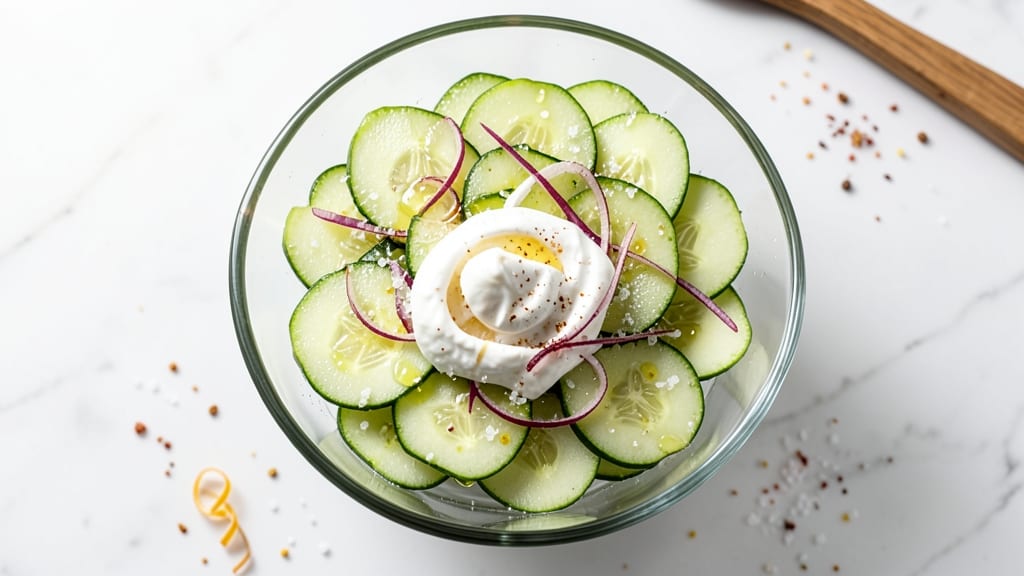
This bariatric cucumber salad recipe delivers refreshing crunch without the bloating or heavy feeling that often comes with traditional salads. The secret lies in carefully selected ingredients—hydrating cucumbers, lean protein, and digestion-friendly textures—that work together to create a satisfying yet gentle meal for sensitive stomachs.
Every bite is designed to be easy on digestion while still packed with flavor and nutrients.
What sets this salad apart is its focus on portion control and nutrient density. With just 5 simple ingredients and 15 minutes of prep time, you get a dish that’s rich in hydration, fiber, and lean protein—all essential for bariatric recovery.
The cucumbers provide hydration and volume without overloading your system, while the protein keeps you full longer. It’s the kind of meal that feels indulgent but supports your dietary needs.
The result is a salad that’s crisp, refreshing, and perfectly balanced—light enough to digest easily but flavorful enough to satisfy cravings. The dressing is minimal, using just enough lemon and vinegar to enhance the natural taste of the cucumbers without adding unnecessary calories or fat.
This is the kind of dish that proves healthy eating can still be delicious and satisfying.
Perfect for post-surgery meals or anyone watching their portion sizes, this salad is also versatile enough to serve as a side or a light main dish. Pair it with grilled chicken or tofu for extra protein, or enjoy it on its own for a refreshing, hydrating bite. Let’s make it!
Ingredients for bariatric cucumber salad
Five ingredients that pack hydration, protein, and satisfying crunch—all gentle on digestion.
| Ingredient | Amount | Notes |
|---|---|---|
| Seedless Cucumbers 🥒 | 1 ½ lb | English or Persian, peeled if skin is tough |
| Red Onion 🧅 | ¼ whole | Thinly sliced, soak in cold water 5 mins |
| Fresh Lemon Juice 🍋 | 2 tbsp | From 1 small lemon, freshly squeezed |
| White Vinegar 💧 | 1 tbsp | Apple cider vinegar works too |
| Plain Nonfat Greek Yogurt 🥛 | ¼ cup | Full-fat for creaminess if tolerated |
| Diamond Crystal Kosher Salt 🧂 | ¼ tsp | Adjust to taste, no substitutions |
| Fresh Dill 🌿 | ⅛ cup | Chopped, stems removed, optional garnish |
| Iceberg Lettuce 🥬 | 1 cup | Shredded, crisp base layer |
The cucumbers are the star here—seedless varieties like Persian or English cut down on fiber content, which is gentler for sensitive stomachs. Local farmers markets often carry them in summer, but the regular grocery store variety works year-round. If you're using regular cucumbers, remove the seeds to reduce bulk. The red onion adds a touch of sharpness without overpowering—soak the slices in cold water for 5 minutes before adding to mellow the bite. Iceberg lettuce provides that satisfying crunch without the heavy texture of romaine or spinach, which can be harder to digest post-surgery.
No Greek yogurt? Plain nonfat cottage cheese works in a pinch, though the texture will be slightly different. Vinegar substitute? Rice vinegar or lemon juice only—avoid balsamic as it adds unnecessary sugar. The dill is completely optional but adds a bright herbal note that pairs beautifully with cucumbers. If you're avoiding fresh herbs, dried dill at one-third the amount will work, though fresh is always preferred. For extra protein without adding volume, consider adding chopped hard-boiled egg whites—they blend right in and provide a satisfying bite.
This salad keeps beautifully in the fridge for 3 days if stored in an airtight container. The dressing separates, so give it a quick stir before serving. For meal prep, portion into small containers—4-ounce servings are perfect for post-surgery portions. The cucumbers will hold their crunch for about 2 days if you remove the dressing and store it separately. Freezing isn't recommended as it ruins the texture, but you can freeze the dressing component alone for up to 3 months if you want to make it ahead.
Why You'll Love This Recipe
- No-Fuss Assembly: I swear, this salad takes less effort than deciding what to eat. Just slice cucumbers, dice onion, mix in yogurt and lemon—no peeling, no boiling, no fancy tools. My bariatric-friendly version keeps it light but satisfying, and honestly? The hardest part is waiting for it to chill.
- Tangy Creamy Magic: That Greek yogurt swap for mayo? Game-changer. The lemon brightens the cucumbers while the vinegar cuts through the richness, leaving you with a salad that’s ridiculously good without weighing you down. Between us, I’ve seen grown adults sneak seconds at potlucks over this one.
- Potluck Hero: Bring this to a barbecue, picnic, or even a sad Tuesday night, and you’ll be the star. It’s protein-packed enough to stand alongside heavier dishes but light enough to eat when you’re not hungry. My daughter’s friends always ask for the recipe—no one guesses it’s bariatric-approved.
- Budget Meets Protein: A single cucumber and a small onion stretch for four servings, and the yogurt adds lean protein without breaking the bank. Leftovers? They keep for days in the fridge, so I make a big batch and use it for lunches, wraps, or even a quick soup garnish. Zero waste, all flavor.
Step-by-step instructions for bariatric-friendly cucumber salad
This refreshing salad delivers crisp texture and bright flavors without the digestive heaviness.
Prepare the Cucumber Base
Slice the 1.5 lb seedless cucumbers into ¼-inch thick half-moons using a mandoline or sharp knife. I like to work in batches—this keeps the cutting board from getting crowded and makes the process safer. Arrange the slices on paper towels and sprinkle lightly with the 0.25 tsp Diamond Crystal kosher salt. Let them sit for 10 minutes while you prep the rest.
The salt draws out excess moisture, which is crucial for a bariatric-friendly salad. This step prevents a watery texture while keeping the cucumbers crisp. After 10 minutes, pat the slices dry with fresh paper towels—this ensures they hold their shape and don't turn soggy in the dressing.
Soak and Slice the Onion
Thinly slice the 0.25 whole red onion into paper-thin rings, using the mandoline's thin setting for precision. Immediately transfer the slices to a bowl and cover with cold water. Let them soak for 5 minutes while you prepare the dressing. The soaking removes some of the onion's sharpness, making it more digestible while preserving its crunch.
After soaking, drain the onions thoroughly using a fine-mesh strainer. I press gently with my fingers to remove all excess water—this prevents the dressing from diluting and ensures each bite has the right balance of flavors. The onions should still retain their bright color and crisp texture after draining.
Create the Light Yogurt Dressing
In a small bowl, whisk together the 0.25 cup plain nonfat Greek yogurt, 2 tbsp fresh lemon juice, and 1 tbsp white vinegar until completely smooth. The yogurt provides a creamy texture without the heaviness of mayo, while the acidity from the lemon and vinegar brightens the entire dish. Taste the mixture and adjust the salt to your preference—this is your flavor foundation.
Next, fold in the 0.125 cup chopped fresh dill using a rubber spatula. The dill adds an herbal note that pairs beautifully with the cucumbers and onions. If you're using full-fat yogurt for creaminess, the texture will be slightly richer, but the nonfat version keeps this salad perfectly light for bariatric needs.
Assemble the Salad
In a large bowl, combine the 1 cup shredded iceberg lettuce with the prepared cucumber slices and drained onions. Gently toss everything together just until the lettuce is evenly distributed. The iceberg provides a crisp base that holds up well to the dressing without wilting. I like to use my hands for this step—it gives me better control over the texture.
Drizzle the yogurt dressing over the salad in a slow, even stream while gently tossing. You want just enough to coat the ingredients without making them soggy. The dressing should cling to the cucumbers and onions, creating a light, refreshing coating. Taste and adjust the seasoning if needed—this is your final opportunity to balance the flavors.
Chill and Serve
Cover the salad and refrigerate for at least 30 minutes before serving. This chilling time allows the flavors to meld together and the dressing to fully absorb into the vegetables. The salad should be served ice cold—this enhances the crispness of the cucumbers and lettuce, making each bite refreshing and satisfying.
When ready to serve, give the salad one final gentle toss to redistribute the dressing. The texture should be crisp with no excess moisture pooling at the bottom of the bowl. This salad makes an excellent light lunch or side dish, providing hydration and nutrients without the bloat that can come with heavier salads.
Pro Tips For Making Bariatric Cucumber Salad
- SOAK CUCUMBERS FIRST: Toss sliced cucumbers in ice water for 10 minutes before draining—this removes excess moisture and prevents a soggy salad. I learned this after making a batch where the yogurt dressing pooled instead of clinging to the veggies.
- THIN THE ONION SLICES: Cut red onion paper-thin (almost translucent) so it softens properly without turning bitter. Thick slices stay crunchy and overpower the light texture of this post-op dish.
- MIX YOGURT AND ACID LAST: Combine lemon juice and vinegar first, then stir in yogurt—this keeps the dressing smooth and prevents curdling. I used to add everything at once and ended up with a lumpy mess.
- USE COLD YOGURT DIRECTLY: Grab yogurt straight from the fridge (no thawing) to keep the salad crisp and the dressing from separating. Room-temperature yogurt turns grainy faster, especially in warm kitchens.
Perfect pairings for these flavors
Protein Boost Add-Ons
For extra protein without adding bulk, fold in 2 oz cooked shrimp or ¼ cup diced grilled chicken breast after assembling. These lean proteins blend seamlessly with the cucumbers and provide satisfying texture.
I like to grill the chicken with just ½ tsp lemon zest and ¼ tsp salt for 4-5 minutes per side—it stays tender while adding a subtle flavor boost. 💪
For a vegetarian option, add ¼ cup crumbled feta cheese (if tolerated) or 2 tbsp nutritional yeast for a cheesy, umami note. The nutritional yeast adds a satisfying savory depth without dairy, making it perfect for those avoiding cheese post-surgery.
Sprinkle it over the salad just before serving to maintain texture.
Hydration-Focused Sides
Pair this salad with chilled cucumber-infused water for ultimate hydration. Simply add ½ cup cucumber slices and 2 lemon wedges to 4 cups cold water and let it sit for 30 minutes before serving. The subtle cucumber flavor enhances the salad's refreshing qualities. 💧
For a complete meal, serve alongside steamed asparagus spears tossed with 1 tsp olive oil and a pinch of salt. The asparagus adds fiber and volume without overloading your system. I like to steam them for just 3-4 minutes until tender-crisp—they complement the salad's brightness beautifully.
Digestive-Friendly Garnishes
Top with ¼ cup microgreens like pea shoots or sprouts for a nutrient boost without added bulk. Microgreens are packed with vitamins but gentle on digestion.
I keep a small container of pea shoots in my fridge for quick garnishes—they add a delicate sweetness that pairs perfectly with the tangy dressing. 🌱
For a crunchy texture without heavy toppings, sprinkle with 1 tbsp toasted pumpkin seeds. Toast them in a dry skillet over medium heat for 2-3 minutes until golden, then let cool.
The seeds add magnesium and healthy fats in a tiny portion, making them ideal for bariatric diets. Just 1 tbsp provides satisfying crunch without overpowering the salad.
Beverage Pairings
Sip on sparkling water with lemon to enhance the salad's refreshing qualities. The bubbles help with digestion while the lemon echoes the dressing's acidity. I like to add ice cubes and a few drops of vanilla extract for extra flair—it feels indulgent without adding calories. 🥤
For a caffeine-free option, try chilled hibiscus tea (also known as jamaica tea). The tart, cranberry-like flavor complements the salad's brightness beautifully. Brew it strong, chill completely, and serve over ice. It's naturally caffeine-free and packed with antioxidants, making it perfect for any time of day.
Nutrition facts
Frequently asked questions
Can I make this salad without cucumbers for a low-FODMAP version?
Yes! Replace cucumbers with ½ cup diced zucchini (peeled if skin is tough) or ½ cup shredded carrots—both are low-FODMAP and still hydrating. The salad will have slightly different texture but maintains the same light, refreshing quality. Just reduce the iceberg lettuce to ½ cup to keep portion sizes appropriate for bariatric needs.
How do I adjust this for stage 1 bariatric patients?
For stage 1, blend all ingredients into a smooth puree using ¼ cup cold water or broth. The resulting texture should be like a thick soup. Start with 2 tbsp portions and gradually increase as tolerated. The yogurt dressing can be omitted or replaced with 1 tsp lemon juice mixed with 1 tsp water for flavor without bulk.
Why does my salad get watery after sitting?
This happens when cucumbers release excess moisture. To prevent it, always pat cucumber slices very dry with paper towels after salting. Store the dressing separately and add it just before serving. For extra insurance, chill the salad for 1 hour before eating—this helps the vegetables firm up slightly.
Can I use this salad as a meal replacement?
While this salad provides hydration and some protein, it's best as a side or light meal component. For a complete meal replacement, add 2 oz grilled chicken breast or ¼ cup cooked quinoa to boost protein and calories. Pair with 1 cup herbal tea to reach your daily fluid requirements while keeping portions appropriate for bariatric needs.
What's the best way to transport this salad for work?
Use a small glass container with a tight lid to maintain freshness. Store the dressing separately in a small leak-proof container. Pack an ice pack in your lunch bag to keep everything cold. When ready to eat, assemble the salad by adding dressing just before consuming—this preserves the crisp texture for hours.