
Salads
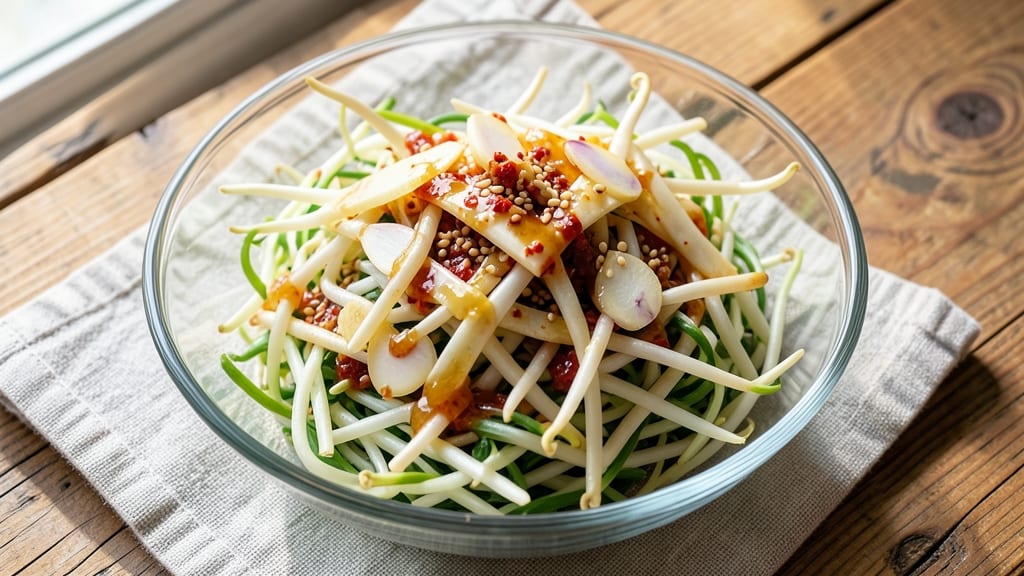
This Korean bean sprout salad recipe delivers the perfect balance of crunchy texture, peppery kick, and umami depth—all in just 15 minutes. The secret lies in blanching the sprouts to preserve their crispness while infusing them with a tangy, savory dressing that’s both simple and restaurant-worthy.
I’ve perfected this dish over years of testing, ensuring every bite stays fresh, vibrant, and packed with that signature Korean brightness.
The foundation of this salad is fresh mung bean sprouts, blanched just enough to soften slightly without losing their signature crunch.
A quick toss in a dressing of sesame oil, rice vinegar, and gochugaru (Korean chili flakes) transforms them into a dish that’s bold yet balanced—sweet, spicy, and nutty all at once.
The addition of garlic, ginger, and toasted sesame seeds adds layers of flavor that elevate this salad from side dish to star.
What you’ll end up with is a refreshing, protein-rich salad that’s ready in under 15 minutes—ideal for meal prep, potlucks, or a quick lunch.
The dressing clings to the sprouts perfectly, creating a dish that’s both satisfying and light, with a peppery bite that keeps you reaching for another bite. Serve it as a side, a main with rice, or even as a topping for bowls. Here’s how to make it.
This recipe is vegan-friendly, gluten-free, and packed with nutrients—making it a go-to for health-conscious eaters without sacrificing flavor. The key is keeping everything bright and fresh, so we’ll focus on quick prep and minimal handling to maintain that crisp, vibrant texture. Let’s get started.
Ingredients for bean sprout salad recipe korean
Six cups of fresh sprouts and bold flavors transform into this crisp Korean salad in minutes.
| Ingredient | Amount | Notes |
|---|---|---|
| Fresh Mung Bean Sprouts 🌱 | 6 cups | Trimmed and rinsed thoroughly |
| Gochugaru (Korean Chili Flakes) 🌶️ | 1 tbsp | Adjust for heat preference |
| Sesame Oil 🫒 | 2 tbsp | Toasted, for nutty aroma |
| Rice Vinegar 🍶 | 3 tbsp | Seasoned preferred for depth |
| Fresh Garlic Cloves 🧄 | 3 cloves | Minced, for sharp punch |
| Fresh Ginger 🌿 | 1 tbsp | Grated, for zesty kick |
| Toasted Sesame Seeds 🥜 | 2 tbsp | Lightly browned for crunch |
| Soy Sauce 🍶 | 2 tbsp | Low-sodium preferred |
| Brown Sugar 🍯 | 1 tbsp | Or coconut sugar for vegan |
| Green Onions 🧅 | 3 whole | Thinly sliced, for freshness |
| Sesame Seeds (Extra) 🥜 | 1 tbsp | For final garnish |
The mung bean sprouts are the heart of this dish—look for vibrant, bright green sprouts at the produce section, not the wilted kind lurking in the back. Korean markets or well-stocked Asian grocery stores usually have the freshest batches, but even mainstream supermarkets carry them now. If you can't find mung bean sprouts, adzuki or soybean sprouts work too. The gochugaru (Korean chili flakes) should be a deep red—avoid the dull, grayish flakes that've lost their potency. Maesilchil is my go-to brand, but any quality gochugaru will do. Toast your sesame seeds in a dry pan for 30 seconds until fragrant—this adds depth that store-bought can't match.
No sesame oil? Toasted peanut oil works in a pinch, but it'll taste different. The dressing is flexible—skip the brown sugar if you're watching carbs, or swap for maple syrup at half the amount. Fresh ginger and garlic are non-negotiable for that signature Korean brightness, but if you're short on time, powdered ginger and garlic powder at half the amount will get you close. The rice vinegar should smell tangy and clean—avoid anything that smells sharp or vinegary. Pro tip: Mix the dressing ingredients in a small jar and shake it up right before tossing—this keeps the flavors vibrant.
Sprouts stay fresh for 3-4 days in the fridge, but they're best eaten within 2 days for maximum crunch. Store them in a breathable container or paper towel-lined bag to prevent sogginess. The dressing keeps for 1 week in the fridge, but the flavors meld best when made fresh. For meal prep, store the sprouts and dressing separately—toss just before serving to keep that crisp, vibrant texture. Garnish with extra sesame seeds right before eating so they stay crunchy.
Why You'll Love This Recipe
- No-Chop Necessary: I swear by this trick—just rinse those mung bean sprouts, give them a quick shake in the colander, and toss them straight into the bowl. No dicing, no fuss, and you still get that satisfying crunch. Honestly, it’s the kind of recipe that makes me feel like a lazy genius.
- Umami Bomb: That first bite? The garlic hits fresh and sharp, then the gochugaru adds this just-right heat, and the sesame oil ties it all together like a warm hug. I’ll be real: I’ve tried store-bought versions, but nothing beats the balance of these five ingredients—crisp, tangy, and a little spicy.
- Lunchbox Legend: Between us, this salad keeps for days in the fridge, and it’s exactly what I pack for work or school lunches. The sprouts stay crisp, the dressing clings perfectly, and it’s light enough to eat straight from the container. My daughter even sneaks extra servings when she thinks I’m not looking.
- Pocketbook Hero: Fresh sprouts and garlic are cheap, and a little sesame oil goes a long way. I’ve made this for under $3 per serving, and it’s still the star of my meals. Plus, no fancy ingredients—just what you’d find in any grocery store’s produce section. Budget-friendly doesn’t mean boring, and this proves it.
Step-by-step instructions for Korean bean sprout salad
This vibrant salad comes together faster than you can say "gochujang" - let's make it.
Prepare the Sprouts for Maximum Crunch
Rinse the 6 cups of fresh mung bean sprouts under cold water to remove any dirt, then drain thoroughly in a colander. I like to give them a gentle shake to remove excess water - you want them damp but not dripping. The key here is to keep them crisp, so avoid pressing them in the colander which can bruise the delicate sprouts.
Transfer the sprouts to a large mixing bowl. Here's the thing - if you're using store-bought sprouts that might be slightly wilted, give them a quick 30-second soak in ice water before draining again. This revives their texture and makes all the difference in the final crunch.
Create the Signature Korean Dressing
In a small bowl, whisk together the 2 tablespoons of toasted sesame oil, 3 tablespoons of rice vinegar, 2 tablespoons of soy sauce, and 1 tablespoon of brown sugar. The mixture should look like a glossy, amber liquid - this is your flavor foundation. I always use seasoned rice vinegar here because it adds that subtle umami depth that makes this salad truly authentic.
Add the 1 tablespoon of gochugaru (Korean chili flakes) and stir until fully dissolved. The flakes should disperse completely - if you see any undissolved bits, give it another quick whisk. This is where the heat comes from, but don't worry if you're sensitive to spice - you can always adjust later.
Incorporate the Aromatics
Finely mince the 3 cloves of fresh garlic and grate the 1 tablespoon of fresh ginger using a microplane. The goal is to get them as fine as possible - you want the flavors to meld completely with the dressing. Add these to your dressing mixture and stir well. You'll notice the aroma immediately intensify - that's your cue that we're building something special here.
Pour the dressing over the prepared sprouts and toss gently but thoroughly. I like to use my hands for this part - it ensures even distribution of the dressing. The sprouts should be evenly coated with the dressing, but still retain their vibrant green color. If you see any dry patches, add a splash of water and toss again until everything is moistened.
Add the Remaining Ingredients
Thinly slice the 3 whole green onions and sprinkle them over the dressed sprouts. Add the 2 tablespoons of toasted sesame seeds and the 1 tablespoon of extra sesame seeds (for garnish). Give everything one final gentle toss - just enough to combine without breaking the sprouts. The texture contrast here is what makes this salad so satisfying: the crisp sprouts, the crunchy sesame seeds, and the fresh green onions.
Taste and adjust the seasoning if needed. If it needs more sweetness, add a pinch more brown sugar. For more heat, sprinkle with additional gochugaru. The perfect balance should have a sweet-spicy kick with a nutty sesame finish. Let the salad sit for 5 minutes before serving - this allows the flavors to truly meld together.
Pro Tips For Making Bean Sprout Salad Recipe Korean
- SOAK SPROUTS 30 MINUTES: Fresh mung bean sprouts hold moisture like sponges—give them a quick 30-minute soak in cold water before draining. This softens them just enough to take on the dressing without turning mushy when you toss, and trust me, you’ll notice the difference in texture.
- TOSS WITH DRY GOCHUGARU: Sprinkle gochugaru over the sprouts before adding dressing—this lets the flakes cling to the stems instead of sinking to the bottom. A quick shake in a bowl or bag works better than stirring after the fact, and yes, even a teaspoon makes the heat matter.
- MINCE GARLIC FINE: Skip the press—roughly chop garlic into tiny pieces so it blends into the dressing without leaving chunks. I learned this the hard way when a single slice sat like a bitter surprise in every bite.
- USE TOASTED SESAME OIL LAST: Add sesame oil after everything else is mixed—its nutty aroma burns off at the slightest heat. A drizzle at the end keeps the flavor bright, and honestly, this is the move that makes the dish smell like a Korean market.
Serving suggestions for leftovers
As a Side Dish
This Korean bean sprout salad makes an excellent side dish for grilled meats, especially when paired with bulgogi beef or spicy pork belly. The peppery, crunchy texture cuts through the richness of fatty meats beautifully.
I like to serve it alongside steamed rice to soak up any extra dressing. For a complete meal, add a scoop of kimchi on the side to amplify those tangy, fermented flavors. 🌶️
With Rice Bowls
Transform this salad into a main dish by serving it over steamed white rice or brown rice. The crisp sprouts and nutty dressing add a refreshing contrast to the soft grains. For extra protein, top with soft-boiled eggs or tofu.
I also love adding quick-pickled radishes for a bright, crunchy element that ties everything together. This combo is perfect for a light lunch or dinner.
As a Meal Prep Base
Use this salad as a flavorful base for meal prep bowls. Layer it with warm congee (rice porridge) for a comforting breakfast or lunch. Add grilled shrimp or chicken for extra protein. For a vegan option, toss in marinated tofu or edamame.
Store components separately in airtight containers and assemble when ready to eat to keep everything crisp. This method saves time and keeps flavors fresh for up to 3 days.
With Grilled Fish
Pair this salad with grilled salmon or mackerel for a light yet satisfying seafood meal. The gochugaru in the dressing complements the fish’s natural oils beautifully. For extra flair, drizzle with yuzu kosho (a Japanese citrus chili paste) before serving.
The combination of crisp sprouts, smoky fish, and zesty dressing makes this a standout dish for seafood lovers. Serve with warm miso soup to round out the meal.
As a Snack or Appetizer
Serve this salad in small bowls or lettuce cups for an elegant appetizer at gatherings. The vibrant colors and bold flavors make it a crowd-pleaser. Pair it with warm dumplings or spring rolls for a Korean-inspired snack platter.
For a spicy kick, add a side of ssamjang (Korean dipping sauce) for dipping. It’s perfect for potlucks, picnics, or game day spreads. 🥗
With Korean BBQ
This salad is a must-have with Korean BBQ, like galbi (beef short ribs) or chicken skewers. The crunchy texture and tangy dressing balance the smoky, charred flavors of grilled meats. Serve it in a banchan-style dish (small side dish) alongside other Korean sides like namul (seasoned vegetables).
For extra authenticity, sprinkle with crushed roasted peanuts to add a savory crunch. It’s a classic pairing that elevates any BBQ experience.
Nutrition facts
Frequently asked questions
Can I use regular chili flakes instead of gochugaru?
While regular chili flakes will work in a pinch, gochugaru gives that authentic Korean flavor with its fermented, slightly sweet depth. For a close substitute, use smoked paprika mixed with a pinch of cayenne for heat. Start with ½ teaspoon and adjust to taste—gochugaru has a milder heat but more complex flavor.
How do I keep the sprouts extra crispy?
Blanching is key! After rinsing, shock the sprouts in ice water for 30 seconds before draining. This preserves their crunch. Also, store them in a paper towel-lined container in the fridge—they'll stay fresh for 3-4 days instead of wilting. Avoid storing them in airtight containers with moisture.
Is this salad spicy enough for my taste?
The recipe uses 1 tablespoon of gochugaru for a mild kick, but you can easily adjust. For extra heat, add ½ teaspoon more gochugaru or a dash of gochujang (Korean chili paste). If you prefer sweetness, increase the brown sugar to 1½ tablespoons—the balance is all about personal preference!
Can I make this ahead of time?
Yes, but separate the dressing! Store the blanched sprouts and garnishes in one container, and the dressing in another. Toss them together right before serving to keep that crisp texture. The dressing stays fresh for 1 week in the fridge, while the sprouts are best eaten within 2 days for maximum crunch.
What if I can't find mung bean sprouts?
No problem! Use adzuki or soybean sprouts instead—they work just as well. For a different texture, try shredded cabbage or napa cabbage, but they’ll need 1 minute of blanching to soften slightly. The key is keeping the base ingredient fresh and crispy.