Salads
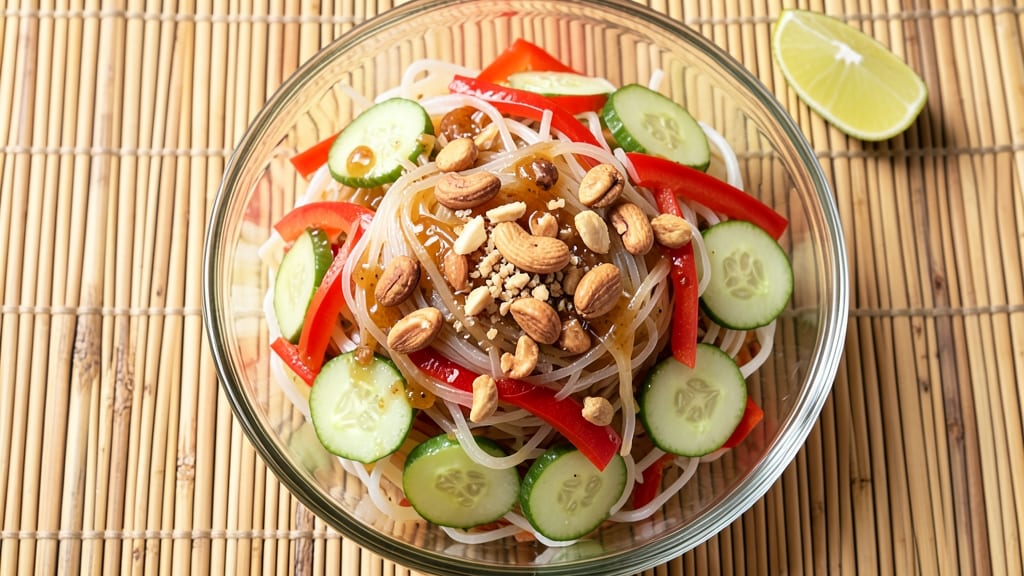
This bean thread noodle salad recipe delivers restaurant-quality silky glass noodles with a tangy peanut-lime dressing that balances sweet, sour, and nutty flavors perfectly. The key to achieving that signature silky texture lies in proper soaking and rinsing—no overcooking allowed.
I developed this vegan version after discovering how versatile bean thread noodles could be beyond stir-fries, creating a dish that's both elegant and satisfying.
The foundation of this salad is the peanut-lime dressing, where toasted peanuts meet zesty lime juice and a touch of maple syrup for depth. Fresh herbs like cilantro and Thai basil add brightness, while crunchy vegetables—bell peppers, cucumber, and shredded carrots—provide texture contrast.
The secret to the perfect bite is letting the noodles absorb the dressing just enough to coat without becoming soggy.
What you'll end up with is a visually stunning salad that's as beautiful as it is delicious—golden noodles glistening with dressing, vibrant vegetables peeking through, and a garnish of toasted peanuts and lime zest.
This dish is foolproof for vegan meals, potlucks, or a light yet filling weeknight dinner. The flavors develop even better when chilled, making it perfect for meal prep.
Serve it as a main dish with a side of steamed rice or as a refreshing appetizer. The balance of textures and flavors ensures every bite is satisfying. Let's get started on creating this elegant yet simple salad!
Ingredients for bean thread noodle salad
These silky noodles and vibrant ingredients create a restaurant-worthy vegan salad with perfect texture balance.
| Ingredient | Amount | Notes |
|---|---|---|
| Bean Thread Noodles (Glass Noodles) 🍜 | 8 oz | Dried, uncooked, high-quality brand |
| Raw Peanuts 🥜 | ½ cup | Unsalted, dry-roasted preferred |
| Lime Juice 🍋 | ⅓ cup | Freshly squeezed, about 3 limes |
| Maple Syrup 🍯 | 2 tbsp | Pure, grade B preferred |
| Red Bell Pepper 🌶️ | 1 whole | Thinly sliced, seeds removed |
| English Cucumber 🥒 | 1 whole | Thinly sliced, seeds removed |
| Carrots 🥕 | 1 whole | Shredded, medium size |
| Fresh Cilantro 🌿 | ¼ cup | Chopped, stems removed |
| Thai Basil 🌿 | ⅛ cup | Chopped, stems removed |
| Sesame Oil 🫒 | 1 tbsp | Toasted, for aroma |
| Soy Sauce 🥢 | 1 ½ tbsp | Low-sodium preferred |
| Garlic Cloves 🧄 | 3 cloves | Minced, fresh preferred |
| Red Chili Flakes 🌶️ | ½ tsp | Adjust to taste |
| Lime Zest 🍋 | 1 tbsp | From 1 lime, for garnish |
| Sea Salt 🧂 | 1 tsp | Diamond Crystal preferred |
The bean thread noodles are the star—look for high-quality dried noodles at Asian markets or well-stocked grocery stores like Whole Foods. Brands like King Noodle or Lotus Foods are my go-to for that signature silky texture. Freshness matters here: if the noodles smell stale or look dull, skip them. For the peanuts, Trader Joe's dry-roasted are perfect—they toast beautifully and add that nutty crunch without being overly oily. The lime juice should be freshly squeezed (none of that bottled stuff)—it makes all the difference in brightness. If you can't find Thai basil, regular basil with a pinch of lime zest works in a pinch, though it won't be quite the same.
No Thai basil? Fresh mint or regular basil at half the amount will still work. Running low on peanuts? Cashews or almonds toasted and chopped give a similar texture, though the flavor shifts slightly. The maple syrup can be swapped for agave nectar or coconut sugar syrup if you prefer. For the vegetables, any crunchy veggies you have on hand will do—jicama, snap peas, or even shredded cabbage add great texture. The key is keeping the veggies crisp. If you're prepping ahead, store the dressing and veggies separately until ready to assemble—this prevents sogginess. And if you can't find sesame oil, toasted peanut oil works just as well for that nutty aroma.
This salad tastes even better chilled, so make it a day ahead if possible. The noodles keep their texture best when stored in the fridge for up to 3 days in an airtight container with dressing on top. For meal prep, portion the dressing separately and toss just before serving. The lime zest and toasted peanuts should be added fresh right before eating—they lose their pop if pre-mixed. If you're serving this at a potluck, bring the dressing and veggies separately and let guests assemble their own bowls. The flavors meld beautifully when chilled, so don't skip the overnight rest if you can help it.
Why You'll Love This Recipe
- No-Soaking Needed: I keep a box of those chewy glass noodles in my pantry—just toss them in boiling water for 2 minutes, rinse, and they’re ready. No waiting around like with regular noodles.
- Sweet-Savory Magic: Between us, the lime and maple syrup combo is chef’s kiss—bright, sticky, and just enough sweetness to balance the peanuts’ crunch. My kids fight over the last bite.
- Picnic-Proof Portion: This salad holds up like a champ: pack it in a jar for lunch, bring it to potlucks, or serve it cold at BBQs. The peanuts stay crunchy, the noodles don’t get soggy, and everyone thinks you slaved over it.
- Pocketbook Performer: A single jar of glass noodles and a bag of bell peppers stretch for weeks—I’ve fed my book club twice with the same batch. Plus, raw peanuts are cheaper than roasted, and lime juice? Always a pantry staple.
Step-by-step instructions for silky glass noodles with tangy peanut-lime dressing
Here's how to assemble this refreshing salad with perfect texture and balanced flavors.
Prepare the Glass Noodles for Optimal Texture
Place the 8 oz bean thread noodles (glass noodles) in a large heatproof bowl. Pour boiling water over the noodles until completely submerged—about 4 cups should do it. Let them soak for exactly 3 minutes, then drain immediately in a colander. Rinse under cold water to stop the cooking process and prevent mushiness.
I like to give the noodles a gentle shake in the colander to separate any clumps. They should remain firm yet tender, with a delicate, almost translucent appearance. If they feel too soft, they've soaked too long—this salad relies on that perfect al dente texture to hold up to the dressing.
Toast and Crush the Raw Peanuts
While the noodles soak, heat a dry skillet over medium heat. Add the 0.5 cup raw peanuts and toast for 3-4 minutes, stirring constantly, until they turn a light golden brown and release their nutty aroma. Remove from heat immediately—they'll continue cooking from residual heat.
Transfer the peanuts to a clean kitchen towel and rub vigorously between your palms to crush about half of them into smaller pieces. This creates a mix of whole peanuts for texture and crushed ones for better distribution in the dressing. Let them cool completely before using, as warm peanuts can make the dressing separate.
Assemble the Tangy Peanut-Lime Dressing
In a medium bowl, combine the 0.33 cup lime juice, 2 tbsp maple syrup, 1.5 tbsp soy sauce, 0.5 tsp red chili flakes, and 1 tbsp lime zest. Whisk vigorously until fully incorporated. Then add the 1 tbsp toasted sesame oil and the 3 minced garlic cloves, whisking again to blend.
Gently fold in the crushed peanuts, reserving a few whole peanuts for garnish. Taste and adjust seasoning—you might need an extra pinch of sea salt or a splash more lime juice to balance the sweet, tangy, and spicy flavors. The dressing should coat the back of a spoon with a silky, slightly oily texture that will cling beautifully to the noodles.
Prepare the Fresh Vegetable Medley
Thinly slice the red bell pepper and english cucumber into 1/8-inch strips using a mandoline or sharp knife. Shred the carrot using a box grater or food processor fitted with the shredding disk. Transfer all vegetables to a large mixing bowl.
Add the 0.25 cup chopped fresh cilantro and 0.125 cup chopped Thai basil to the vegetables. Give everything a gentle toss with tongs to combine. The vegetables should remain crisp and vibrant—avoid over-mixing, which can bruise the delicate cucumber and bell pepper slices.
Combine and Chill for Maximum Freshness
Add the drained glass noodles to the vegetable mixture and toss gently to coat evenly. Pour the peanut-lime dressing over the noodles and toss again, working quickly to distribute it uniformly. The noodles should glisten slightly from the dressing while maintaining their individual shape.
Transfer the salad to an airtight container and refrigerate for at least 30 minutes before serving. This chilling time allows the flavors to meld beautifully and the noodles to absorb the dressing without becoming soggy. Serve chilled or at room temperature, garnished with the reserved whole peanuts and an extra sprinkle of Thai basil for that final aromatic touch.
Pro Tips For Making Bean Thread Noodle Salad
- SOAK NOODLES UNTIL FLEXIBLE: I learned this the hard way—bean thread noodles need a good 20-30 minutes in hot water (not boiling) until they’re soft but still hold shape when squeezed. Over-soaking turns them mushy, and under-soaking leaves them chewy. Drain and rinse immediately in cold water to stop cooking—this keeps them from turning to glue in your salad.
- TOAST PEANUTS LOW AND SLOW: Skip the high heat—raw peanuts burn faster than you think. Spread them on a dry skillet over medium-low and stir constantly for 5-7 minutes until fragrant and golden, not dark. Over-toasting makes them bitter, and under-toasting leaves them raw-tasting. Let them cool completely before chopping, or they’ll release oil everywhere.
- CUT RED PEPPER IN STRIPS: Thin, even strips (about 1/4-inch wide) cook faster and stay crisp longer than chunks. I used to dice them small, but they softened too quickly in the dressing. If you’re short on time, microwave the whole pepper for 30 seconds first—it speeds up the charring when you sear it later.
- MIX DRESSING LAST MINUTE: Maple syrup and lime juice don’t play well together if you prep too early—the syrup crystallizes, and the lime curdles. Keep the dressing components separate until tossing with noodles, and add a splash of warm water if it’s too thick. Taste right after mixing, because glass noodles soak up flavors fast—you might need more lime or a pinch of salt.
Regional styles of this bean thread noodle salad
Chinese Street Food Roots
This salad traces its origins to Chinese street food culture, particularly in Guangdong province where bean thread noodles are a staple. Vendors traditionally served them cold with simple dressings—often peanut-based—to balance the heat of spicy dishes.
The tangy lime and sweet maple syrup in this version keep that authentic street food spirit while elevating it for home kitchens. 🌶️
Thai-Inspired Fusion
While rooted in Chinese cuisine, the peanut-lime dressing transforms this salad into a Thai-inspired dish. Thai chefs often use similar components—peanuts, lime, and chili—in salads like Som Tum (green papaya salad). The Thai basil and sesame oil add that extra aromatic punch that bridges both cuisines beautifully.
I first encountered this fusion in Bangkok's street markets, where vendors mixed Chinese noodles with Thai flavors.
Vietnamese Refreshing Twist
In Vietnam, this dish takes on a lighter, herb-forward approach. Vietnamese versions often include mint, perilla leaves, and fish sauce (which we've replaced with soy sauce for vegan-friendly flavor). The Vietnamese style emphasizes crunchy textures—think shredded daikon or jicama—paired with a tangy dressing.
For a Vietnamese-inspired version, swap the carrots for shredded daikon radish and add a handful of fresh mint.
Japanese Silky Adaptation
Japanese chefs prefer their bean thread noodles extra silky, often serving them chilled with a sesame-ginger dressing instead of peanut-based. The Japanese version, called harusame salad, focuses on minimalism—just noodles, cucumber, and a delicate dressing.
For a Japanese-inspired take, reduce the dressing to 1 tbsp toasted sesame oil, 1 tbsp rice vinegar, 1 tsp grated ginger, and a pinch of salt. Skip the peanuts and garnish with thinly sliced scallions instead.
Modern Vegan Evolution
This recipe represents the modern vegan evolution of traditional Asian noodle salads. Vegan adaptations often replace fish sauce with soy sauce or mushroom broth, and animal fats with sesame or peanut oil. The maple syrup adds depth without dairy, while lime brightens the dish naturally.
I developed this version after realizing how well bean thread noodles work as a protein substitute—their chewy texture mimics meat in satisfying ways. 💫
Regional Garnish Variations
Garnishes change dramatically by region. In China, it's crispy fried shallots and cilantro. Thailand adds crushed peanuts and lime zest, while Vietnam tops with fresh herbs and fried garlic. For a Korean-inspired twist, sprinkle with toasted sesame seeds and a drizzle of gochujang (Korean chili paste).
Each garnish enhances the salad's flavor profile while keeping it visually stunning—don't skip this final step!
Nutrition facts
Frequently asked questions
Why do bean thread noodles need to soak for only 3 minutes?
These delicate noodles cook instantly in boiling water—just 3 minutes is all they need to reach perfect al dente texture. Over-soaking makes them mushy, which ruins the salad's signature silky bite. The key is draining immediately and rinsing with cold water to stop the cooking process right away.
Can I use cooked bean thread noodles from a package?
but check the package first—some pre-cooked noodles contain preservatives that may alter the texture. If using them, rinse thoroughly under cold water to remove excess starch and cool them completely before assembling the salad. For best results, fresh dried bean thread noodles yield the most authentic silky texture.
How do I prevent the dressing from separating?
The secret is letting the crushed peanuts cool completely before mixing them into the dressing. Warm peanuts release oils that cause separation. Also, whisk the dressing vigorously and let it sit for 5 minutes before using—this helps the ingredients fully emulsify. If it starts separating, simply whisk again or add 1 tsp more lime juice to help bind it.
What's the best way to store leftovers?
Store the salad in an airtight container with the dressing poured on top (not mixed in) to prevent sogginess. Keep it refrigerated for up to 3 days. When ready to eat, toss gently with fresh dressing and garnish with extra peanuts and herbs. For longer storage, freeze the dressing separately and keep the noodles and veggies in the fridge for up to 2 days before combining.
Can I make this salad nut-free?
Yes! Replace the peanuts with toasted pumpkin seeds or sunflower seeds for a nut-free version. For extra protein, add edamame or chickpeas. Adjust the dressing by adding 1 tbsp tahini or 1 tsp miso paste to maintain that rich, nutty depth. The seeds will add a satisfying crunch while keeping the dish allergy-friendly.