Salads
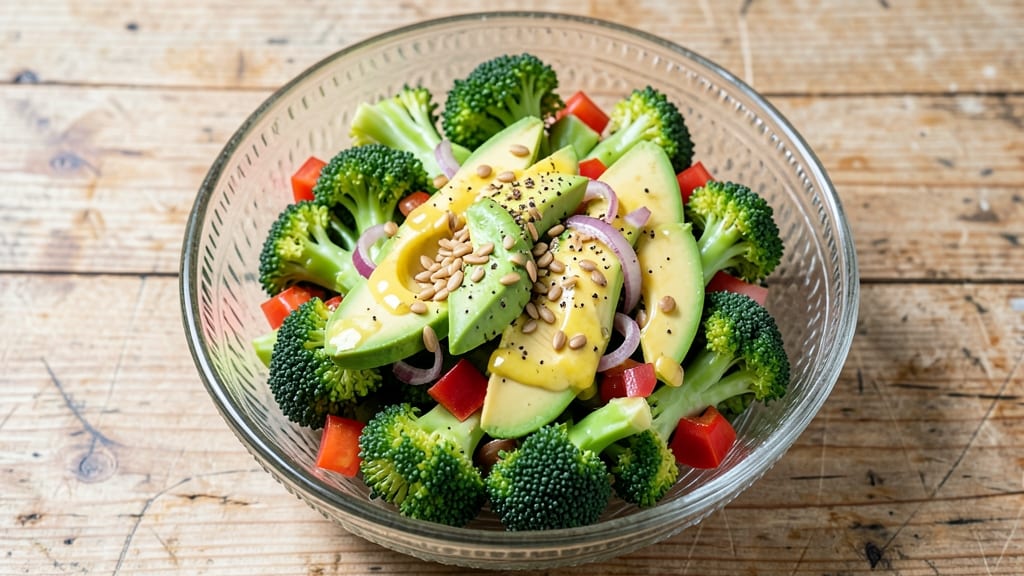
This blood-sugar-friendly broccoli salad recipe for diabetics proves healthy eating doesn't mean sacrificing flavor or texture—just smart ingredient choices and a bright citrus vinaigrette that keeps carbs in check.
After years of testing diabetic-friendly meals, I perfected this version with high-fiber broccoli, crunchy nuts, and a tangy dressing that won't spike blood sugar. The secret lies in balancing fiber, healthy fats, and protein while avoiding hidden sugars that derail well-intentioned meals.
What sets this salad apart is its controlled carb profile—no creamy dressings or sugary add-ins, just a zesty lemon-vinegar base with olive oil for richness. The broccoli florets stay crisp-tender when roasted briefly (not boiled), while sunflower seeds add satisfying crunch without the blood sugar impact of croutons.
I've included portioning guidance too, since portion control matters just as much as ingredient choices for blood sugar management.
By the time you're done assembling this salad, you'll have a vibrant, crunchy dish that's packed with flavor but designed to work with diabetic meal plans.
The citrus dressing cuts through the earthiness of the broccoli while adding a refreshing brightness, and the nutty seeds provide that satisfying texture without the empty carbs. This is the kind of salad that disappears quickly but leaves you feeling satisfied—not deprived.
Perfect for meal prep or last-minute lunches, this recipe scales easily for singles or families while maintaining its blood sugar benefits. The ingredients are simple to find at any grocery store, and the prep takes just 20 minutes.
Let's make this salad that works as hard as you do for your health goals.
Ingredients for broccoli salad recipe for diabetics
Simple ingredients that balance fiber, healthy fats, and tangy brightness for perfect diabetic-friendly crunch.
| Ingredient | Amount | Notes |
|---|---|---|
| Fresh Broccoli Crowns 🥦 | 6 cups | Florets cut into bite-sized pieces |
| Red Bell Pepper 🍆 | 1 medium | Diced into small cubes |
| Sunflower Seeds 🥜 | ½ cup | Raw, unsalted for blood sugar control |
| Avocado 🥑 | 1 medium | Pitted, sliced into thin pieces |
| Red Onion 🧅 | ¼ cup | Finely diced, about 1 small onion |
| Fresh Lemon Juice 🍋 | ¼ cup | Freshly squeezed, no added sugar |
| Extra-Virgin Olive Oil 🫒 | ¼ cup | Light, fruity variety preferred |
| Apple Cider Vinegar 🍶 | 1 tbsp | Raw, unfiltered preferred |
| Dijon Mustard 🌶️ | 1 tsp | For depth of flavor |
| Fresh Parsley 🌿 | ¼ cup | Chopped, for freshness |
| Diamond Crystal Kosher Salt 🧂 | ½ tsp | For seasoning |
| Freshly Ground Black Pepper 🌶️ | ¼ tsp | For finishing |
The broccoli is your fiber powerhouse—look for bright green florets with tight buds at Whole Foods or your local market. Trader Joe's often has pre-cut crowns if you're short on time, but fresh is always better. Red bell peppers add natural sweetness without spiking blood sugar, and sunflower seeds bring satisfying crunch without the carb load of croutons. For the avocado, grab one that yields slightly to gentle pressure—organic is ideal, but conventional works too. The key is using ingredients in their whole form; no pre-shredded bags that lose freshness fast.
No red bell pepper? Yellow or orange bell peppers work just as well. Sunflower seeds too pricey? Pumpkin seeds are a great swap—they've got even more magnesium. The dressing relies on fresh lemon juice, but if you're out, lime juice works too. For extra richness without sugar, add a splash of unsweetened almond milk to the dressing. The avocado can be omitted if you're watching fats, but I recommend keeping it for that creamy texture that balances the tangy dressing. Prep the dressing ingredients separately so you can toss everything together last-minute for maximum crispness.
Broccoli stays fresh for 5-7 days in the fridge, but roast it the day you serve for best texture. Sunflower seeds keep for 6 months in a cool, dark place—just measure them out into a small container to avoid oxidation. The dressing can be made 2 days ahead; store it in a sealed jar with the avocado added just before serving. Portion the salad into 1-cup servings for blood sugar control—this recipe makes exactly four balanced portions. Leftovers keep for 3 days in the fridge, but the avocado will turn brown, so add it fresh when reheating.
Why You'll Love This Recipe
- No-Cook Magic: I swear by this—just chop, toss, and let the avocado and sunflower seeds do their thing. No stove, no waiting, just fresh crunch in minutes.
- Sweet & Crunchy Balance: That red bell pepper adds a bright, almost candy-like sweetness while the sunflower seeds give this salad a satisfying bite. It’s weirdly addictive, like a cross between a veggie platter and a snack mix.
- Lunchbox or Party Star: Honestly, this works everywhere. Pack it for work—it stays fresh for days—and it’s fancy enough for potlucks but simple enough for a Tuesday. My diabetic dad takes it to office meetings, and my kids beg for it after soccer games.
- Budget Meal Hack: Broccoli crowns and bell peppers stretch forever, and avocado keeps it feeling indulgent without breaking the bank. I make a big batch on Sundays, and it covers lunches, snacks, and even a side for grilled chicken—no waste, all flavor.
Step-by-step instructions for blood-sugar-friendly broccoli salad
This vibrant salad delivers satisfying crunch and bold flavors while keeping carbs in check.
Prepare the Vegetable Base
Begin by cutting the 6 cups fresh broccoli crowns into bite-sized florets, discarding any thick stems. I like to separate them into even clusters for visual appeal. Next, dice the 1 medium red bell pepper into small, uniform cubes—this ensures even distribution throughout the salad. Finely dice the 0.25 cup red onion as well, but don't let it get too small or it'll overpower the other flavors.
Place all prepared vegetables in a large mixing bowl. Give them a gentle toss with your hands to distribute them evenly. The broccoli should be the star here, so aim for about 1.5 cups of it per serving when divided. This preparation step is crucial for achieving that perfect texture contrast in every bite.
Make the Light Citrus Vinaigrette
In a small bowl, whisk together the 0.25 cup fresh lemon juice, 0.25 cup extra-virgin olive oil, 1 tablespoon apple cider vinegar, and 1 teaspoon Dijon mustard. I prefer using a whisk for this because it creates a silky emulsion that coats the vegetables beautifully. Start with a slow whisking motion, gradually increasing speed until the mixture becomes smooth and glossy.
Season the dressing with 0.5 teaspoon kosher salt and 0.25 teaspoon freshly ground black pepper. Taste and adjust if needed—this is your flavor foundation. The dressing should be tangy but balanced, with the lemon cutting through the richness of the olive oil. Set it aside while you prepare the remaining components.
Add Protein and Texture Elements
Slice the 1 medium avocado into thin, even pieces. I like to use a sharp knife and cut parallel to the pit for consistent slices. Immediately toss the avocado with 1 tablespoon lemon juice to prevent browning—this keeps it vibrant and fresh-tasting. Sprinkle the avocado pieces over the vegetable base, reserving a few slices for garnish.
Add the 0.5 cup sunflower seeds to the bowl and gently toss everything together. The seeds provide that satisfying crunch while adding healthy fats that help stabilize blood sugar. If you're concerned about portion control, measure out about 2 tablespoons of seeds per serving. The seeds should be evenly distributed throughout the salad for balanced texture in every bite.
Finish with Fresh Herbs and Final Toss
Chop the 0.25 cup fresh parsley into fine pieces. The parsley adds a bright, fresh element that cuts through the richness of the avocado and seeds. Sprinkle it evenly over the salad and give everything one final gentle toss. Pour the dressing over the top and toss again, ensuring every vegetable piece gets coated with that zesty citrus flavor.
Let the salad sit for 5-10 minutes before serving. This brief resting period allows the flavors to meld together beautifully. If you notice the avocado is browning too quickly, simply toss it with a bit more lemon juice just before serving. The final salad should be vibrant, colorful, and packed with texture—each bite offering a satisfying crunch from the broccoli, seeds, and bell pepper.
Pro Tips For Making Broccoli Salad Recipe For Diabetics
- STEAM BROCCOLI FIRST: I learned this the hard way—roasting broccoli whole until tender and then chopping it ruins the texture. Instead, steam the crowns for exactly 3 minutes (cut-side down in a colander over boiling water), then plunge into ice water to stop cooking. The florets stay crisp, hold their shape, and won’t turn mushy when tossed with the dressing.
- SLICE ONION THINLY: Skip the thick chunks—diabetic-friendly salads need every bite to be flavorful without spiking blood sugar. Use a mandoline or sharp knife to slice red onion paper-thin (about 1/16-inch), then soak in cold water for 5 minutes to mellow the bite. Drain well before adding; this keeps the salad from tasting harsh or overwhelming.
- ADD AVOCADO LAST: I used to toss in avocado with everything else, and by the time I served the salad, it’d turned brown and sad. Now I wait until right before eating—just halve, pit, and scoop slices onto each serving. The healthy fats stay vibrant, and you avoid that weird, oxidized flavor that ruins the whole dish.
- TOAST SUNFLOWER SEEDS: Raw sunflower seeds are fine, but toasted ones add depth without extra carbs. Spread them in a dry skillet over medium-low heat for 3–4 minutes, stirring constantly, until they’re golden and smell nutty. Let them cool completely before sprinkling—hot seeds burn your mouth, and that’s not the kind of crunch you want in a diabetic-friendly salad.
Troubleshooting perfect results
Wilted Vegetables
If your broccoli or bell peppers look limp after chopping, it's usually from oxidation—not overcooking. Toss them with 1 tablespoon lemon juice immediately and let sit for 5 minutes before assembling.
This restores crispness while adding brightness. For extra crunch, roast the broccoli at 400°F for 8-10 minutes before adding to the salad—just don't overcook or it'll turn mushy. 🥦
Dressing Too Thin?
The dressing may separate if the olive oil and lemon juice aren't emulsified properly. Fix this by whisking vigorously or using a fork to chop the Dijon mustard into the oil first.
For a quicker fix, add ½ teaspoon xanthan gum or 1 teaspoon cornstarch to the dressing and whisk again. If it's still too thin, reduce the lemon juice by 1 tablespoon—the acidity can make the dressing runny. 🍋
Avocado Browning Fast?
Avocados oxidize quickly, but you can slow this by:
- Tossing slices with 1 tablespoon lemon juice immediately after cutting
- Adding a pinch of salt (it helps preserve color)
- Keeping the salad in an airtight container with a paper towel pressed against the avocado
For best results, add avocado just before serving or store it separately in a sealed container with extra lemon juice. 🥑
Seeds Too Salty?
Store-bought sunflower seeds often contain added salt, which can make the salad taste flat. Rinse them in a fine-mesh strainer under cold water for 10 seconds to remove excess salt, then pat dry with a paper towel.
For a completely salt-free option, use unsalted seeds or lightly toast them in a dry pan over medium heat for 2-3 minutes until fragrant. 🥜
Missing Crunch?
If your salad lacks texture, try these fixes:
- Add ¼ cup sliced almonds (toasted for extra crunch)
- Swap sunflower seeds for pumpkin seeds (they're nuttier and firmer)
- Lightly toast the broccoli florets in the oven for 5 minutes before assembling
For maximum crunch, keep all components separate until the very last moment before tossing. ⚡
Dressing Too Tangy?
If the lemon and vinegar flavors overwhelm, balance them by:
- Adding 1 teaspoon honey (use sparingly—just enough to mellow the acidity)
- Stirring in 1 tablespoon unsweetened almond milk to dilute slightly
- Reducing the lemon juice by 1 tablespoon and adding ½ teaspoon maple syrup instead
The dressing should complement, not dominate—the broccoli and avocado should still shine through. 💫
Nutrition facts
Frequently asked questions
Can I make this broccoli salad without avocado for lower fat?
The avocado adds healthy fats that help stabilize blood sugar, but you can omit it entirely. For a similar creamy texture, add ¼ cup mashed white beans (rinsed well) or 2 tablespoons tahini to the dressing. The salad will still be satisfying without it—just focus on keeping the fiber-rich veggies and seeds as the stars.
How does this salad compare to traditional broccoli salad with mayo?
This version is designed to be blood-sugar-friendly by eliminating added sugars and using a citrus vinaigrette instead of mayo. Traditional mayo-based salads often contain refined carbs (like croutons) and hidden sugars in dressings, which can spike blood glucose. This recipe keeps carbs low while delivering bold flavor through natural ingredients like lemon, vinegar, and Dijon mustard.
Can I add protein to make this a complete meal?
Yes! Add ½ cup grilled chicken breast (about 3 oz per serving) or ¼ cup chickpeas (rinsed) for extra protein. Both options will help balance blood sugar while keeping the salad satisfying. For a vegetarian option, try ¼ cup crumbled feta cheese—just watch portions since cheese can be higher in sodium.
Will this salad work for meal prep?
Perfect for meal prep! Store the dressing separately and assemble the salad within 24 hours to keep everything crisp. Keep the avocado separate until serving to prevent browning. Pack in 1-cup portions with a small container of dressing on the side. This salad keeps well for 3-4 days in the fridge—just give it a good toss before eating.
What's the best way to adjust this for very low-carb diets?
For strict low-carb needs, reduce the red bell pepper to ¼ cup and swap the red onion for 1 tablespoon chopped green onion. Skip the avocado if needed, but keep the sunflower seeds and focus on maximizing the broccoli portion. The dressing is already low-carb, but you could add 1 teaspoon erythritol if you prefer extra sweetness without sugar.