
Salads
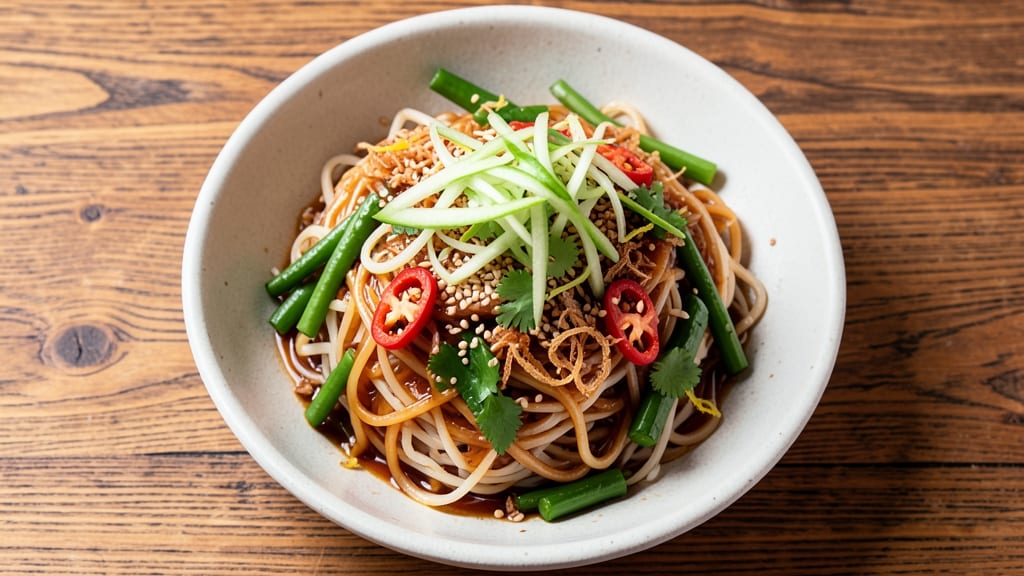
This Burmese noodle salad recipe brings the vibrant flavors of Myanmar to your table with its perfect balance of tangy tamarind, toasted sesame crunch, and fresh herbs.
The dish combines delicate rice noodles with a bold dressing made from tamarind paste, fish sauce, garlic, and chili—creating a harmonious blend of sweet, sour, and spicy notes that dance on your palate.
I've perfected this recipe to deliver the same restaurant-quality experience at home, where every bite feels like a taste of Southeast Asia.
The secret to this dish lies in the dressing, which transforms simple ingredients into something extraordinary. Toasted sesame seeds add a nutty crunch, while fresh herbs like mint and cilantro bring brightness and freshness.
Whether you use chicken, tofu, or shrimp, the protein is marinated in a mix of garlic, soy sauce, and lime, ensuring it stays tender and infused with flavor. The rice noodles are prepped just right—soaked but still firm—to hold up to the dressing without turning mushy.
What makes this salad truly special is how the flavors come together. The tamarind dressing coats the noodles and protein, creating a sticky, aromatic glaze that clings to every strand.
Topped with crushed peanuts and a squeeze of lime, each bite delivers a perfect mix of textures and tastes—crispy, creamy, tangy, and fresh. It's a dish that's as satisfying as it is visually stunning, perfect for a light yet flavorful meal.
This Burmese noodle salad is versatile enough for any occasion—serve it as a refreshing lunch, a side dish for grilled meats, or even a vegetarian main with tofu. The recipe is simple yet impressive, making it ideal for both weeknight dinners and special gatherings.
Let's get started on creating this vibrant, flavor-packed dish that will transport you straight to the bustling streets of Myanmar.
Ingredients for burmese noodle salad
These vibrant ingredients bring the bold flavors of Myanmar to your kitchen table.
| Ingredient | Amount | Notes |
|---|---|---|
| Rice Noodles 🍜 | 8 oz | Flat, medium-width, uncooked |
| Tamarind Paste 🍈 | ⅓ cup | Unsweetened, block form preferred |
| Fish Sauce 🐟 | 2 tbsp | Red Boat brand recommended |
| Garlic Cloves 🧄 | 6 cloves | Minced, fresh preferred |
| Fresh Chili Peppers 🌶️ | 2 whole | Bird's eye or Thai chili, finely chopped |
| Lime Juice 🍋 | ¼ cup | Freshly squeezed |
| Soy Sauce 🍶 | 2 tbsp | Light or regular |
| Toasted Sesame Seeds 🥜 | ¼ cup | Store-bought or homemade |
| Crushed Peanuts 🥜 | ½ cup | Unsalted, lightly crushed |
| Fresh Cilantro Leaves 🌿 | ½ cup | Stems removed, chopped |
| Fresh Mint Leaves 🌿 | ¼ cup | Chopped, tender stems included |
| Protein of Choice 🍗 | 1 lb | Chicken breast, tofu, or shrimp |
| Olive Oil 🫒 | 2 tbsp | For protein marinade |
| Sugar 🍚 | 1 tbsp | White or brown, adjust to taste |
| Salt 🧂 | 1 tsp | Kosher or sea salt |
The tamarind paste is the heart of this dish—look for block form at Asian markets (it's more flavorful than paste). Thai Kitchen or Mae Ploy brands are easy to find. If you can't find tamarind paste, a mix of lime juice and brown sugar works in a pinch, but it won't be quite the same. For the fish sauce, Red Boat is my go-to—it's clean, potent, and free from additives. The garlic and chili should be fresh; if you're using dried chili flakes, halve the amount. Toast your own sesame seeds in a dry pan for 2-3 minutes until fragrant—game-changer for that nutty crunch!
No tamarind? Lime juice plus brown sugar gets you close, though it won't have the same depth. Swapping proteins? Tofu gets marinated longer (30 mins vs. 15), while shrimp cooks in just 2 minutes. Fresh herbs wilt fast, so store them in damp paper towels in the fridge. The rice noodles need a quick soak in hot water (5-7 minutes) until pliable but still firm—no boiling! For extra heat, add a dash of Sriracha or chili garlic sauce to the dressing. If you're serving this as a vegetarian main, double the tofu or add edamame for extra protein.
This salad tastes even better the next day—flavors meld beautifully. Store leftovers in an airtight container for up to 3 days in the fridge. The dressing keeps separately for 5 days, so you can prep ahead. For serving, I like to arrange the noodles on a platter, drizzle with extra dressing, and scatter the crushed peanuts and herbs on top. Garnish with lime wedges—because nothing says 'fresh' like a squeeze at the table. Freezes well for 2 months if you're prepping for a crowd, though the noodles get softer after thawing.
Why You'll Love This Recipe
- No-Fuss Assembly: I swear, this comes together in 15 minutes flat. Soak the rice noodles while you prep the dressing—just mix tamarind paste, fish sauce, minced garlic, and chili, then toss. No boiling, no waiting, just stir and serve.
- Tangy Kick: That tamarind-fish sauce combo? It’s ridiculously good—bright, salty, with a little heat from the fresh chili. The noodles soak up the flavor like a dream, giving you that perfect balance of sour, spicy, and umami.
- Lunchbox Hero: Between us, this is my go-to for packed lunches. Keeps for days in the fridge, stays fresh, and I can toss in whatever I have—hard-boiled eggs, shredded cabbage, or even leftover grilled chicken. Zero waste, all flavor.
- Budget Magic: Fish sauce and tamarind paste are cheap staples, and rice noodles cost pennies. I stretch this salad into two meals easy—first as a light lunch, then reheated (or cold) the next day with a fried egg on top. Feeds two for the price of one takeout.
Step-by-step instructions for Burmese noodle salad
This vibrant dish brings together tangy tamarind, nutty sesame, and fresh herbs for a perfect balance.
Prepare the Tangy Tamarind Dressing
In a small bowl, combine the 0.33 cup tamarind paste, 2 tablespoons fish sauce, 1 tablespoon sugar, and 2 tablespoons soy sauce. Whisk vigorously until the tamarind paste dissolves completely and the mixture becomes smooth. You'll notice the tamarind's signature tangy-sweet flavor developing as it blends with the salty fish sauce and umami soy sauce.
Slowly drizzle in the 0.25 cup lime juice while continuing to whisk. The dressing should transform into a glossy, golden liquid with a bright citrus aroma. Taste and adjust seasoning - you might want to add a pinch more sugar or fish sauce to balance the flavors perfectly. Set this dressing aside while you prepare the remaining components.
Cook and Marinate the Protein
Slice the 1 lb protein of choice into thin strips or bite-sized pieces, depending on your preference. In a bowl, combine the protein with 2 tablespoons olive oil, 1 teaspoon salt, and 1 tablespoon lime juice. Mix thoroughly to ensure even coating. Let this marinate for 10-15 minutes while you prepare the other components.
Heat a skillet over medium-high heat and add the marinated protein. Cook for 3-5 minutes until fully cooked through and slightly browned. For chicken or shrimp, you'll want to see the edges turning opaque and the internal temperature reaching 165°F. Remove from heat and set aside to cool slightly before adding to the salad.
Assemble the Fresh Vegetable Components
In a large mixing bowl, combine the 8 oz rice noodles, 0.5 cup crushed peanuts, 0.25 cup toasted sesame seeds, 0.5 cup chopped fresh cilantro leaves, and 0.25 cup chopped fresh mint leaves. Gently toss everything together to distribute the herbs and nuts evenly throughout the noodles. The fresh herbs will release their bright aromas as you mix.
Add the cooked protein to the bowl and toss again to combine. The warm protein will help release more of the herbs' flavors. At this point, you can taste the base components - the noodles should have a pleasant texture with a nice crunch from the peanuts and sesame seeds, and the herbs should add a fresh, vibrant note.
Combine and Toss with Dressing
Pour the prepared tamarind dressing over the noodle mixture. Using clean hands or a large spoon, toss everything together until the noodles are evenly coated with the dressing. You'll see the noodles glisten as they absorb the tangy sauce. The mixture should look vibrant with the green herbs contrasting against the golden noodles and peanuts.
Add the 6 cloves minced garlic and 2 whole finely chopped fresh chili peppers to the bowl. Toss again to distribute these flavorful ingredients throughout the salad. The garlic will add a subtle depth, while the chili peppers will bring a pleasant heat that balances the dish. Let the salad sit for 5 minutes to allow all the flavors to meld together.
Serve Immediately for Maximum Freshness
Give the salad one final toss before serving to ensure everything is well combined. The perfect Burmese noodle salad should have a balance of textures - the soft noodles, the crunch of peanuts and sesame seeds, and the fresh bite of herbs. The dressing should coat each strand of noodle while still allowing the individual components to shine.
Serve immediately while the noodles are still warm and the flavors are at their peak. This dish is best enjoyed fresh, as the herbs will continue to release their aromas and the dressing will maintain its vibrant tang. Garnish each serving with an additional sprinkle of toasted sesame seeds and a few fresh mint leaves for that final touch of authenticity.
Pro Tips For Making Burmese Noodle Salad
- SOAK NOODLES UNTIL TRULY SOFT: I learned this the hard way—rice noodles that aren’t fully tender will turn to mush when tossed with the dressing. Soak them in warm (not boiling) water for 15-20 minutes, then check: they should bend easily without snapping. Drain just before mixing with the sauce, or they’ll get soggy.
- MINCE GARLIC FINE, THEN REST: Fresh garlic makes all the difference, but mincing it too coarsely leaves chunks that overpower the dish. Use a knife to chop it into a paste, then let it sit for 5 minutes before adding to the sauce—this softens the edges and blends better. (Yes, even if you’re impatient like me.)
- DILUTE TAMARIND PASTE FIRST: Thick tamarind paste clumps like glue if you toss it in dry. Mix it with 2-3 tablespoons of warm water before adding to the sauce—this ensures it dissolves smoothly. If it’s still grainy, strain it through a fine sieve. (Your future self will thank you.)
- TOSS NOODLES WITH DRY HANDS: Wet hands make noodles slippery and turn the salad into a sticky mess. Pat your hands dry before handling the noodles, and use a fork to toss them with the dressing. This keeps the texture light and the flavors balanced—no one wants a gluey pile of noodles.
Essential equipment for this dish
Mixing Bowl Essentials
You'll need a large mixing bowl (at least 12-inch diameter) to combine all components without spills. I recommend a stainless steel bowl from OXO Good Grips—it's non-reactive and easy to clean.
For the tamarind dressing, a small glass bowl (like Pyrex) works best because you can whisk directly in it without worrying about scratches. 🥣
Knife and Cutting Tools
A sharp 8-inch chef's knife is crucial for mincing garlic and chopping chili peppers. I use a Wüsthof Classic—its precision makes quick work of these ingredients.
For crushing peanuts, a rolling pin or mortar and pestle works, but a small food processor (like Ninja FP-101) speeds up the process for larger batches. Never skip sharp knives—they ensure even texture and safety. ✂️
Skillet for Protein
Use a non-stick skillet (preferably 10-inch) like Calphalon for cooking the protein—it prevents sticking and makes flipping effortless. If you prefer cast iron, season it well first.
A meat thermometer (like Thermoworks Smoke) ensures chicken or shrimp reaches 165°F safely. Avoid overcrowding the pan to maintain even cooking. 🔥
Measuring Tools
Precision matters with this recipe. Use a liquid measuring cup for tamarind paste and lime juice, and a set of stainless steel measuring spoons for fish sauce, sugar, and soy sauce.
For the rice noodles, a kitchen scale (like OXO Good Grips) gives the most accurate weight. A fine-mesh strainer helps drain excess water from soaked noodles without breaking them. 📏
Optional Pro Tools
For extra authenticity, a mortar and pestle (like Kuhn Rikon) helps crush garlic and chili peppers for deeper flavor. A microplane (for lime zest) or mandoline (for even noodle slicing) elevates texture.
If you love sesame seeds, toast them in a small dry skillet over medium-low heat for 2-3 minutes until fragrant—this simple step transforms the dish. 🥜
Nutrition facts
Frequently asked questions
What's the best way to store leftover Burmese noodle salad?
Store leftovers in an airtight container in the fridge for up to 3 days. The dressing keeps separately for 5 days if you want to prep ahead. For best texture, serve within 24 hours—the noodles hold up better when fresh. Reheat gently in the microwave with a splash of water to restore moisture.
Can I make this salad without tamarind paste?
Yes! Mix 0.25 cup lime juice with 1.5 tablespoons brown sugar as a substitute. While not identical, this creates a similar tangy-sweet balance. For extra depth, add 1 teaspoon vinegar (rice or apple cider). The dish will still taste delicious, though the authentic Burmese flavor profile will differ slightly.
How do I adjust the spice level for kids or sensitive eaters?
Reduce or omit the fresh chili peppers entirely. For mild heat, use 1 teaspoon chili flakes instead of whole peppers. Taste the dressing before combining with noodles—you can always add more sugar to balance any lingering spice. Kids often love the nutty peanut and sesame flavors, so focus on those textures first.
What's the difference between rice noodles and vermicelli?
Rice noodles are wider and more substantial (flat, medium-width in this recipe), while vermicelli are thin and round. For this dish, rice noodles hold up better to the dressing and provide better texture contrast. If using vermicelli, reduce cooking time to 3-4 minutes and add 1 extra tablespoon fish sauce to compensate for their lighter texture.
Can I make this salad ahead of time for a party?
Prepare the dressing and marinate the protein 1 day ahead. Store separately in airtight containers. Assemble just before serving to maintain crispness. For large groups, double the recipe and use two 12-inch mixing bowls. Keep the crushed peanuts and sesame seeds separate until serving to prevent sogginess.