Salads
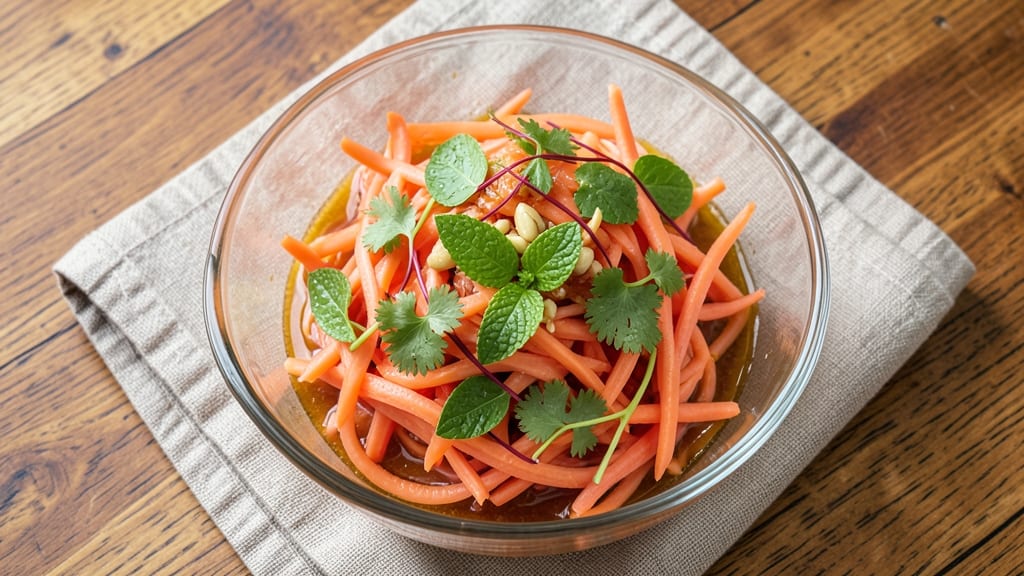
This Burmese papaya salad recipe delivers the perfect balance of tangy, spicy, and crunchy flavors in just 20 minutes. Inspired by traditional Burmese cuisine, this dish transforms fresh papaya into a vibrant, refreshing salad that’s both light and satisfying.
The secret lies in the harmony of sweet, sour, and spicy elements—each bite is a burst of bright, complex flavors that make it a standout dish.
The recipe begins with ripe papaya, shredded finely to create a tender yet crisp texture. Fresh herbs like mint and cilantro add depth, while a zesty dressing made with lime juice, fish sauce (or a vegan alternative), garlic, and chili brings the flavors to life.
The addition of toasted peanuts and lime zest adds a satisfying crunch and aromatic finish. It’s a dish that’s as easy to prepare as it is delicious to eat.
What makes this salad truly special is its versatility—serve it as a refreshing side with steamed rice or grilled meats, or enjoy it as a light, flavorful main dish on its own.
The balance of flavors is foolproof, ensuring every bite is packed with freshness and excitement. Whether you're a seasoned cook or a beginner, this recipe is designed to impress without complicating things.
For those looking to adapt the recipe, swapping fish sauce for soy sauce or coconut aminos creates a vegan-friendly version, while adjusting the chili level lets you customize the heat. The salad also keeps well in the fridge for up to 2 days, making it perfect for meal prep.
Let’s bring the vibrant flavors of Burma to your table with this simple yet unforgettable recipe.
Ingredients for burmese papaya salad
Fresh papaya, herbs, and zesty dressing transform into this vibrant Burmese salad.
| Ingredient | Amount | Notes |
|---|---|---|
| Ripe Papaya 🍈 | 2 cups | Shredded finely, seeds removed |
| Fresh Mint Leaves 🌿 | ½ cup | Stems removed, loosely packed |
| Fresh Cilantro Leaves 🌿 | ¼ cup | Chopped, stems removed |
| Lime Juice 🍋 | ½ cup | Freshly squeezed, strained |
| Vegetarian Fish Sauce Substitute 🍜 | 2 tbsp | Soy sauce or coconut aminos |
| Garlic Cloves 🧄 | 3 cloves | Minced finely, fresh preferred |
| Red Chili Peppers 🌶️ | 2 whole | Thinly sliced, adjust for heat |
| Toasted Peanuts 🥜 | ½ cup | Crushed roughly, store-bought okay |
| Lime Zest 🍋 | 1 tbsp | From 1 lime, finely grated |
| Sugar 🍯 | 2 tbsp | White or brown, adjust to taste |
| Vegetable Oil 🫒 | 1 tbsp | For toasting peanuts |
| Salt 🧂 | ½ tsp | Kosher or sea salt |
| Steamed Jasmine Rice 🍚 | 2 cups | Optional serving base |
The papaya is the star—look for ripe but firm fruit with a vibrant orange color. Asian markets often carry the best quality, but grocery stores usually have it too. Fresh herbs are non-negotiable here; wilted mint or cilantro will ruin the dish. For the fish sauce substitute, coconut aminos add a subtle sweetness, while soy sauce gives a more neutral profile. If you can't find ripe papaya, substitute with green mango—just shred it thinner for similar texture.
No fresh mint? Dried mint works at half the amount, though it lacks the bright freshness. Chili too spicy? Remove seeds and membranes or swap for milder jalapeños. The sugar balances the acidity—taste as you go, especially if using tart limes. For extra crunch, toast the peanuts yourself in a dry pan for 3-4 minutes until golden. The dressing should coat the back of a spoon; if too thin, add more lime juice or sugar.
Store the dressing separately in the fridge for up to 3 days—this keeps the herbs fresh longer. The salad itself holds for 2 days if stored in an airtight container, though the papaya softens over time. Serve over steamed jasmine rice to round out the meal, or enjoy as-is for a light lunch. The flavors actually improve after sitting 10 minutes, as everything melds together.
Why You'll Love This Recipe
- I’ll be real: fresh herbs and ripe fruit can feel pricey, but this recipe stretches ingredients like crazy. A single lime and a small bunch of mint go a long way, and you’re left with a dish that’s way more impressive than store-bought mixes. Plus, it’s vegetarian but still packs serious flavor—no compromises.
- No-Knife Nightmare: I swear by this one after my last papaya carving disaster. Just tear the fruit into chunks—no fancy mandoline required—and let the dressing do the work. The juicy sweetness of ripe papaya pairs perfectly with the sharpness of lime and that umami punch from the fish sauce substitute, all while you’re still scrolling through your phone.
- Tangy, Herby Magic: Between us, the mint and cilantro make this salad ridiculously addictive. That bright lime cut through the fruit’s natural sweetness while the herbs add a freshness you won’t find in your average salad. It’s the kind of dish that makes you want to eat it straight from the bowl—no apologies.
- Lunchbox Hero: Honestly, this keeps perfectly for days in the fridge, and it’s the only salad I’ll pack for work. Toss it in a container with some rice or crackers, and you’ve got a meal that’s still exciting by day three. My coworkers actually ask for seconds—unheard of for a salad.
Step-by-step instructions for Burmese papaya salad
Here's how to assemble this vibrant salad with perfect balance of sweet, spicy, and tangy flavors.
Prepare the Papaya Base
Cut the 2 cups ripe papaya in half lengthwise and scoop out the seeds with a spoon. Using a sharp knife, carefully shave off the skin, then finely shred the flesh into thin strips—about ⅛-inch wide. Place the shredded papaya in a large mixing bowl. The papaya should be tender but still hold its shape slightly, not turning to mush.
Real talk: If your papaya feels fibrous, give it a quick pass through a food processor for more uniform texture. The goal is to create that signature "chewy" texture that's distinct from fruit salads. Set aside while you prepare the remaining ingredients.
Toast the Peanuts and Toasted Garlic
Heat 1 tablespoon vegetable oil in a dry skillet over medium heat. Add the 0.5 cup toasted peanuts and toast for 2-3 minutes until fragrant and lightly golden. Immediately transfer to a plate to cool, then roughly crush them between your palms or with a rolling pin. This adds the perfect crunch contrast.
In the same skillet, add the 3 cloves garlic (peeled) and toast for 30 seconds until golden and fragrant. Remove from heat immediately—they'll continue cooking from residual heat. Let cool completely before adding to the salad mixture.
Create the Signature Dressing
In a small bowl, whisk together the 0.5 cup lime juice, 2 tablespoons vegetarian fish sauce substitute, 2 tablespoons sugar, 0.5 teaspoon salt, and 1 tablespoon lime zest. This is the flavor foundation—don't skip tasting as you go. The dressing should balance sweet, salty, and tart notes with just a hint of funk from the fish sauce.
Add the 0.5 cup fresh mint leaves and 0.25 cup fresh cilantro leaves, then gently muddle with a fork to release their oils while keeping the leaves mostly intact. This infusion gives the salad its signature aromatic depth. Thin the dressing with 1-2 tablespoons water if needed to reach a pourable consistency.
Combine All Ingredients
Pour the dressing over the shredded papaya and toss gently but thoroughly to coat every piece. Add the toasted garlic, crushed peanuts, and 2 thinly sliced red chili peppers (seeds removed if you prefer less heat). The salad should look vibrant with pops of green, red, and white.
Taste and adjust the balance: Need more sweetness? Add another ½ teaspoon sugar. Too spicy? Balance with more lime juice. The ideal flavor profile should be complex—bright, tangy, slightly sweet, with a lingering heat that doesn't overpower.
Serve Immediately
Transfer the salad to a serving platter and serve over 2 cups steamed jasmine rice if desired. The rice soaks up the excess dressing while adding a neutral base that lets the salad's flavors shine. For best texture, serve within 15 minutes—the peanuts stay crisp and the dressing remains vibrant.
Garnish with additional mint leaves and lime wedges for presentation. This salad keeps well in the fridge for up to 2 hours, but the peanuts will soften slightly. For maximum freshness, serve immediately after assembly.
Pro Tips For Making Burmese Papaya Salad
- Ripen That Papaya: Skip the mushy fruit—look for papaya with a deep orange hue and just a tiny give when pressed near the stem. Overripe ones turn to mush in your hands (and bowl), while underripe ones taste like bland rubber. I learned this the hard way after making a salad that could’ve doubled as a smoothie.
- Tear, Don’t Chop Herbs: Rough up those mint and cilantro leaves with your fingers instead of chopping them finely. The ragged edges release more flavor and aroma, which is half the magic of this salad. Yes, it’ll look less "Instagram," but your taste buds won’t care—trust me.
- Shock the Papaya: After shredding the papaya, toss it in ice water for 30 seconds before draining. This stops the enzymes that turn your vibrant salad into a sad, watery mess. I used to skip this, and my salad would wilt by the time I added the dressing—now it stays crisp for hours.
- Dress in Stages: Don’t dump all the lime juice and fish sauce substitute at once. Start with half, toss, taste, then add the rest. The acidity builds flavor, but too much too soon will curdle the papaya. I was skeptical until I tried it—now I can’t imagine doing it any other way.
Best sauces and condiments for these flavors
Classic Burmese Dressing
The foundation of any great Burmese papaya salad is the dressing, which balances sweet, sour, salty, and spicy notes. I start with ½ cup freshly squeezed lime juice—never bottled—for that bright, zesty kick.
Add 2 tablespoons of vegetarian fish sauce substitute (like coconut aminos) for umami depth, then sweeten with 2 tablespoons sugar to counteract the acidity. A pinch of ½ teaspoon salt and 1 tablespoon lime zest add aromatic complexity.
The dressing should coat the back of a spoon but remain pourable. 🍋
Herb Infusion Magic
Fresh herbs are non-negotiable here. I muddle ½ cup mint leaves and ¼ cup cilantro directly into the dressing to release their oils while keeping the leaves mostly intact. This step is what gives the salad its signature aromatic punch.
For extra depth, I sometimes add 1 teaspoon grated ginger to the dressing—it rounds out the flavors beautifully. If you can't find fresh mint, dried will work in a pinch, but the fresh version is truly transformative. 🌿
Spicy Chili Variations
The heat level is entirely customizable. For a mild kick, use 1 thinly sliced jalapeño instead of the traditional red chili peppers. If you love heat, keep the seeds and membranes in for maximum spice.
I also like to add ½ teaspoon ground white pepper to the dressing for a subtle, earthy warmth that complements the chili. For a smoky twist, swap 1 teaspoon smoked paprika for half the sugar in the dressing. 🌶️
Crunchy Texture Boosters
Beyond peanuts, there are endless ways to add texture. I often toast ¼ cup crushed roasted cashews alongside the peanuts for a richer, nuttier crunch. For a tropical twist, add 2 tablespoons shredded coconut (toasted lightly in the same pan as the peanuts).
Another favorite is ½ cup thinly sliced radishes, which add a crisp, peppery bite that cuts through the richness. These additions elevate the salad from good to extraordinary. 🥜
Sweet-Savory Additions
To deepen the savory profile, I sometimes stir in 1 tablespoon toasted sesame seeds or 1 teaspoon sesame oil into the dressing. For a touch of sweetness that pairs beautifully with the spice, add 2 tablespoons finely chopped dried longan or 1 tablespoon honey to the dressing.
These ingredients add layers of complexity that make the salad even more dynamic. The key is to taste as you go—balance is everything. 🍯
Dressing Storage Tips
Make the dressing ahead of time to save steps on busy days. Store it in an airtight container in the fridge for up to 3 days, but keep the herbs separate until ready to use.
When you're ready to assemble the salad, simply mix the dressing with the herbs and toss with the papaya. This trick ensures the herbs stay fresh and vibrant, while the dressing develops even more depth over time. Pro tip: Label the container with the date to track freshness. ❄️
Nutrition facts
Frequently asked questions
Can I use green papaya instead of ripe papaya?
Yes, but the texture will be quite different. Green papaya creates a firmer, crunchier salad that's more like a Southeast Asian vegetable dish. For a closer match to traditional Burmese papaya salad, use ripe but firm orange papaya—it should yield easily when pressed but not be mushy. If you must use green, shred it thinner and add 1 extra tablespoon lime juice to balance the less sweet flavor.
How do I make this recipe vegan?
Swap the fish sauce for 2 tablespoons coconut aminos or soy sauce—both work well for umami depth. For extra richness, add 1 teaspoon miso paste to the dressing. The salad remains fully plant-based while keeping all the signature flavors. Just taste as you go, as coconut aminos can be slightly sweeter than fish sauce.
Why does my salad taste too sour?
Too much lime juice is the most common cause. Balance it by adding ½ teaspoon more sugar or 1 teaspoon toasted sesame seeds to round out the flavors. If the dressing is still overwhelming, mix in 1 tablespoon shredded coconut or 1 teaspoon honey—these neutralize acidity beautifully. Always taste after combining all ingredients.
Can I prepare this ahead of time?
Yes, but store the dressing and papaya separately. Make the dressing up to 3 days ahead and refrigerate in an airtight container. Keep the herbs separate until serving to maintain freshness. Assemble the salad just before eating—this preserves the crisp texture of the peanuts and papaya. For best results, serve within 1-2 hours of tossing.
What's the best way to adjust the spice level?
Start by removing the seeds and membranes from the chili peppers for milder heat. For extra kick, add ½ teaspoon chili flakes—or swap in 1 teaspoon sambal oelek to the dressing. Balance any heat with more lime juice or sugar. Pro tip: Toast the chili peppers in a dry pan for 30 seconds—this intensifies their flavor without adding moisture.