Salads
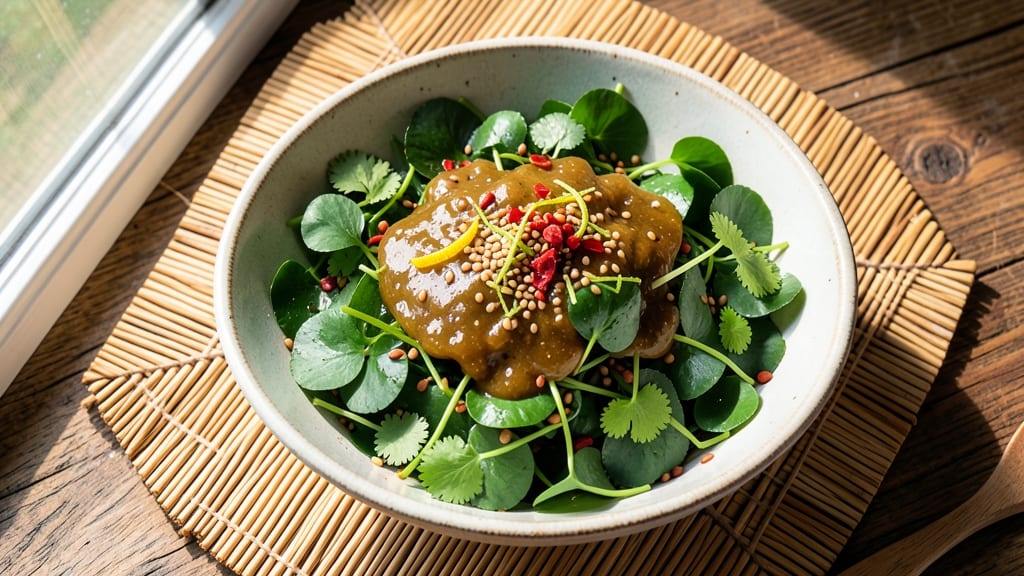
This Burmese pennywort salad recipe delivers a perfect balance of tangy lime, spicy chili, and herbaceous crunch—a refreshing, vegan dish that captures the bold flavors of Myanmar.
The secret lies in properly preparing the pennywort leaves, which must be thoroughly washed and chopped to highlight their natural crispness and subtle bitterness. Traditional Burmese cuisine thrives on sour, spicy, and umami notes, and this salad embodies those elements in every bite.
The dressing is where the magic happens—a zesty blend of lime juice, tamarind paste, and chili flakes that creates a vibrant, aromatic sauce. Toasted sesame seeds and fresh herbs like cilantro or mint add texture and depth, while a touch of garlic and shallots deepen the umami profile.
This dish is not only visually striking with its bright green leaves and golden garnishes but also incredibly satisfying in flavor.
Perfect for warm weather or as a light yet flavorful main course, this salad comes together in just 20 minutes with minimal effort. The key is ensuring the pennywort is fresh and properly prepared—no wilting or soggy textures here.
Serve it as a standalone dish or pair it with grilled tofu or steamed rice for a complete meal.
Optional garnishes like fried shallots or crushed peanuts add an extra layer of crunch, while a sprinkle of lime zest brightens the dish even further. Whether you're exploring Burmese cuisine or simply looking for a vibrant, plant-based salad, this recipe delivers restaurant-quality results at home.
Ingredients for burmese pennywort salad
Fresh pennywort and zesty lime form the heart of this vibrant Burmese-inspired salad.
| Ingredient | Amount | Notes |
|---|---|---|
| Pennywort Leaves 🌿 | 6 cups | Fresh, washed, stems removed |
| Fresh Lime Juice 🍋 | ½ cup | Strained, seeds removed |
| Tamarind Paste 🍯 | 2 tbsp | Unsweetened, dissolved in warm water |
| Red Chili Flakes 🌶️ | 1 tbsp | Adjust for spice preference |
| Toasted Sesame Seeds 🥜 | 2 tbsp | Lightly browned in dry pan |
| Fresh Cilantro Leaves 🌿 | ⅓ cup | Chopped, stems removed |
| Fresh Mint Leaves 🌿 | ¼ cup | Chopped, for brightness |
| Garlic Cloves 🧄 | 3 cloves | Minced, for umami depth |
| Shallots 🧅 | 2 whole | Thinly sliced, for sharpness |
| Coconut Aminos 🥛 | 1 tbsp | For salty umami balance |
| Lime Zest 🍋 | 1 tsp | Freshly grated for brightness |
| Crushed Peanuts 🥜 | ¼ cup | Optional garnish for crunch |
| Fried Shallots 🧅 | 2 tbsp | Store-bought or homemade |
| Extra-Virgin Olive Oil 🫒 | 1 tbsp | For drizzling, optional |
Pennywort is the star—find it at Asian markets or specialty grocery stores like Whole Foods. Look for bright green, crisp leaves with no yellowing. Freshness is key: wash thoroughly and pat dry to remove any dirt or grit. The cilantro and mint should be equally vibrant—store-bought bags often work, but farmers markets usually have fresher options. For tamarind paste, Mae Ploy or Thai Kitchen brands are reliable; avoid sweetened versions. Toast the sesame seeds in a dry pan until golden—just 2-3 minutes—to enhance their nutty flavor without burning.
No tamarind? Lemon juice plus a pinch of sugar mimics its tangy depth. Chili flakes too spicy? Swap for 1 tsp mild chili powder. Shallots can be replaced with red onion (finely chopped), though they add a milder sweetness. For extra umami without coconut aminos, soy sauce or vegan fish sauce works well. Fresh herbs wilt fast—store them in damp paper towels in the fridge for up to 5 days. The garlic and shallots can be prepped ahead; just keep them dry until ready to use to prevent browning.
This salad keeps best when stored in an airtight container for 2 days—the flavors meld beautifully overnight. The dressing separates naturally; just stir before serving. For extra crunch, toast the peanuts and fried shallots fresh each time. Garnishes like lime zest and sesame seeds can be added just before serving to keep them crisp. If prepping ahead, store the pennywort and herbs separately to maintain texture. The dressing can be made 1 day in advance—just whisk before combining with the salad.
Why You'll Love This Recipe
- I swear by this trick: just tear the pennywort leaves by hand—no knife, no fuss. The texture stays fresh, and honestly? It’s faster than chopping greens for any salad I’ve ever made.
- No-Chop Necessary: I swear by this trick: just tear the pennywort leaves by hand—no knife, no fuss. The texture stays fresh, and honestly? It’s faster than chopping greens for any salad I’ve ever made.
- Tamarind-Lime Zing: That tamarind paste and lime juice combo is chef’s kiss—sour, sweet, and just spicy enough from the chili flakes. It’s the kind of flavor that makes you eat it straight from the bowl, no apologies.
- Lunchbox Hero: Pack it in jars for work or school—it holds up for days (yes, even the pennywort stays crisp). My kids take theirs to daycare, and I’ve had coworkers beg for the recipe after one taste.
Step-by-step instructions for Burmese pennywort salad
This vibrant Burmese salad delivers a perfect balance of tangy, spicy, and herbal notes.
Prepare the Tamarind-Lime Dressing
In a small bowl, dissolve the 2 tbsp tamarind paste in ¼ cup warm water until smooth. This creates the base of our dressing. Add the 0.5 cup fresh lime juice, 1 tbsp coconut aminos, and 1 tsp lime zest, then whisk until fully combined. The mixture should be thick but pourable—if it's too stiff, add 1-2 teaspoons water to reach the right consistency.
Taste and adjust the balance: the tamarind provides depth, the lime offers brightness, and coconut aminos add umami. The dressing should be tangy with a subtle sweetness—this is the flavor foundation of the salad. Set aside while you prepare the remaining ingredients.
Toast and Sauté the Aromatics
Heat a dry skillet over medium heat and toast the 2 tbsp toasted sesame seeds for 1-2 minutes until fragrant and lightly golden. Remove them immediately and set aside. In the same skillet, add 1 tbsp extra-virgin olive oil and sauté the 2 whole shallots (thinly sliced) for 3-4 minutes until soft and translucent.
Add the 3 cloves minced garlic and cook for 30 seconds until aromatic but not browned. Immediately transfer the shallots and garlic to a bowl to cool. This step develops the base flavors that will carry through the entire salad. The garlic should smell pungent but not burnt—this ensures we capture its full flavor without bitterness.
Combine the Salad Base
In a large mixing bowl, combine the 6 cups pennywort leaves, 0.33 cup chopped cilantro leaves, and 0.25 cup chopped mint leaves. Gently toss with the cooled shallot-garlic mixture. Add the 1 tbsp red chili flakes and toss again to distribute evenly. The leaves should look vibrant and slightly wilted from the garlic's heat.
Here's the thing—pennywort leaves have a delicate texture, so handle them gently. Over-tossing can bruise the leaves and make the salad mushy. Instead, use light, lifting motions with your hands or a spatula to maintain their crispness. The chili flakes should be scattered throughout, promising a subtle heat with every bite.
Finish with Crunch and Garnish
Drizzle the tamarind-lime dressing over the salad and toss gently to coat evenly. The leaves should glisten with moisture but not appear soggy. Sprinkle with the 2 tbsp fried shallots and 0.25 cup crushed peanuts, tossing just once to distribute the crunchy toppings.
For serving, divide the salad among plates and garnish with an additional sprinkle of toasted sesame seeds and fried shallots. The peanuts add texture contrast, the fried shallots bring a crispy edge, and the sesame seeds contribute a nutty finish. Serve immediately while the leaves are still crisp and the dressing is vibrant.
Adjust and Serve
Taste and adjust the seasoning: if the salad needs more tang, add a splash of lime juice; if it needs more heat, sprinkle additional chili flakes. The ideal balance should be bright, slightly spicy, and herbaceous with a satisfying crunch.
This salad works beautifully as a refreshing appetizer or light main course. Pair it with grilled proteins or steamed rice to create a complete meal. The flavors develop best when served fresh, so enjoy it immediately after assembly for the perfect balance of textures and tastes.
Pro Tips For Making Burmese Pennywort Salad
- Wash Leaves Twice: Pennywort leaves trap dirt between their tender layers—I learned this the hard way when my first batch tasted gritty. Rinse them in cold water, then swirl them in a second bowl of fresh water before draining. No need to soak; just a quick, thorough scrub does the trick.
- Dilute Tamarind Paste: Store-bought tamarind paste is often thick and clumpy. Thin it with 1 part warm water to 2 parts paste before mixing—this prevents grainy bits in your dressing. Stir well, then taste: it should coat the back of a spoon without being gluey.
- Toast Sesame Seeds Low: I used to burn them over high heat, thinking faster equaled better. Instead, dry-toast in a nonstick pan over medium-low for 2-3 minutes, stirring constantly until they smell nutty and turn golden. Overheating turns them bitter—trust the aroma, not the color.
- Balance Lime Gradually: Fresh lime juice is the star, but adding it all at once can overwhelm the salad’s earthy depth. Start with half the recommended amount, taste, then adjust. The tamarind and chili need room to shine—you can always add more lime, but you can’t take it out.
Regional styles of this dish
Yangon Street Style
In Yangon, this salad is often served as a quick street food snack, known as hnyin-thoke (leaf salad). Vendors toss the pennywort with a dressing made from fermented tea leaves (laphet thoke), tamarind, and chili, creating a funky, umami-rich flavor.
For an authentic twist, replace the tamarind with 1 tbsp fermented tea leaf powder (available at Asian markets) and add 1 tsp palm sugar to mimic the caramelized depth. The texture should be bold and slightly sticky—just like the salads sold along Yangon’s bustling streets. 🌶️
Mandalay Royal Version
Mandalay’s royal cuisine elevates this dish with delicate presentation and premium ingredients. Use young pennywort leaves (tender and less bitter) and garnish with gold leaf flakes (edible and symbolic) for a luxurious touch.
The dressing here is lighter—swap coconut aminos for 1 tsp vegan fish sauce and reduce chili flakes to ½ tbsp for a subtler heat. Serve on a banana leaf for an authentic royal dining experience. The focus is on balance: crisp leaves, bright acidity, and a whisper of spice. ✨
Rakhine Coastal Adaptation
Along Myanmar’s Rakhine coast, seafood and tropical flavors influence this salad. Add shredded green mango (for sweetness) and diced cucumber (for crunch) to the pennywort base. The dressing gets a seafood boost with 1 tsp shrimp paste (check for vegan versions) and a splash of lime juice.
Top with toasted coconut flakes and crushed peanuts for a fusion of land and sea. This version is lighter, brighter, and perfect for hot coastal climates. 🌊
Shan Highland Twist
The Shan people incorporate wild herbs and forest ingredients into their cuisine. For this adaptation, add chopped lemongrass (for citrusy aroma) and wild mint (if available) to the pennywort. The dressing includes 1 tsp Shan-style chili jam (sweet and spicy) and 1 tbsp rice vinegar for tang.
Garnish with crushed roasted chickpeas (for protein) and toasted sesame seeds. The result is a heartier, earthier salad that reflects the Shan highlands’ rustic flavors. 🌿
Modern Fusion Update
For a contemporary take, blend the tamarind-lime dressing into a creamy dressing by adding 2 tbsp vegan yogurt or cashew cream. Swap fried shallots for crispy wonton strips and add avocado slices for richness.
This version keeps the traditional flavors but updates the texture for a restaurant-worthy twist. Serve with grilled tofu skewers for a complete meal. The fusion balances tradition with innovation—perfect for adventurous eaters. 💡
Nutrition facts
Frequently asked questions
Where can I find fresh pennywort leaves?
Look for pennywort (Centella asiatica) at Asian specialty markets or well-stocked grocery stores like Whole Foods. It's often sold as "gotu kola" or "Indian pennywort" in the produce section. If unavailable fresh, frozen pennywort works in a pinch—just thaw and drain well before using. The leaves should be bright green and crisp; avoid any with yellowing or wilted spots.
Can I substitute tamarind if I don't have any?
Yes! Mix ¼ cup lemon juice with 1 tsp sugar to mimic tamarind's tangy depth. For a closer match, add ½ tsp vinegar (rice or apple cider) to enhance the sour notes. The dressing will be slightly sweeter but still vibrant. Adjust other seasonings accordingly—reduce coconut aminos slightly if using more sugar.
How do I prevent the pennywort from getting soggy?
Handle the leaves gently—toss them lightly with the dressing rather than overmixing. Add crunchy toppings (peanuts, fried shallots) last to maintain texture. For extra crispness, serve immediately after assembly. If prepping ahead, store the dressing separately and combine just before serving. Avoid using watery ingredients like cucumber in large amounts.
Is this salad spicy enough for heat lovers?
For extra heat, add ½ tsp cayenne pepper or 1 fresh Thai chili (minced) to the dressing. For a smoky kick, toast the chili flakes in a dry pan for 30 seconds before adding. Start with these adjustments and taste—you can always add more chili flakes on top before serving. The salad's natural brightness balances even intense heat.
Can I make this salad ahead of time?
Yes, but with a few tricks: store the pennywort and herbs separately from the dressing in airtight containers for up to 2 days. Keep the dressing in a separate jar—it'll separate naturally, so stir before combining. Toast the sesame seeds and fry the shallots fresh before serving to maintain their crispness. The flavors actually improve overnight as the dressing marinates the leaves!