Salads
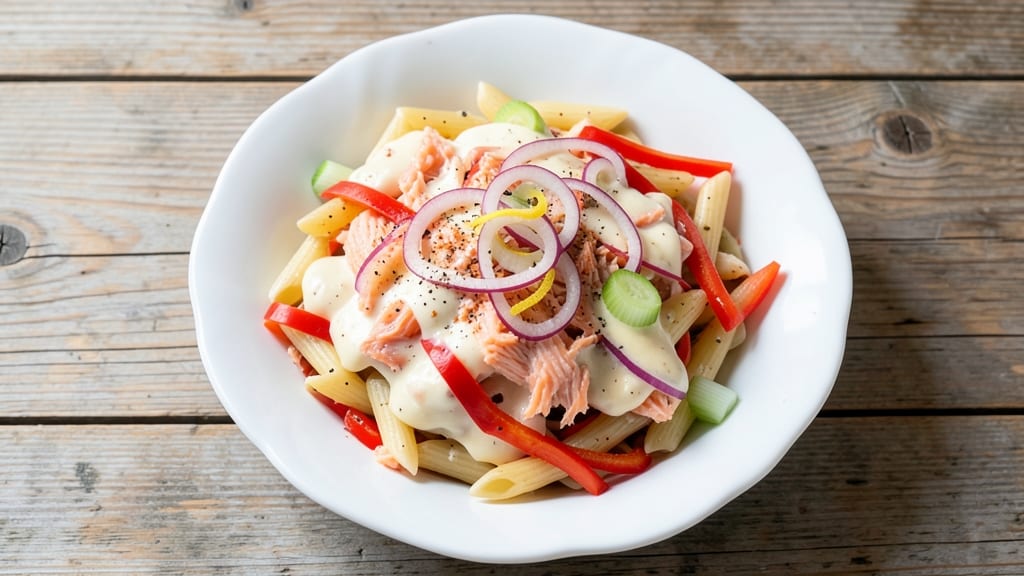
This canned salmon pasta salad recipe transforms humble pantry staples into a protein-packed, restaurant-worthy dish that comes together in just 20 minutes. The secret lies in crisp-tender celery and flaky salmon that melt in your mouth—no fancy equipment required.
What makes this salad special is how the bright lemon-dressing cuts through the richness of the salmon while keeping every ingredient distinct yet harmonious.
The foundation is a mix of sturdy pasta like penne or rotini, which holds up to the dressing without turning mushy. Canned salmon adds a surprising depth of flavor without the fuss of fresh fillets, while crisp celery and bell peppers provide the perfect crunch.
The dressing—tangy lemon, creamy mayo, and a touch of Dijon—binds everything together while keeping the dish light enough for a summer lunch.
What you'll end up with is a salad that's flaky with every bite of salmon, crisp with each celery slice, and perfectly balanced in texture and flavor. It's the kind of dish that tastes even better the next day, making it ideal for meal prep.
The best part? This recipe is naturally pescatarian, packed with protein, and ready in less time than it takes to order takeout.
For extra freshness, fold in avocado or fresh herbs like dill and parsley just before serving. This salad works just as well for a light lunch as it does as a side for grilled meats or fish. Let's make it!
Ingredients for canned salmon pasta salad
Pantry staples meet flaky salmon for a protein-packed salad that's crisp, bright, and ready in minutes.
| Ingredient | Amount | Notes |
|---|---|---|
| Canned Salmon (wild, in water) 🐟 | 2 cans | Drained, flakes removed |
| Penne Pasta 🍝 | 12 oz | Uncooked, sturdy shape |
| Fresh Celery Stems 🧅 | 3 whole | Thinly sliced, crisp |
| Red Bell Pepper 🍅 | 1 whole | Diced, seeds removed |
| Red Onion 🧅 | ½ whole | Finely diced |
| Mayonnaise 🥛 | ½ cup | High-quality, creamy |
| Lemon Juice 🍋 | 2 tbsp | Freshly squeezed |
| Dijon Mustard 🌶️ | 1 tbsp | Mild or strong |
| Extra-Virgin Olive Oil 🫒 | 1 tbsp | For richness |
| Fresh Dill 🌿 | ¼ cup | Chopped, optional |
| Salt 🧂 | ½ tsp | Kosher or sea salt |
| Black Pepper 🌶️ | ¼ tsp | Freshly ground |
| Avocado 🥑 | ½ whole | Diced, for serving |
The salmon makes this salad shine—wild-caught in water has the best texture and flavor. Trader Joe's and Wild Planet brands are my go-to for quality, but any canned salmon works if it's not drained in oil. Look for cans with vibrant pink color and no fishy smell. Celery should be crisp with no brown spots—cut just before mixing to keep it fresh. Bell peppers? Red or yellow add natural sweetness, but green works too if that's what's on hand. For the pasta, penne or rotini hold up best to the dressing without getting mushy.
No fresh dill? Dried dill at one-third the amount works in a pinch, but fresh is ideal. Short on mayo? Greek yogurt mixed with lemon juice cuts the richness while adding protein. The avocado is optional but adds creamy texture—add it last so it doesn't turn brown. For extra crunch, toss in sliced radishes or cucumber. The dressing ratio is key: if you prefer it tangier, add an extra tablespoon of lemon juice. For a creamier version, swap half the mayo for vegan mayo if needed.
Pasta and veggies keep best in the fridge for 3 days if stored separately. The dressing stays fresh for 5 days in an airtight container. This salad actually tastes better the next day as flavors meld. For meal prep, store components separately and assemble when ready to eat. The avocado should be added just before serving. If you're making this ahead, keep the dressing separate until the last minute to maintain crispness.
Why You'll Love This Recipe
- I swear by this trick: just toss the drained salmon, chopped celery, and bell pepper into the pasta while it’s still warm—no waiting, no soggy veggies. The pasta absorbs the juices perfectly, and the texture stays bright.
- No-Cook Crunch Prep: I swear by this trick: just toss the drained salmon, chopped celery, and bell pepper into the pasta while it’s still warm—no waiting, no soggy veggies. The pasta absorbs the juices perfectly, and the texture stays bright.
- Salmon’s Rich Magic: That canned wild salmon? It’s the star—flaky, buttery, and packed with ocean flavor without the fuss. Honestly, the first time I made this, I thought, "This is way better than takeout."
- Lunchbox Hero: Between us, this salad holds up for days in the fridge, making it my go-to for packed lunches or quick dinners. My kids actually finish it—no leftovers in their containers.
Step-by-step instructions for canned salmon pasta salad
A perfectly balanced dish where tender pasta meets flaky salmon and crisp vegetables in under 20 minutes.
🍳 Step 1: Cook the Pasta Al Dente
Bring a large pot of salted water to a rolling boil. Add the 12 oz penne pasta and cook until 1 minute before the package's al dente time—this ensures perfect texture when chilled. Drain immediately and rinse under cold water for 30 seconds to stop cooking and remove excess starch. The pasta should be hot but not steaming when you finish rinsing.
I like to shock the pasta in cold water for just a moment—this prevents it from becoming mushy when mixed with the dressing later. Spread the drained pasta on a baking sheet to cool slightly while you prep the vegetables. This step is crucial for maintaining the pasta's bite and preventing a soggy salad.
👨🍳 Step 2: Prepare the Vegetable Mixture
While the pasta cools, thinly slice the 3 whole fresh celery stems into ¼-inch thick pieces. Dice the 1 whole red bell pepper into ¼-inch cubes, removing seeds and membranes first. Finely dice the 0.5 whole red onion, aiming for pieces no larger than ⅛-inch—this ensures even distribution throughout the salad.
Combine the sliced celery, diced bell pepper, and red onion in a large mixing bowl. Toss gently with the 1 tbsp extra-virgin olive oil and set aside. The vegetables should glisten slightly from the oil, which helps them absorb the dressing more evenly. This prep work takes about 5 minutes and keeps everything ready for the final assembly.
🥘 Step 3: Create the Dressing and Combine Ingredients
In a medium bowl, whisk together the 0.5 cup mayonnaise, 2 tbsp lemon juice, 1 tbsp Dijon mustard, 0.5 tsp salt, and 0.25 tsp black pepper until smooth. Add the 0.25 cup chopped fresh dill and mix well. The dressing should be thick but pourable—if it's too stiff, add 1 tsp of cold water to loosen it slightly.
Drain the 2 cans canned salmon, removing any skin or large bones, and add the flakes to the vegetable mixture. Pour the dressing over the salmon and vegetables, then gently fold in the cooled pasta. The combination should look vibrant with flecks of salmon throughout. Taste and adjust seasoning if needed—this is the moment to ensure the flavors are perfectly balanced before serving.
⏰ Step 4: Chill and Serve with Avocado Topping
Cover the bowl and refrigerate the salad for at least 30 minutes to allow flavors to meld. This chilling time is essential for developing the crisp texture of the celery and the creamy consistency of the dressing. The salad will keep well in the refrigerator for up to 2 days, making it perfect for meal prep.
Before serving, dice the 0.5 whole avocado into ¼-inch cubes and gently toss them into the salad just before eating. The avocado adds a rich, creamy contrast to the crisp vegetables and flaky salmon. Serve the salad chilled, garnished with additional chopped fresh dill if desired. Each bite should deliver a perfect balance of textures and flavors, with the salmon remaining flaky and the celery providing a satisfying crunch.
Pro Tips For Making Canned Salmon Pasta Salad
- DRAIN PASTA WELL—REALLY WELL: I learned this the hard way—leaving any pasta sauce clinging to penne turns your salad into a soggy mess. Rinse it under cold water until the pasta is fully drained, then give it a quick shake in the colander. The extra effort keeps your celery and bell pepper from wilting into mush.
- DICE SALMON SMALL: Skip the big chunks unless you love chewing. Break the canned salmon into ½-inch pieces—this ensures even distribution and makes every bite feel balanced. Pro move: Flake it directly into the bowl with a fork while it’s still cold, so it stays tender.
- SAUTE THE ONION FIRST: Don’t just chop and toss raw onion into the mix. Sauté it in a dry pan for 3-4 minutes until it softens and just starts to caramelize—this sweetens the flavor and cuts through the fish’s richness. Add a pinch of salt while it cooks, or you’ll end up with a bland base.
- STORE IT COLD: This isn’t a dish you want to reheat. Assemble the salad, then refrigerate it for at least 2 hours before serving. The flavors meld better when everything’s chilled, and the pasta absorbs the dressing more evenly. If you’re short on time, make it the night before—it tastes even better the next day.
Common mistakes when making this recipe
Overcooking the Pasta
One of the biggest mistakes is cooking the pasta until it's fully al dente, then mixing it with the dressing while still hot. The starch released from overcooked pasta turns the salad into a mushy mess.
Instead, cook it just 1 minute before the package's recommended time, then rinse it under cold water for 30 seconds to stop the cooking process completely. Spread it on a baking sheet to cool slightly before mixing—this keeps the texture firm and satisfying. 🍝
Skipping the Chill Time
Rushing to serve this salad right after assembly means missing out on the magic of flavor development. The 30-minute chill time in the fridge is non-negotiable—it lets the celery crisp up, the dressing cling to the pasta, and the salmon flavors meld beautifully.
I've learned this the hard way: serving it immediately results in a salad that's just... okay. Give it time, and you'll be rewarded with a dish that tastes even better the next day. ❄️
Using Stale Ingredients
Celery that's even slightly wilted or bell peppers with soft spots will turn your salad into a sad, watery dish. Always check your ingredients before starting: celery should snap crisply when bent, and bell peppers should feel firm to the touch.
If your celery is past its prime, swap it for radishes or cucumber—they hold up better and add a refreshing crunch. Freshness is everything in this salad. 🧅
Neglecting the Dressing Balance
The dressing is what ties everything together, so don't skimp on the lemon juice or Dijon mustard. If you find the salad tasting flat after mixing, it's likely because the dressing needs more acidity.
Add an extra 1 tablespoon of lemon juice or a pinch of Dijon mustard—this brightens up the salmon and cuts through any richness from the mayo. Taste as you go, and adjust until it's perfectly balanced. 🍋
Adding Avocado Too Early
Avocado is a fantastic addition, but adding it too soon turns it into a brown, mushy mess. Always dice it just before serving and fold it in at the very last minute. If you're prepping ahead, keep the avocado separate until serving day.
For extra freshness, sprinkle a little lemon juice over the avocado pieces before adding them to the salad. This keeps them vibrant and creamy. 🥑
Using Low-Quality Salmon
Not all canned salmon is created equal. If you're using salmon packed in oil, drain it thoroughly and rinse it under cold water to remove any greasiness. For the best texture and flavor, opt for wild-caught salmon in water—brands like Trader Joe's or Wild Planet are my go-to choices.
The flakes should be tender but still hold their shape, not falling apart like they're overcooked. This makes all the difference in the final dish. 🐟
Nutrition facts
Frequently asked questions
Can I use frozen salmon instead of canned?
While canned salmon is ideal for convenience, you can use frozen salmon if needed. Thaw it overnight in the fridge first, then flake it carefully. The texture won't be as perfectly flaky as canned, but it still works well. For best results, pat the salmon dry before adding to the salad to prevent excess moisture.
How do I make this salad creamy without mayo?
Swap the mayo for ½ cup Greek yogurt mixed with 1 tbsp lemon juice—it adds creaminess while keeping the dish lighter. For extra richness, blend in 1 tbsp avocado with the yogurt. This version works perfectly for vegan diets if you use plant-based mayo or vegan yogurt.
What pasta shapes work best for this recipe?
Sturdy shapes like penne, rotini, or fusilli hold up best to the dressing without turning mushy. For extra texture, try orzo or farfalle. Avoid delicate shapes like angel hair—they'll overcook when chilled. Cook all pasta 1 minute less than package instructions for best results.
Can I make this salad ahead of time?
Store the cooked pasta, vegetables, and dressing separately in airtight containers for up to 3 days. Combine everything just before serving to maintain crispness. Keep the avocado separate until serving day—add it last to prevent browning. The flavors actually improve overnight!
Is this salad kid-friendly?
With a few adjustments, yes! Skip the Dijon mustard and reduce the lemon juice to 1 tbsp for a milder flavor. Add extra sweetness with diced sweet corn or peas**, and serve with a side of buttered bread for dipping. The creamy texture and familiar ingredients make it appealing for picky eaters.