
Salads
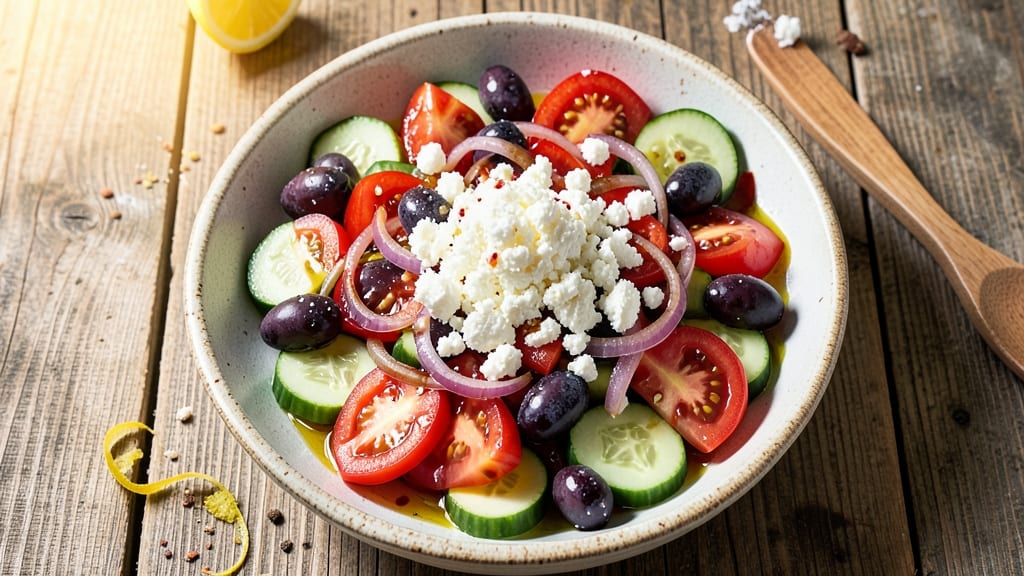
This Greek salad recipe with red wine vinegar delivers the bright tang and crisp florets that make it a summer staple. The secret lies in perfectly ripe tomatoes, crisp cucumbers, and a dressing that balances sharp vinegar with rich olive oil—just like my grandmother used to make.
Every bite captures the essence of Greece with its fresh, vibrant flavors and satisfying crunch.
The traditional ingredients—juicy tomatoes, cool cucumbers, briny olives, and salty feta—come together in a symphony of textures and tastes. What sets this version apart is the red wine vinegar dressing, which adds depth and a subtle complexity that store-bought versions often miss.
The key is timing: slice the vegetables just before serving to preserve their crispness and let the flavors meld when dressed.
What you'll end up with is a salad that looks as beautiful as it tastes—colorful, fresh, and perfectly balanced. The red wine vinegar dressing cuts through the richness of the feta and olives while enhancing the natural sweetness of the vegetables.
This is the kind of dish that feels like a vacation in every bite, perfect for picnics, lunches, or as a side for grilled meats.
Serve immediately for the best texture, but the dressing can be made ahead. The flavors only get better as they sit, making this salad both convenient and impressive. Let's get started on creating your own taste of Greece.
Ingredients for greek salad recipe red wine vinegar
Fresh vegetables, briny olives, and a tangy dressing make this Greek salad brighter than ever.
| Ingredient | Amount | Notes |
|---|---|---|
| Ripe Tomatoes 🍅 | 2 lbs | Heirloom or beefsteak preferred |
| Persian Cucumbers 🥒 | 1 ½ lbs | Skin-on for texture |
| Kalata Olives 🫒 | 1 cup | Pitted, brined or dry-cured |
| Red Onion 🧅 | 1 whole | Thinly sliced, white preferred |
| Crumbled Feta Cheese 🧀 | 8 oz | Aged 6+ months, block preferred |
| Extra-Virgin Olive Oil 🫒 | ¾ cup | Fruity, peppery variety |
| Red Wine Vinegar 🍷 | ⅓ cup | Dry, aged 2+ years |
| Dried Oregano 🌿 | 1 tsp | Mediterranean blend preferred |
| Fresh Dill 🌿 | ¼ cup | Chopped stems included |
| Diamond Crystal Kosher Salt 🧂 | 1 ½ tsp | For seasoning |
| Freshly Ground Black Pepper 🌶️ | ½ tsp | Cracked peppercorns preferred |
| Lemon Juice 🍋 | 1 tbsp | Freshly squeezed |
| Red Wine Vinegar Dressing Add-On 🍷 | 2 tbsp | Extra for drizzling |
Tomatoes and cucumbers are the stars here—pick the plumpest, firmest ones you can find. Trader Joe's and Whole Foods usually have great heirloom tomatoes in summer, but any beefsteak or vine-ripened will work. For cucumbers, Persian types stay crisper longer, but regular ones work too. The olives? Kalata are traditional, but Castelvetrano or Manzanilla olives are great substitutes if you can't find them. Feta should be aged at least 6 months—block form is best, but crumbled works in a pinch. If you're buying pre-crumbled, look for it in the refrigerated section, not the shelf-stable stuff.
No red wine vinegar? Balsamic vinegar at half the amount works in a bind, but it'll taste different. Fresh dill is ideal, but dried dill at one-third the amount gets you close. For the dressing, high-quality extra-virgin olive oil makes all the difference—California Olive Ranch or Colavita are solid choices. If you're using a sweeter olive oil, add an extra splash of vinegar to balance it. The lemon juice brightens everything up, so don't skip it. And trust me, freshly ground black pepper tastes worlds better than pre-ground. If you're short on time, a quick 30-second pulse in a spice grinder will do the trick.
This salad is best eaten fresh, but the dressing can be made up to 2 days ahead—it just gets more flavorful. Store the veggies and feta separately in the fridge until ready to assemble. The olives will keep for 1 week in their brine, and the feta stays good for 2 weeks if properly stored. For extra crunch, slice the cucumbers and tomatoes just before serving. The dressing can be thinned with a splash of water if it gets too thick after refrigeration. Leftovers? Toss them with a bit more olive oil and serve over toast for a quick lunch.
Why You'll Love This Recipe
- No-Chop Nightmare: I swear, the Persian cucumbers stay crisp even if you slice them the night before. Just toss with the tomatoes and olives—no peeling, no seeding, no fuss. The red onion? I buy pre-sliced for lazy days, and the feta? Buy it pre-crumbled. Honestly, this is the salad that lets me not cook.
- Tangy Magic: That red wine vinegar cut—bright, sharp, just enough to make the juicy tomatoes sing—is what turns this into something special. The Kalata olives add a salty punch, while the feta melts into creamy pockets. It’s the kind of salad that makes you take an extra bite, even when you’re "full."
- Weeknight Wonder: This is my go-to when I’m too tired for a full meal but still want something satisfying. Serve it alongside grilled chicken, wrap it in warm pita, or just eat it straight from the bowl. Between us, it’s also the only salad my picky kid won’t complain about—she picks out the olives, but still finishes her plate.
- Budget-Friendly Staple: Tomatoes, cucumbers, and onions last forever, and feta stretches across multiple meals. I make a big batch on Sundays, and it’s still fresh by Friday. The olives? A little goes a long way. It’s the kind of recipe that makes grocery day feel like a win. Plus, no one notices if you skip the fancy herbs—it’s still spot-on.
Step-by-step instructions for Greek salad with red wine vinegar
Here's how to assemble this vibrant salad with crisp florets and bold flavors.
Prep the Vegetables for Maximum Crunch
Start with the ripe tomatoes—cut them into 1-inch chunks, leaving the skins on for texture. I like to squeeze them gently before cutting to remove excess water, which keeps them crisp longer. Next, slice the Persian cucumbers into ½-inch thick rounds, leaving the skins on for that signature crunch. Thinly slice the red onion into ¼-inch strips and immediately place them in a bowl of ice water for 10 minutes to mellow their sharpness.
For the Kalata olives, if they're brined, drain them well and pat dry with a paper towel to remove excess moisture. If they're dry-cured, use them straight from the jar. This step prevents a soggy salad later. Once prepped, spread all the vegetables on a clean kitchen towel and sprinkle with 1 teaspoon of the kosher salt—this draws out any remaining moisture and enhances their natural flavors.
Build the Dressing for Bright Tang
In a small bowl, whisk together the 0.75 cup extra-virgin olive oil, 0.33 cup red wine vinegar, 1 tablespoon lemon juice, 1 teaspoon dried oregano, and 0.5 teaspoon freshly ground black pepper. The red wine vinegar adds that signature tang, while the lemon juice brightens the whole dish. Taste and adjust the seasoning—you want it balanced, not overpowering.
Now, stir in the 0.25 cup fresh dill and 2 tablespoons red wine vinegar dressing add-on. The fresh dill adds a vibrant herbaceous note, and the extra vinegar ensures the dressing stays tangy even after tossing with the salad. Let the dressing sit for 5 minutes while you assemble the salad—this gives the flavors time to meld.
Assemble and Toss for Even Coating
In a large bowl, combine the prepped vegetables, crumbled feta cheese, and the reserved red onion (drained and dried). Gently toss everything together with your hands or a large spoon—you want to distribute the feta evenly without mashing the tomatoes or cucumbers. This is where the magic happens: the feta's saltiness balances the freshness of the veggies.
Drizzle the dressing over the salad and toss again, this time using a gentle folding motion to coat everything evenly. The goal is to distribute the dressing without breaking down the texture of the vegetables. Taste as you go—if the salad needs more tang, add a splash of the extra red wine vinegar dressing add-on. Let the salad sit for 10 minutes before serving to allow the flavors to fully develop and the dressing to absorb.
Serve Immediately for Peak Freshness
Transfer the salad to a platter and garnish with an extra sprinkle of fresh dill and a final drizzle of extra-virgin olive oil. The fresh dill adds a pop of color and a burst of flavor, while the olive oil ties everything together. Serve the salad immediately—Greek salad is best enjoyed fresh, when the vegetables are still crisp and the dressing is vibrant.
This salad is all about contrast: the crunch of the cucumbers and tomatoes, the creaminess of the feta, and the bright tang of the red wine vinegar. Each bite should deliver a mix of textures and flavors that make you crave another forkful. Pair it with warm pita bread or grilled meats for a complete meal.
Pro Tips For Making Greek Salad Recipe Red Wine Vinegar
- CHILL THE ONION: Let that red onion sit in ice water for 10 minutes before slicing—it’ll keep the bite sharp without making your eyes water. I learned this after crying through three salads in a row, and now I actually enjoy prepping this part.
- SALT THE TOMATOES: Toss halved tomatoes with a pinch of salt and let them sit for 5 minutes before assembling. This draws out moisture so they don’t turn the dressing into soup. Yes, it’s an extra step, but your salad will stay crisp longer.
- DRY THE FETA WELL: Pat crumbled feta with paper towels to remove excess moisture—wet cheese makes the salad soggy fast. I used to skip this and always wondered why my feta looked sad after 30 minutes. Now it stays fluffy and salty.
- USE LESS OIL FIRST: Start with just 1 tablespoon of olive oil, then add more if needed—too much oil drowns the bright flavors of the vinegar and veggies. The dressing should coat the greens lightly, not pool at the bottom. Trust me, it’s easier to add than fix.
Creative variations of greek salad recipe red wine vinegar
Mediterranean Twist
Add ¼ cup chopped roasted red peppers (jarred or homemade) for a smoky depth that pairs beautifully with the red wine vinegar.
I like to roast my own by tossing sliced bell peppers with 1 tbsp olive oil and ½ tsp smoked paprika, then roasting at 400°F for 20 minutes until charred. This adds a subtle sweetness that complements the tangy dressing. 🌶️
Lemon-Herb Variation
Boost the brightness by doubling the lemon juice to 2 tbsp and adding 1 tbsp minced garlic to the dressing. Fresh garlic mellows slightly when tossed with the salad, adding a delicate punch instead of overpowering.
For extra herbaceousness, stir in 1 tbsp chopped mint alongside the dill—it’s a refreshing twist that works especially well with Persian cucumbers. 🍋
Protein-Packed Additions
Turn this into a full meal by adding ½ cup cooked chickpeas (rinsed and drained) for plant-based protein or 4 oz grilled chicken breast cut into strips. The chickpeas absorb the dressing beautifully, while the chicken adds a savory contrast.
For a seafood option, toss in ½ cup cooked shrimp—just make sure they’re fully chilled before mixing to keep the salad crisp. 🍗
Spicy Kick Option
For heat lovers, add ½ tsp crushed red pepper flakes to the dressing or sprinkle 1 tbsp finely chopped jalapeño over the top. The red wine vinegar’s acidity balances the heat perfectly, while the jalapeño adds a fresh, fruity spice.
If you prefer smoky heat, swap in ½ tsp smoked sea salt instead of regular salt when prepping the veggies. 🔥
Seasonal Adaptations
In summer, swap in sliced zucchini or cherry tomatoes for extra freshness. For fall, add ½ cup diced butternut squash (roasted at 400°F for 25 minutes) to introduce warmth.
Winter calls for heartier ingredients like pickled beets (½ cup, sliced) or caramelized onions** (¼ cup) to keep the salad satisfying year-round. 🍂
Nutrition facts
Frequently asked questions
Why does red wine vinegar make this Greek salad taste different?
The red wine vinegar adds a deeper, slightly fruity complexity compared to white vinegar or lemon juice alone. It balances the richness of feta and olives while enhancing the natural sweetness of tomatoes and cucumbers. The acidity also helps preserve crispness longer than other dressings.
Can I make the dressing ahead of time?
Yes! The dressing can be prepared up to 2 days ahead and stored in an airtight container in the fridge. Give it a quick whisk before using to re-emulsify the oil. The flavors actually improve as they sit, becoming more balanced and complex. Just don't add fresh herbs until serving.
What if I don't have Kalata olives?
Use Castelvetrano or Manzanilla olives as substitutes—they're milder and work beautifully. For extra flavor, try green olives (like Cerignola) but reduce the dressing slightly since they're saltier. The key is to drain them well to prevent a soggy salad.
How do I keep the cucumbers from getting watery?
Pat them completely dry with a kitchen towel after slicing, then sprinkle with ½ teaspoon salt and let sit for 10 minutes before assembling. This draws out excess moisture. Also, slice them just before serving to maintain maximum crispness.
Can I use this salad as a meal?
Add ½ cup cooked chickpeas or 4 oz grilled chicken to make it heartier. The protein balances the salad's freshness while keeping it light. For extra substance, serve with warm pita bread or crusty sourdough.