
Salads
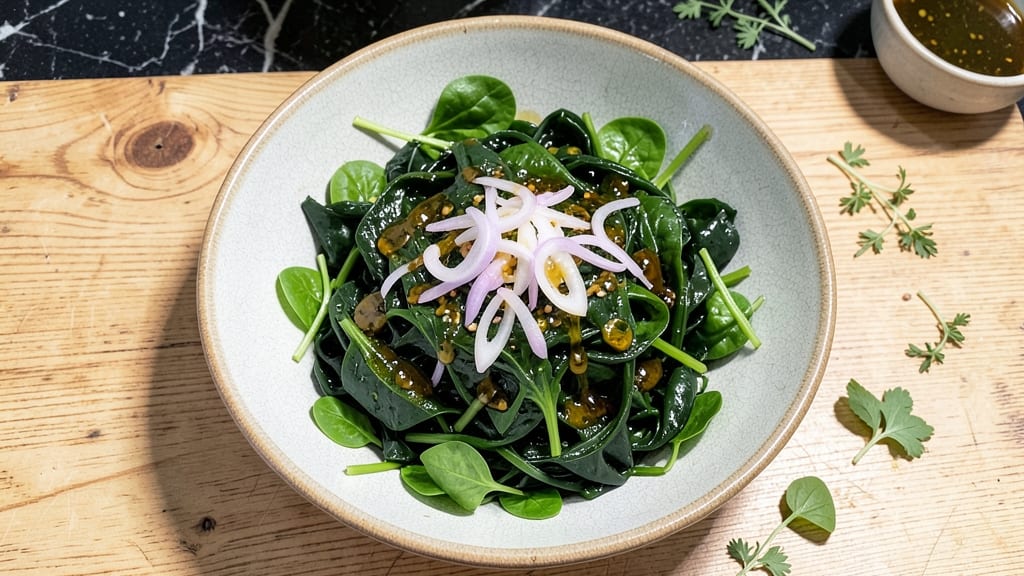
This arame seaweed salad recipe transforms simple ingredients into a vibrant, umami-rich dish that balances crisp textures with bold flavors. The secret lies in properly rehydrating the arame—just a few minutes in warm water unlocks its signature oceanic depth while preserving that satisfying crunch.
I developed this recipe after discovering how much my family loved the contrast between tender greens and seaweed's mineral punch, especially when paired with the nutty zing of sesame dressing.
The beauty of this salad is its versatility—it works as a light main for vegan meals or a sophisticated side that elevates any protein dish.
What makes it special is the dressing: a perfect marriage of toasted sesame oil, rice vinegar, and a touch of maple syrup that cuts through the seaweed's intensity.
The key technique is massaging the dressing into the greens just before serving, ensuring every bite delivers that bright, tangy punch without overpowering the natural flavors.
By the time you're done, you'll have a salad that's as visually striking as it is delicious—deep green leaves dotted with glossy arame strands, all glistening under a golden sesame drizzle.
The texture contrast is what makes it unforgettable: crispy fried shallots add a satisfying crunch, while the seaweed provides that addictive chewiness. This isn't just another salad; it's a flavor experience that proves umami can be both elegant and effortless.
Perfect for meal prep or last-minute entertaining, this recipe comes together in under 20 minutes once you've rehydrated the seaweed. The ingredients are simple, the technique straightforward, and the results consistently impressive. Let's get started—your taste buds will thank you for the umami-packed adventure.
Ingredients for arame seaweed salad
Simple ingredients unlocking umami's oceanic depth with crisp textures and vibrant flavors.
| Ingredient | Amount | Notes |
|---|---|---|
| Dried Arame Seaweed 🌊 | 2 oz | Rehydrated in warm water |
| Baby Spinach Leaves 🌿 | 5 oz | Fresh, organic preferred |
| Shallots 🧅 | 2 whole | Thinly sliced for frying |
| Extra-Virgin Olive Oil 🫒 | ½ cup | For frying shallots |
| Toasted Sesame Oil 🌰 | 1 ½ tbsp | For dressing and garnish |
| Rice Vinegar 🍶 | 3 tbsp | Unseasoned, for tang |
| Pure Maple Syrup 🍁 | 1 ½ tbsp | For subtle sweetness |
| Sesame Seeds 🌰 | 1 tbsp | Toasted for garnish |
| White Sesame Seeds 🌰 | 1 tbsp | For visual contrast |
| Diamond Crystal Kosher Salt 🧂 | ½ tsp | Fine grain for seasoning |
| Black Peppercorns 🌶️ | ¼ tsp | Freshly cracked |
| Lemon Zest 🍋 | 1 tsp | Brightens the dressing |
| Fresh Ginger 🌿 | 1 tsp | Finely grated for depth |
The arame seaweed is the star—dried strands from Asian markets or specialty stores deliver the most authentic texture. Look for packages labeled 'arame' or 'kombu' (though kombu is darker). Rehydrate in warm water for exactly 5 minutes—any longer and it turns mushy. The spinach should be baby variety for delicate leaves that won't overpower the seaweed's mineral punch. For the shallots, organic from Whole Foods ensures cleaner slices that fry to perfect crispness without burning. Toast your sesame seeds in a dry pan until golden—this step transforms ordinary seeds into aromatic garnishes that elevate the entire dish.
No sesame oil? Toasted peanut oil works in a pinch, though it lacks the nutty depth. Substitute maple syrup with agave nectar at equal amounts, but the maple's caramel notes complement the umami better. Fresh ginger is ideal, but powdered ginger at half the amount suffices. The dressing ratio is precise—too much vinegar makes it sharp, too little and the sweetness overpowers. For extra crunch, fried onion strings can replace shallots, though they lack the same delicate sweetness. Always use extra-virgin olive oil for frying—regular oil burns too quickly and creates bitter flavors.
Rehydrated arame keeps 3 days refrigerated in its water, but drain well before using. The dressing components stay fresh 1 week separately, but combine only when ready to serve for maximum brightness. For meal prep, store dressed salad in airtight containers with parchment paper between layers—prevents sogginess. The fried shallots crisp best when eaten immediately, so fry fresh if prepping ahead. Garnishes like sesame seeds can be toasted in advance and stored in a dark jar for 2 weeks to preserve their aroma.
Why You'll Love This Recipe
- Five-Minute Soak: I swear by this trick—just toss the dried arame into warm water for five minutes, and it’s ready. No rehydrating overnight, no fussing. That’s the magic of arame: it softens fast while keeping its satisfying chew.
- Umami Bomb: Between us, the combination of toasted sesame oil and shallots on baby spinach is next-level. The arame adds this briny, oceanic depth that makes it taste like a fancy bistro dish—without the pretension.
- Lunchbox Hero: Honestly, this salad holds up better than most. Pack it in a jar with the dressing separate, and by lunchtime, the flavors meld into something even richer. My kids actually finish their salads now—call me a miracle worker.
- Budget Brightener: A single bag of dried arame lasts me weeks, and it’s cheaper than fresh greens that wilt in two days. Plus, the olive oil and sesame oil stretch thin, so I’m not breaking the bank for flavor. Smart, simple, and satisfying.
Step-by-step instructions for arame seaweed salad with zesty sesame dressing
Here's how to craft this umami-rich salad with perfect texture and balanced flavors.
Rehydrate the Dried Arame Seaweed
Place the 2 oz dried arame seaweed in a heatproof bowl and cover it with 2 cups warm water (not boiling). Let it soak for 10-15 minutes until it expands to about 3 times its original size and becomes tender when pierced with a fork. The seaweed should look plump and vibrant, with a deep green color that signals it's ready for use.
Drain the seaweed thoroughly in a fine-mesh strainer, pressing gently with a spoon to remove excess water. I like to rinse it briefly under cold water to stop any further cooking and refresh the texture. This step is crucial—over-soaking makes the seaweed mushy, while under-soaking leaves it chewy. You want it to hold its shape while still being tender enough to eat.
Prepare the Shallots for Crispy Frying
Peel and thinly slice the 2 whole shallots into 1/8-inch rounds. Separate the slices and pat them completely dry with paper towels—this ensures they crisp up beautifully rather than absorbing oil. Heat 0.5 cup extra-virgin olive oil in a small skillet over medium heat until shimmering but not smoking.
Add the shallot slices in a single layer and cook for 3-4 minutes, stirring occasionally, until they turn golden brown and crisp at the edges. Remove them with a slotted spoon and drain on paper towels. The shallots should be tender-crisp with a caramelized aroma. If they brown too quickly, reduce the heat slightly—you want even cooking without burning.
Assemble the Salad Base
In a large mixing bowl, combine the 5 oz baby spinach leaves with the drained arame seaweed. Gently toss with your hands or a spatula just until the spinach wilts slightly and the seaweed is evenly distributed. This step is light—you don't want to bruise the spinach or break up the seaweed strands. The spinach should look fresh but slightly tenderized, with the seaweed peeking through for texture contrast.
Add the crispy shallot slices and toss again just to combine. Sprinkle with the 0.5 tsp diamond crystal kosher salt, 0.25 tsp freshly cracked black peppercorns, and 1 tsp lemon zest. The lemon zest will brighten the umami flavors while the salt and pepper enhance the natural sweetness of the shallots. Taste at this stage—you should notice a balance of earthy seaweed, crisp shallots, and citrus brightness.
Make the Zesty Sesame Dressing
In a small bowl, whisk together the 1.5 tbsp toasted sesame oil, 3 tbsp rice vinegar, 1.5 tbsp pure maple syrup, 1 tsp finely grated fresh ginger, and 1 tsp lemon zest. The mixture should look emulsified with a glossy sheen. If it separates, whisk vigorously for another 10-15 seconds—this dressing relies on the balance of oil and acid to create that signature zing.
Taste and adjust the seasoning: if it needs more tang, add a splash of rice vinegar; if it's too sweet, a pinch more salt. The dressing should coat the back of a spoon with a smooth, slightly sticky texture. Here's the thing—this dressing is the soul of the salad, so don't rush this step. The ginger and lemon zest should sing while the maple syrup rounds out the acidity.
Combine and Garnish for Serving
Drizzle the dressing over the salad base and toss gently to coat everything evenly. The spinach should glisten with the dressing while the seaweed and shallots maintain their distinct textures. Divide the salad among 4 serving plates and garnish each with 1 tbsp toasted sesame seeds and 1 tbsp white sesame seeds for visual contrast and added crunch.
Serve immediately while the shallots are still crisp and the dressing is vibrant. The ideal serving temperature is room temperature—this allows all the flavors to meld without compromising the textures. Each bite should deliver the umami punch of the arame, the crisp crunch of the shallots, and the bright, nutty dressing in perfect harmony.
Pro Tips For Making Arame Seaweed Salad
- SOAK ARAMÉ IN COLD WATER: I learned this the hard way—hot water shrinks aramé into a sad, rubbery mess. Use lukewarm or cold water for 10-15 minutes, then rinse briefly under running water to stop the soaking process. The strands should hold their shape like fresh noodles, not limp spaghetti.
- SLICE SHALLOTS THINLY: A knife through shallots is no joke, but thin slices make all the difference here. Cut them paper-thin (almost translucent) so they soften quickly and don’t overpower the salad. If you’re impatient like me, use a mandoline—just watch your fingers.
- DRESS SPINACH LAST: Baby spinach wilts faster than you’d think, especially with sesame oil’s heat. Toss the aramé and shallots first, then fold in the spinach just before serving. The leaves stay crisp, and the flavors meld without turning the salad into a sad, soggy pile.
- USE SESAME OIL SPARINGLY: Toasted sesame oil is potent—start with half a teaspoon and taste. Too much turns your elegant salad into a nutty, overpowering mess. Drizzle it last and mix gently, letting the diner add more if they crave it. (Yes, even if you’re the diner.)
Creative variations of this dish
Asian-Inspired Fusion
Transform this salad into a ramen bowl topping by serving it over steaming hot noodles. Add 1 cup cooked ramen per bowl, top with the salad, and drizzle with an extra 1 tbsp toasted sesame oil.
Garnish with soft-boiled egg halves and chopped scallions for a Japanese-inspired fusion that's quick and satisfying. 🍜
Mediterranean Twist
Swap the sesame dressing for a lemon-herb vinaigrette by mixing 3 tbsp extra-virgin olive oil, 2 tbsp lemon juice, 1 tsp dried oregano, and ½ tsp honey.
Add ¼ cup Kalamata olives and 2 tbsp crumbled feta for a Greek-inspired variation. The briny olives and tangy feta complement the seaweed's umami perfectly. 🥗
Spicy Miso Kick
For a bold, umami-packed version, stir 1 tbsp white miso paste into the dressing along with an extra ½ tsp grated ginger. Add 1 tsp sriracha or chili crisp to taste for heat.
Top with crispy fried garlic and toasted sesame seeds for a Korean-inspired spicy twist that's addictive. 🌶️
Protein-Packed Upgrade
Turn this into a complete meal by adding ½ cup marinated tofu or crispy baked tempeh. For extra richness, toss in ¼ cup edamame and 2 tbsp chopped cilantro. The protein and crunch make this salad heartier while keeping it vegan-friendly. Perfect for lunch or dinner! 💪
Winter Warmth Version
For a cozy winter salad, add ½ cup roasted butternut squash cubes and 2 tbsp toasted pecans. Replace the crispy shallots with pan-seared mushrooms for an earthy depth. The warm spices in the squash balance the seaweed's oceanic notes beautifully. 🍂
Meal Prep Adaptation
Prep the dressing and seaweed separately for easy assembly later. Store the rehydrated arame in its water in the fridge for up to 3 days. Keep the dressing in a sealed jar and toss with fresh spinach and shallots just before serving.
Add toppings like sesame seeds fresh to maintain crunch. This keeps the salad fresh-tasting for up to 2 days in airtight containers. ⏰
Nutrition facts
Frequently asked questions
How long does dried arame seaweed need to soak?
Dried arame requires 10-15 minutes in warm water to rehydrate properly. The strands should expand to about 3 times their original size and become tender when pierced with a fork. Over-soaking beyond 15 minutes will make it mushy, while under-soaking leaves it chewy. Always drain thoroughly before using.
Can I substitute arame with other seaweeds?
Yes, but textures vary. Wakame works well with a slightly sweeter taste, while nori is stronger and best used sparingly. For a similar texture, use 1 oz dried wakame per 2 oz arame. Avoid kelp or dulse—they're too fibrous. The key is choosing seaweed with a delicate, oceanic flavor that won't overpower the salad's balance.
What's the best way to store leftover arame salad?
Store the salad base (spinach + seaweed) in an airtight container with parchment paper between layers for up to 2 days. Keep the dressing separate and add it fresh before serving to maintain crispness. For longer storage, freeze the rehydrated arame in its water for up to 1 month—thaw and rinse before using. Always add toppings like fried shallots fresh to preserve texture.
Why did my seaweed turn slimy when rehydrating?
This happens from either over-soaking or using boiling water. Always use warm (not hot) water and limit soaking to 10-15 minutes. For extra firmness, rinse with cold water after draining. If using store-bought dried arame, check for expiration—older seaweed loses its texture integrity. Freshly dried seaweed from Asian markets stays crispier longer.
Can I make this salad gluten-free?
This recipe is naturally gluten-free as written. Just ensure your rice vinegar is certified gluten-free and check the labels on sesame seeds (some brands process with wheat). For extra safety, use tamari instead of regular soy sauce if you're sensitive. The dressing and all other ingredients are inherently gluten-free, making this an excellent option for gluten-free diets.